Best Crypto Hardware Wallets 2025 — 5 Top Picks to Secure Your Coins

This post takes you through five top-notch hardware wallets that you should think about in 2025. I’ll go over who each is suitable for, how they vary, and how to safely transfer cryptocurrency from BTCC to one of these wallets.
Table of Contents
- Why Use a Hardware Wallet?
- How I Chose These Wallets
- 5 Best Crypto Hardware Wallets 2025
- How to Choose the Right Wallet for You
- How to Withdraw from BTCC to Your Hardware Wallet (Step-by-Step)
- Why This Matters for BTCC Users
- FAQs
- Conclusion
- Sources
Why Use a Hardware Wallet?
•Full self-custody:Rather than storing them on an exchange, your private keys remain offline in a dedicated device.
•Less hack risk: A hardware wallet will protect your keys regardless of the security of your computer or email.
•Long-term security: Hardware wallets, not exchanges, are the most secure way to store cryptocurrency for the long term.
How I Chose These Wallets
•Security: encrypted connection, offline signature, and extensive audit trail
•Usability: a good starting point for newcomers
•Asset support: Bitcoin-only vs potential to handle several assets
•Real-life respect: honesty, openness, and vendor credibility
All five of the options listed below are valid in their own unique ways.
/ You can claim a welcome reward of up to 10,055 USDT🎁\
5 Best Crypto Hardware Wallets 2025
1. Ledger Nano Gen5 — Best All-Around Choice for Multi-Coin Holds
Why it stands out:
- Hundreds, if not thousands, of coins and tokens supported by multiple blockchains
- The ledger Wallet companion app and streamlined user interface make managing a breeze.
- Enhanced mobility is a result of the inclusion of Bluetooth and Near Field Communication (NFC).
2. Trezor Model T — For Open-Source & Privacy-Conscious Users
- Flexible recovery options
- Touchscreen + user-friendly software
- Open-source firmware — complete transparency and community trust
3. BitBox02 Multi — Compact, Secure & Beginner-Friendly
Why it stands out:
- Harsh security assessments, dual-chip architecture, and open-source firmware
- Recover quickly with the help of the MicroSD backup option.
- Very easy to carry, slim, and unobtrusive
Best for: Those just starting out or who would rather have a basic, frictionless wallet without all the extra features.
4. Coldcard Mk4 — Bitcoin-Only, Ultra-Secure, for Advanced Users
Why it stands out:
- Superior for storing Bitcoins for the long haul
- Built with air gaps so keys never come into contact with an internet-connected device
- Fully compatible with Bitcoin’s advanced features, including multisig, PSBT, and hardware-based key generation
Best for: Those who value security above everything else, such as Bitcoin maximalists or long-term hodlers.
5. Keystone 3 Pro — Air-Gapped & Modern Option (Ideal for DeFi / ETH Users)
Why it stands out:
- Complete QR-based air-gap transaction signing—minimizes attack surface
- Strong support for Ethereum, tokens, and the most widely used online wallets
- A sleek, mobile-friendly user interface
/ You can claim a welcome reward of up to 10,055 USDT🎁\
How to Choose the Right Wallet for You
| Your Need / Profile | Recommended Wallet | Why It’s the Best Fit |
|---|---|---|
| You hold many different coins and want easy management | Ledger Nano Gen5 | Offers the widest native app support via Ledger Live, making managing thousands of altcoins seamless. |
| You care about open-source firmware and maximum transparency | Trezor Model T | Fully verifiable open-source software & hardware. Trust is built on community audit, not just company claims. |
| You want a minimal, secure, easy-to-use wallet | BitBox02 Multi | Swiss-engineered simplicity. The microSD backup is arguably more beginner-friendly than writing seed phrases. |
| You hold mostly Bitcoin and want ultra-secure cold storage | Coldcard Mk4 | The gold standard for Bitcoin air-gapped security. No USB connection ever—signs via QR codes or SD cards. |
| You are into Ethereum / DeFi / tokens — want air-gapped security | Keystone 3 Pro | The only mainstream air-gapped wallet with a large touchscreen, perfect for signing complex DeFi transactions. |
How to Withdraw from BTCC to Your Hardware Wallet (Step-by-Step)
1. Only purchase hardware wallets from authorized retailers, never from independent vendors.
Create a new wallet and write the seed phrase on paper or steel—never a digital file or picture—to initialize it.
3. Install the official wallet program or software (such as BitBox, Trezor Suite, or Ledger Wallet).
4. Never copy an address from a webpage; instead, create a receive address and confirm it on the device screen.
5. Go to Wallet → Withdraw after logging into your BTCC account.
6. From your device, paste the verified receiving address.
7. First, send a tiny test amount, like a few dollars. Verify its arrival.
8. If all is well, send the remaining ones. Keep your seed in a secure location, preferably in a metal backup that is fireproof.
Why This Matters for BTCC Users
FAQs
Q: I hear hardware wallets can still be hacked — is that true?
Q: Is it hard to set up a hardware wallet if I’m not tech-savvy?
Q: What happens if I lose my hardware wallet?
Q: Which wallet is best for long-term “cold” holding?
A:For pure cold storage, Bitcoin-only wallets like Coldcard Mk4 are hard to beat. Use a Ledger or Trezor if you value security and ease of use for several assets.
Q: Can I use BTCC together with a hardware wallet?
A: Definitely. Withdraw from BTCC to your hardware wallet to ensure ultimate control and long-term security.
Conclusion
Pursuing the “one best wallet” is not the point of security. You need to pick a tool that works for you and then back it up with healthy habits like backing up often, storing seeds offsite, and being careful when withdrawing funds.
You may rest easy knowing that you have control over your funds with any of the five wallets mentioned above. Hardware wallets are more secure and reliable options for long-term hodlers.
Ready to take control? Sign up at BTCC and withdraw your crypto to a hardware wallet today — make your assets truly yours.
/ You can claim a welcome reward of up to 10,055 USDT🎁\
Sources
For more detailed market analysis, strategies, and educational resources, visit BTCC Academy and stay ahead of the curve in the rapidly evolving crypto space.
How to Trade Crypto on BTCC?
This brief instruction will assist you in registering for and trading on the BTCC exchange.
Step 1: Register an account
The first step is to hit the “Sign Up” button on the BTCC website or app. Your email address and a strong password are all you need. After completing that, look for a verification email in your inbox. To activate your account, click the link in the email.

Step 2: Finish the KYC
The Know Your Customer (KYC) procedure is the next step after your account is operational. The main goal of this stage is to maintain compliance and security. You must upload identification, such as a passport or driver’s license. You’ll receive a confirmation email as soon as your documents are validated, so don’t worry—it’s a quick process.

Step 3. Deposit Funds
After that, adding money to your account is simple. BTCC provides a range of payment options, such as credit cards and bank transfers. To get your money into your trading account, simply choose what works best for you, enter the amount, and then follow the instructions.
- Fiat Deposit. Buy USDT using Visa/Mastercard (KYC required).
- Crypto Deposit. Transfer crypto from another platform or wallet.

Step 4. Start Trading
If you wish to follow profitable traders, you might go for copy trading, futures, or spot trading. After choosing your order type and the cryptocurrency you wish to trade, press the buy or sell button. Managing your portfolio and keeping track of your trades is made simple by the user-friendly interface.

Look more for details: How to Trade Crypto Futures Contracts on BTCC
BTCC FAQs
Is BTCC safe?
Based on its track record since 2011, BTCC has established itself as a secure cryptocurrency exchange. There have been no reports of fraudulent activity involving user accounts or the platform’s infrastructure. By enforcing mandatory know-your-customer (KYC) and anti-money laundering (AML) procedures, the cryptocurrency trading platform gives consumers greater security. For operations like withdrawals, it also provides extra security features like two-factor authentication (2FA).
Is KYC Necessary for BTCC?
Indeed. Before using BTCC goods, users must finish the Know Your Customer (KYC) process. A facial recognition scan and legitimate identification documents must be submitted for this process. Usually, it is finished in a few minutes. This procedure has the benefit of strengthening the security of the exchange and satisfying legal requirements.
Because their accounts will have a lower daily withdrawal limit, those who do not finish their KYC are unable to make deposits. It should be noted that those who present a legitimate ID without a facial recognition scan will likewise have restricted withdrawal options.
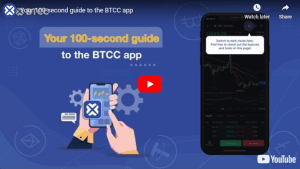
Is There a Mobile App for BTCC?
Indeed. For users of iOS and Android, BTCC has a mobile app. The exchange’s website offers the mobile app for download. Since both the web version and the mobile app have the same features and capabilities, they are comparable.
Will I Have to Pay BTCC Trading Fees?
Indeed. BTCC levies a fee for trade, just like a lot of other centralised exchanges. Each user’s VIP level, which is unlocked according to their available money, determines the different costs. The BTCC website provides information on the charge rates.
Can I Access BTCC From the U.S?
You can, indeed. According to its website, BTCC has obtained a crypto license from the US Financial Crimes Enforcement Network (FinCEN), which enables the cryptocurrency exchange to provide its services to investors who are headquartered in the US.
According to BTCC’s User Agreement document, its goods are not allowed to be used in nations and organisations that have been sanctioned by the United States or other nations where it has a licence.
BTCC Guide:
- How to Trade Crypto Futures Contracts on BTCC
- BTCC Guide-How to Deposit Crypto on BTCC?
- What is Crypto Futures Trading – Beginner’s Guide
- What is Leverage in Cryptocurrency? How Can I Trade at 100X Leverage?
- BTCC Review 2024: Best Crypto Futures Exchange
Crypto Buying Guides:
- How To Buy Bitcoin (BTC)
- How To Buy Picoin
- How To Buy Ethereum (ETH)
- How To Buy Dogecoin (DOGE)
- How To Buy Pepe Coin (PEPE)
- How To Buy Ripple (XRP)
Crypto Prediction:
- Ethereum (ETH) Price Prediction 2024, 2025, 2030 — Will ETH Reach $10,000?
- Ethereum Price Prediction 2024, 2025, 2030: How High Can ETH Go in 2024?
- Bitcoin (BTC) Price Prediction 2024, 2025, 2030 — Is BTC a Good Investment?
- Ripple (XRP) Price Prediction 2024, 2025, 2030 — Will XRP Reach $1 After SEC Lawsuit?
- Pi Coin Price Prediction 2024,2025,2030 — Is Pi Coin a Good Buy?
- Pepe (PEPE) Price Prediction 2024, 2025, 2030 – Will PEPE Reach $1