How to Choose the Best Low-Fee Crypto Exchange in the USA (2025 Guide)

This article explains, in practical terms, how to evaluate crypto exchanges for low fees, security, liquidity, and usability, while highlighting which platforms actually deliver the best value for American traders today.
We’ll cover in this guide:
- Understanding How Crypto Exchange Fees Work
- Key Factors to Compare in 2025
- Fee Comparison: Hidden Costs You Might Overlook
- Evaluating Security and Regulation
- How to Avoid High Fees When Trading Crypto
- Advanced Considerations for 2025 Traders
- Best Low-Fee Exchanges for Different Trader Types
- Common Mistakes When Choosing a Crypto Exchange
- Final Checklist: How to Choose the Right Exchange
- Future Trends: The 2025–2030 Outlook
- Conclusion
- FAQs
- How to Trade Crypto on BTCC?
- BTCC FAQs
Understanding How Crypto Exchange Fees Work
/ You can claim a welcome reward of up to 10,055 USDT🎁\
Key Factors to Compare in 2025
Customer Support
Best Low-Fee Crypto Exchanges in the USA (2025 Overview)
| Exchange | Maker Fee | Taker Fee | Key Strength | Best For |
|---|---|---|---|---|
| Binance.US | 0.00%–0.10% | 0.00%–0.10% | Lowest spot fees in the U.S. | Active & high-volume traders |
| Kraken Pro | 0.00%–0.16% | 0.10%–0.26% | Deep liquidity, top-tier security | Professional & security-focused traders |
| Coinbase Advanced | 0.00%–0.40% | 0.05%–0.60% | User-friendly, trusted brand | U.S. retail traders |
| Gemini ActiveTrader | 0.00%–0.25% | 0.25%–0.35% | Strong regulatory compliance | Institutional & compliance-focused users |
| OKX (Global) | 0.08% | 0.10% | Advanced tools, global access | Experienced & international traders |
Fee Comparison: Hidden Costs You Might Overlook
For example:
Evaluating Security and Regulation
/ You can claim a welcome reward of up to 10,055 USDT🎁\
How to Avoid High Fees When Trading Crypto
Even on low-fee exchanges, small mistakes can increase costs.
Here’s how to minimize them:
Advanced Considerations for 2025 Traders
Best Low-Fee Exchanges for Different Trader Types
For Beginners: Coinbase Advanced
For Cost Efficiency: Binance.US
For Institutions: Gemini ActiveTrader
Common Mistakes When Choosing a Crypto Exchange
Final Checklist: How to Choose the Right Exchange
| Factor | Why It Matters | What to Look For |
|---|---|---|
| Fees | Directly impacts your net returns | ≤ 0.10% per trade (spot), transparent fee structure |
| Regulation | Provides legal protection and recourse | FINCEN-registered, state money transmitter licenses |
| Security | Prevents theft and unauthorized access | Cold storage (>95% funds), mandatory 2FA, insurance |
| Liquidity | Ensures better trade execution and prices | Top-tier order books, high daily trading volume |
| Ease of Use | Saves time and reduces errors | Clean UI, responsive mobile app, intuitive navigation |
| Customer Support | Critical for risk mitigation and issue resolution | 24/7 live chat or phone support, quick response times |
Future Trends: The 2025–2030 Outlook
Conclusion
FAQs
For more detailed market analysis, strategies, and educational resources, visit BTCC Academy and stay ahead of the curve in the rapidly evolving crypto space.
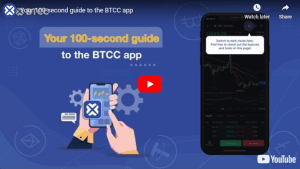
How to Trade Crypto on BTCC?
This brief instruction will assist you in registering for and trading on the BTCC exchange.
Step 1: Register an account
The first step is to hit the “Sign Up” button on the BTCC website or app. Your email address and a strong password are all you need. After completing that, look for a verification email in your inbox. To activate your account, click the link in the email.

Step 2: Finish the KYC
The Know Your Customer (KYC) procedure is the next step after your account is operational. The main goal of this stage is to maintain compliance and security. You must upload identification, such as a passport or driver’s license. You’ll receive a confirmation email as soon as your documents are validated, so don’t worry—it’s a quick process.

Step 3. Deposit Funds
After that, adding money to your account is simple. BTCC provides a range of payment options, such as credit cards and bank transfers. To get your money into your trading account, simply choose what works best for you, enter the amount, and then follow the instructions.
- Fiat Deposit. Buy USDT using Visa/Mastercard (KYC required).
- Crypto Deposit. Transfer crypto from another platform or wallet.

Step 4. Start Trading
If you wish to follow profitable traders, you might go for copy trading, futures, or spot trading. After choosing your order type and the cryptocurrency you wish to trade, press the buy or sell button. Managing your portfolio and keeping track of your trades is made simple by the user-friendly interface.

Look more for details: How to Trade Crypto Futures Contracts on BTCC
BTCC FAQs
Is BTCC safe?
Based on its track record since 2011, BTCC has established itself as a secure cryptocurrency exchange. There have been no reports of fraudulent activity involving user accounts or the platform’s infrastructure. By enforcing mandatory know-your-customer (KYC) and anti-money laundering (AML) procedures, the cryptocurrency trading platform gives consumers greater security. For operations like withdrawals, it also provides extra security features like two-factor authentication (2FA).
Is KYC Necessary for BTCC?
Indeed. Before using BTCC goods, users must finish the Know Your Customer (KYC) process. A facial recognition scan and legitimate identification documents must be submitted for this process. Usually, it is finished in a few minutes. This procedure has the benefit of strengthening the security of the exchange and satisfying legal requirements.
Because their accounts will have a lower daily withdrawal limit, those who do not finish their KYC are unable to make deposits. It should be noted that those who present a legitimate ID without a facial recognition scan will likewise have restricted withdrawal options.
Is There a Mobile App for BTCC?
Indeed. For users of iOS and Android, BTCC has a mobile app. The exchange’s website offers the mobile app for download. Since both the web version and the mobile app have the same features and capabilities, they are comparable.
Will I Have to Pay BTCC Trading Fees?
Indeed. BTCC levies a fee for trade, just like a lot of other centralised exchanges. Each user’s VIP level, which is unlocked according to their available money, determines the different costs. The BTCC website provides information on the charge rates.
Can I Access BTCC From the U.S?
You can, indeed. According to its website, BTCC has obtained a crypto license from the US Financial Crimes Enforcement Network (FinCEN), which enables the cryptocurrency exchange to provide its services to investors who are headquartered in the US.
According to BTCC’s User Agreement document, its goods are not allowed to be used in nations and organisations that have been sanctioned by the United States or other nations where it has a licence.
BTCC Guide:
- How to Trade Crypto Futures Contracts on BTCC
- BTCC Guide-How to Deposit Crypto on BTCC?
- What is Crypto Futures Trading – Beginner’s Guide
- What is Leverage in Cryptocurrency? How Can I Trade at 100X Leverage?
- BTCC Review 2024: Best Crypto Futures Exchange
Crypto Buying Guides:
- How To Buy Bitcoin (BTC)
- How To Buy Picoin
- How To Buy Ethereum (ETH)
- How To Buy Dogecoin (DOGE)
- How To Buy Pepe Coin (PEPE)
- How To Buy Ripple (XRP)
Crypto Prediction:
- Ethereum (ETH) Price Prediction 2024, 2025, 2030 — Will ETH Reach $10,000?
- Ethereum Price Prediction 2024, 2025, 2030: How High Can ETH Go in 2024?
- Bitcoin (BTC) Price Prediction 2024, 2025, 2030 — Is BTC a Good Investment?
- Ripple (XRP) Price Prediction 2024, 2025, 2030 — Will XRP Reach $1 After SEC Lawsuit?
- Pi Coin Price Prediction 2024,2025,2030 — Is Pi Coin a Good Buy?
- Pepe (PEPE) Price Prediction 2024, 2025, 2030 – Will PEPE Reach $1