The Next Stablecoin: A Nearly $300 Billion Potential Market and 50x Growth Opportunity
 Odaily
Original source: Tokenized stocks are the next stablecoins
Compiled by | Odaily News (@OdailyChina)
Translated by | Wenser (@wenser2010)
Editor's note: If we were to vote for the "2026 keyword of the year" in the crypto market, "tokenized stocks" might receive the most votes. If last year's DAT treasury companies represented the crypto market actively embracing the traditional finance narrative by packaging themselves as listed companies to attract liquidity, then this year's formal emergence of tokenized stocks as a mainstream crypto market product signifies two things: first, the crypto market's innovation narrative is running thin, forcing it to introduce traditional financial stocks at the asset packaging level to absorb more liquidity; second, the traditional financial market's co-optation of the crypto market has expanded further, with blockchain technology becoming the wrapping paper for stock assets. On-chain derivatives and pre-market tokens that seemingly control pre-market pricing power remain small in scale compared to the underlying stocks.
The only encouraging sign is that the value of tokenized stocks is gradually gaining recognition from the traditional financial market. The New York Stock Exchange and Nasdaq are both exploring tokenized stock trading platforms, and the SEC has opened the door to tokenized stock trading platform TSV through innovation exemptions.
Looking at tokenized stocks from the vantage point of 2026, they may resemble stablecoins in 2020, before widespread adoption—a market with enormous potential, where the various demands surrounding them will become an important part of the crypto market and even the global economy.
Odaily News has compiled and translated a recent analysis from data analytics platform Token Terminal, exploring the development, future, and stablecoin-like bright prospects of tokenized stocks, to boost confidence among crypto readers and wish everyone a speedy familiarization with and acceptance of their new identity as "US stock traders."
The Path Stablecoins Took, the Future Journey of Tokenized Stocks: A $4.8 Billion Market Cap Milestone
In March 2020, the stablecoin market cap surpassed $4.8 billion. In the years since, the stablecoin market cap has grown steadily, and now its market cap has increased 59-fold to $285 billion. In July 2025, the US federal stablecoin bill, the GENIUS Act, was officially passed, and the US has brought stablecoins under regulation and support, thereby expanding the reach of the dollar.
Coincidentally, on November 13, 2026, the market cap of tokenized stocks also reached the $4.8 billion mark. Tokenized stocks, as referred to here, are blockchain tokens that track publicly listed company stocks. Most (Odaily News note: not all platforms have real underlying asset backing) tokenized stocks are backed 1:1 by real stocks held by regulated custodians, who are responsible for safekeeping. These tokens support 24/7 trading and can be used in various on-chain applications. This market is expanding rapidly. Over the past 12 months, the market cap of tokenized stocks has grown 9.1x, and the number of holders has grown 40x to approximately 5.9 million.
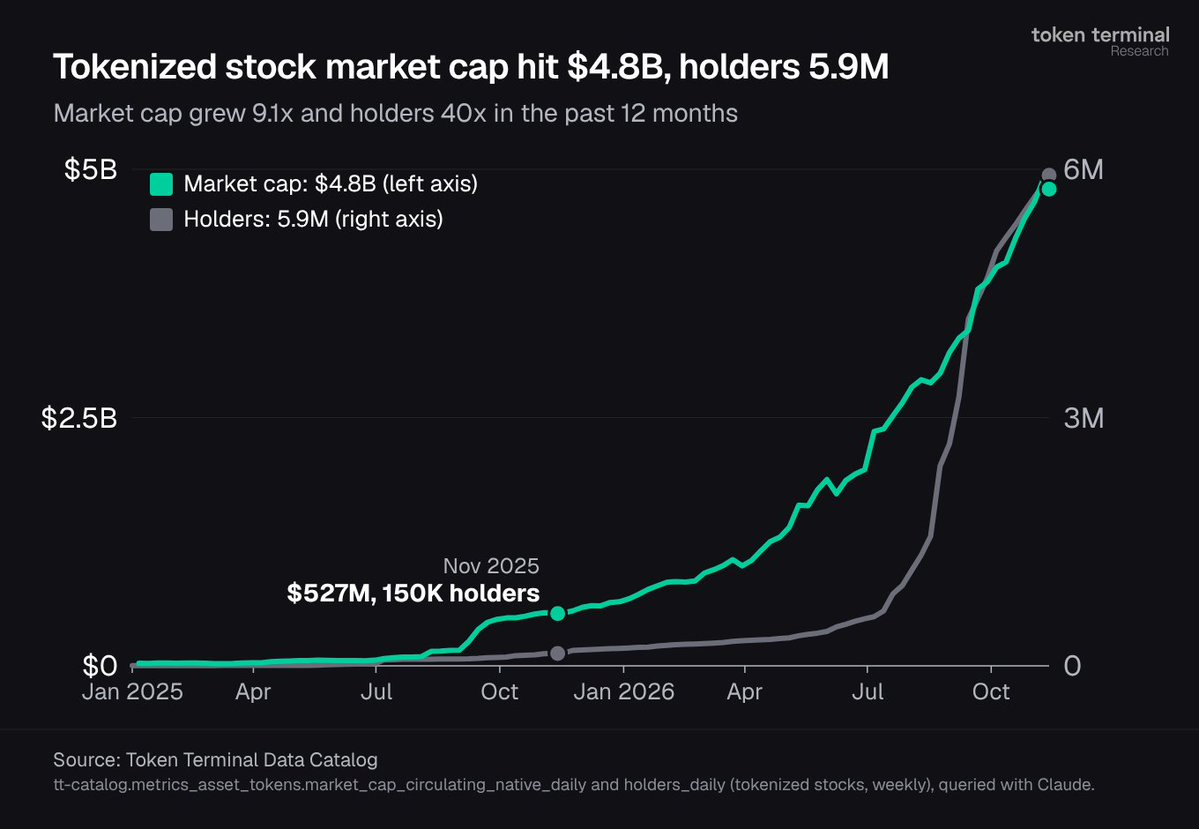
Tokenized stock market cap reaches $4.8 billion, with 5.9 million holders. Source: Token Terminal Data Catalog, etc.
Based on the current trajectory, tokenized stocks are following the same path stablecoins took toward a $285 billion market cap, and the US rationale for supporting tokenized stocks is identical to that for stablecoins.
Historical Trend: A New Category Poised to Rival Stablecoins in Scale Is Taking Shape
Stablecoins (tokens designed to maintain a $1 value) are the clearest precedent. Every market crisis since 2020—from the COVID crash to the Terra and FTX collapses to the Silicon Valley Bank failure—has tested whether holders trust stablecoins, and the stablecoin market cap has recovered after each crisis.
These crises also proved which designs truly withstand the test. Terra's UST, which relied on algorithms rather than reserves, collapsed completely; while USDT and USDC, the two largest stablecoins backed primarily by cash and US Treasury bonds, now account for 86% of the total stablecoin market cap. Most tokenized stocks employ the same reserve-backed design.
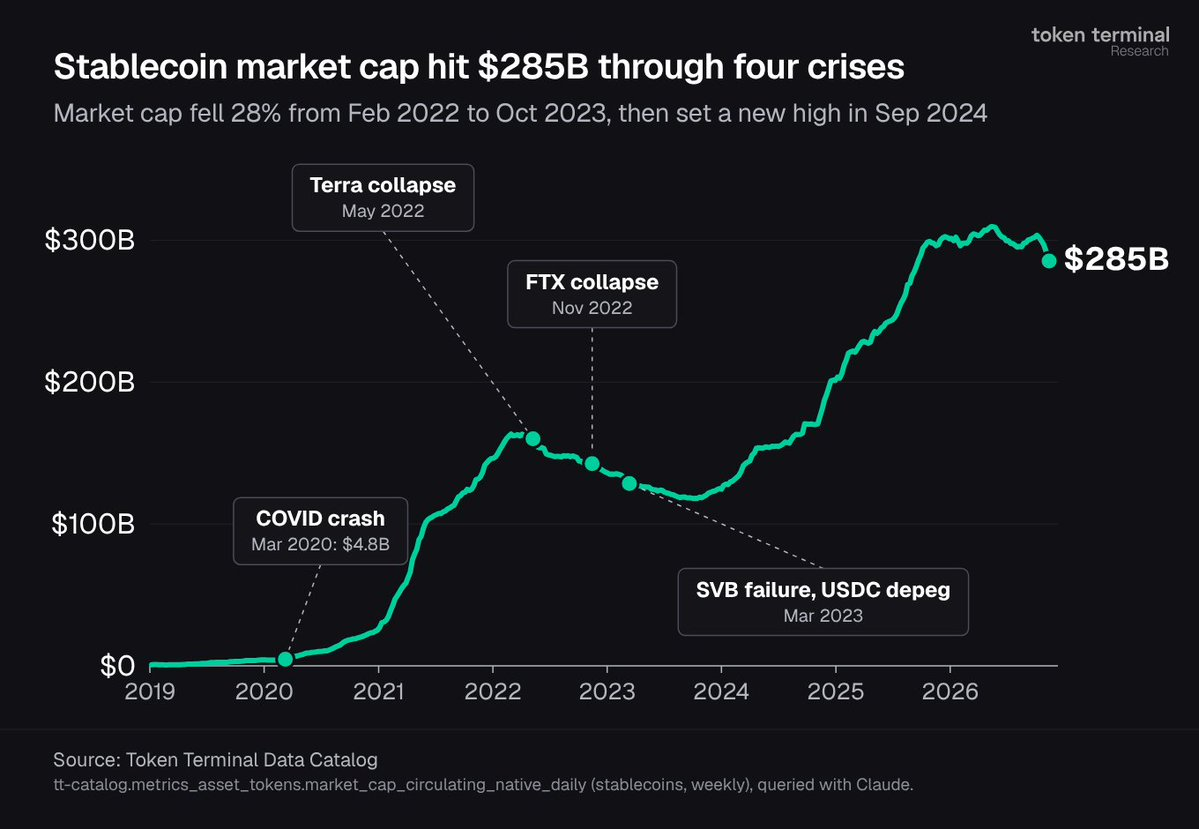
After four crises, the stablecoin market cap rose to $285 billion
The current market cap of tokenized stocks has already matched the stablecoin market cap of March 2020, and it reached this scale faster. From the point when each crossed a $1 billion market cap, tokenized stocks took only 8 months to reach $4.8 billion, while stablecoins took 11 months to achieve the same milestone.
Moreover, tokenized stocks entered a more mature market environment: wallets, exchanges, and DeFi venues were already in place, and the rules were clearer than for stablecoins in 2020, including the exemption arrangements the US Securities and Exchange Commission (SEC) has provided for tokenized stock trading since September 2026.
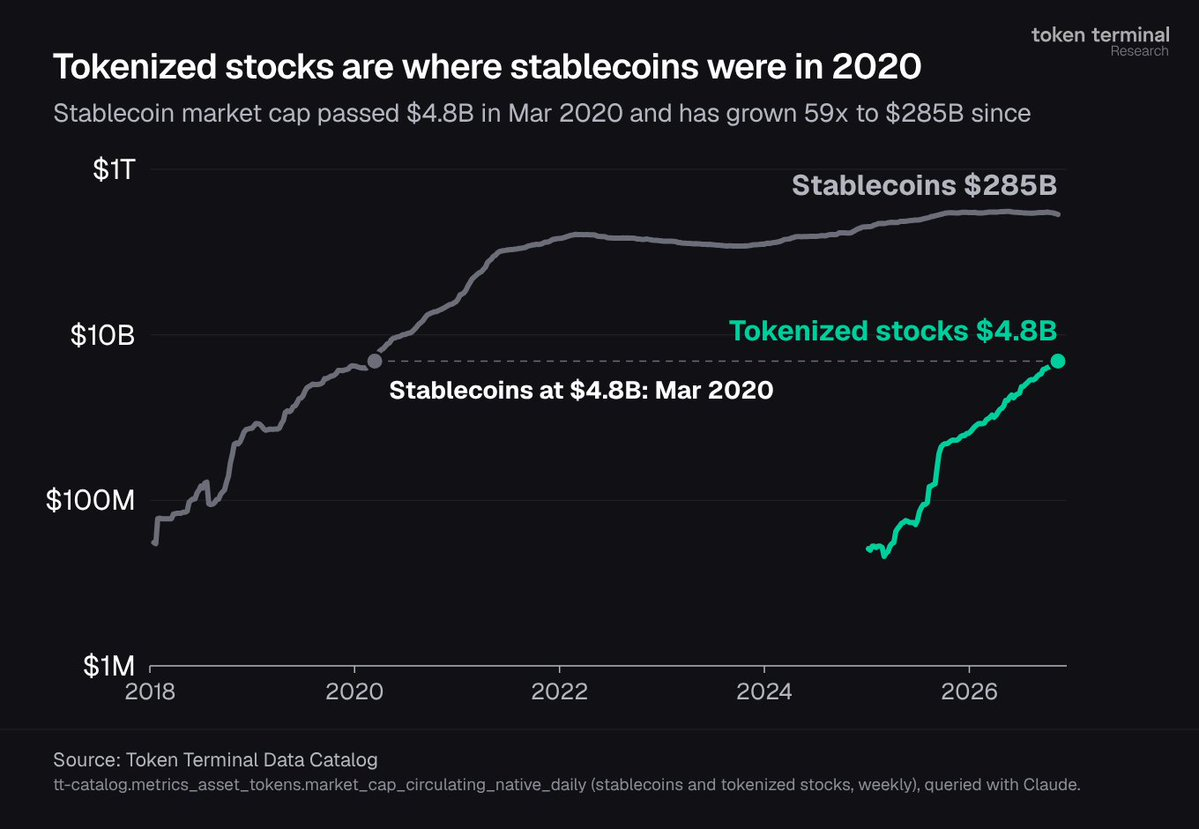
Tokenized stocks are where stablecoins were in 2020: Token Terminal Data Catalog
The demand that tokenized stocks are tapping into is enormous: Foreign investors currently hold $25.2 trillion in US stocks, up 23% over the past 12 months, while the current tokenized stock market cap is only 0.02% of foreign investors' US stock holdings. Moving just 1% of these US stock assets on-chain would amount to $252 billion, roughly 50 times today's tokenized stock market.
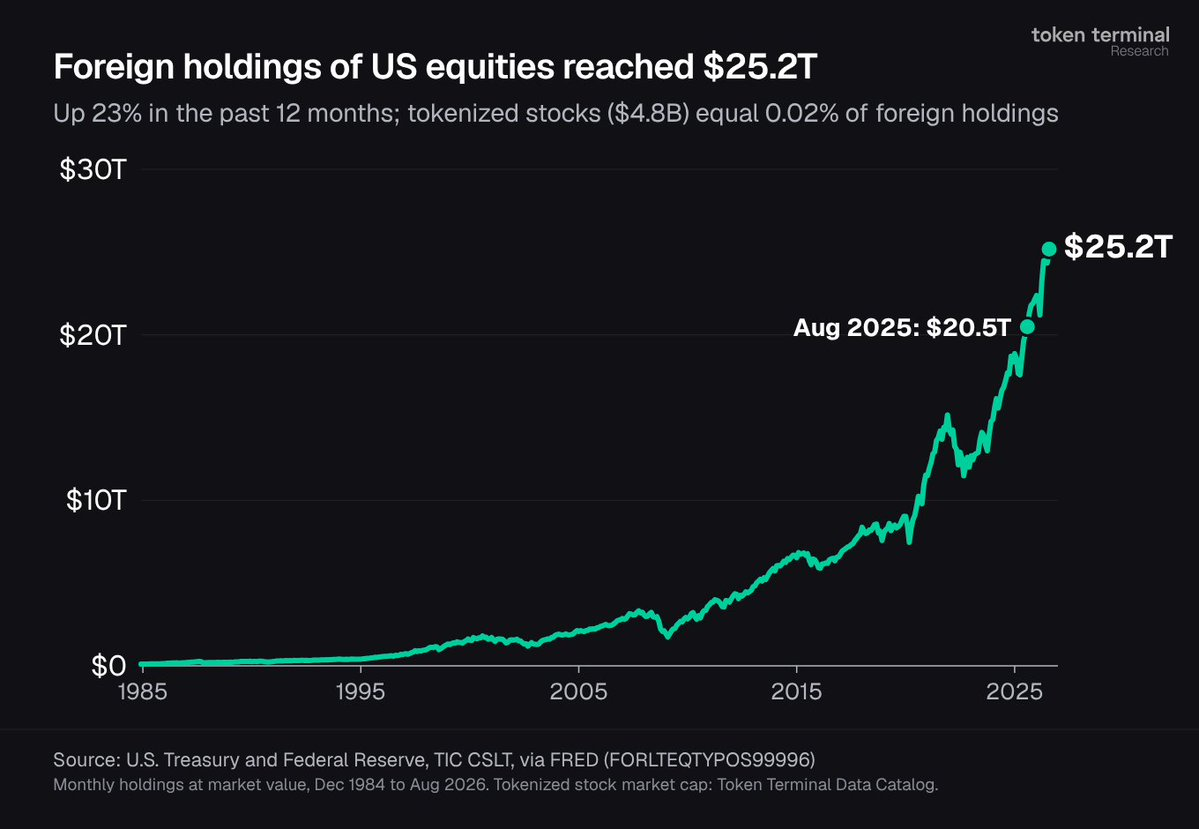
Foreign investors hold $25.2 trillion in US stocks: U.S. Treasury and Federal Reserve
US Interests: The Same Rationale as Stablecoins
US Treasury Secretary Scott Bessent has stated that stablecoins could become one of the largest buyers of US Treasury bonds and help expand the dollar's influence overseas. Tokenized stocks can deliver the same effect for US stocks, and four characteristics of the current tokenized stock market reflect this similarity:
The underlying assets are American, the buyers are overseas, the tokens are backed by real stocks, and most of the stocks are held by US custodians.
Most tokenized stocks track assets of US-listed companies, and US-listed stocks and exchange-traded funds (ETFs) account for 88% of the total tokenized stock market cap.
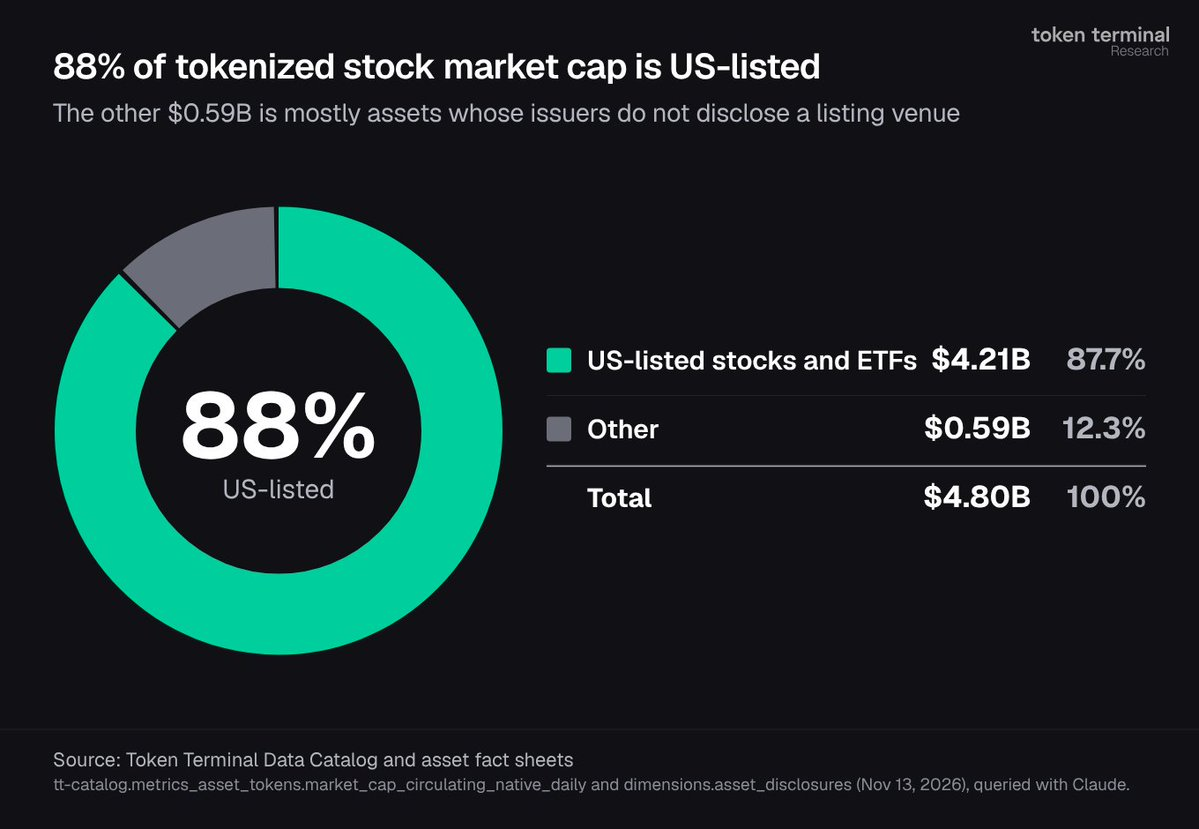
88% of tokenized stocks are US-listed assets
The buyers of tokenized stocks are overwhelmingly outside the US. Tokens that issuers sell only to non-US investors account for 91% of the total tokenized stock market cap, so the demand behind tokenized stocks is essentially an allocation market where overseas capital buys US assets.
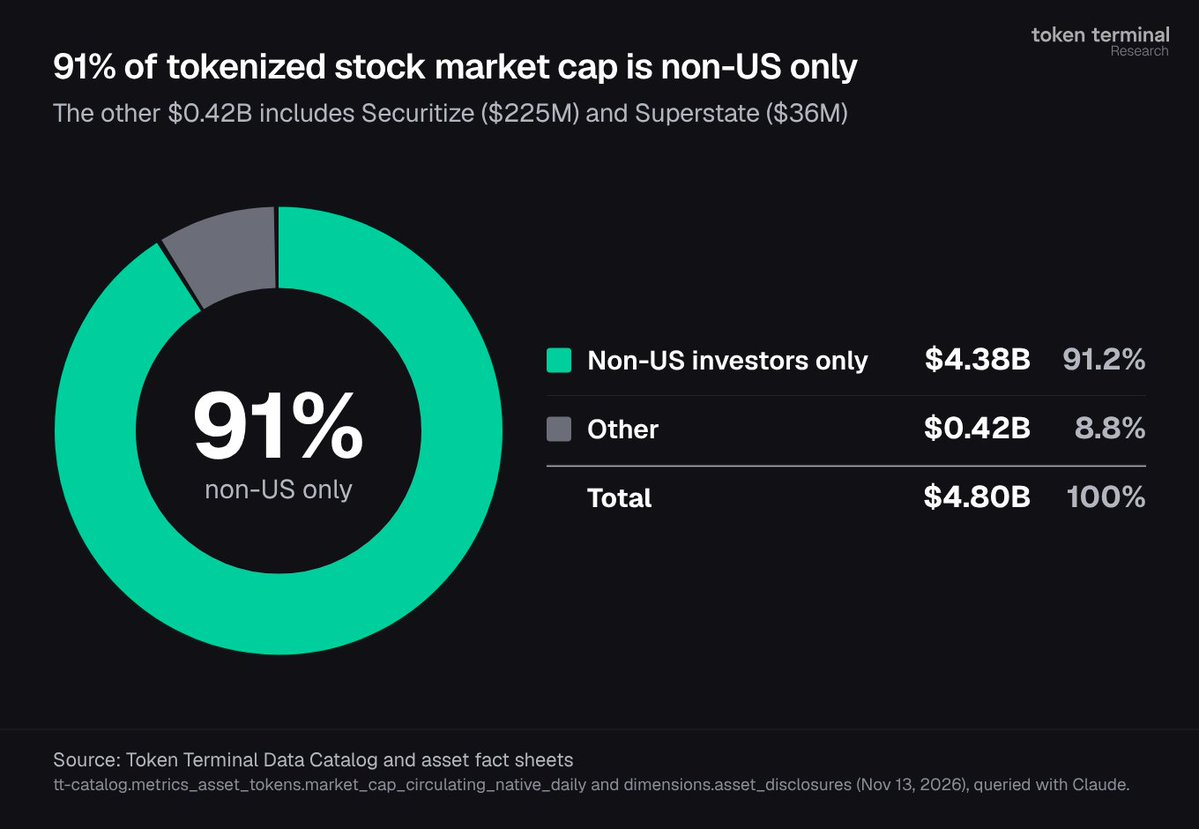
91% of tokenized stocks are sold only to non-US investors
Almost all tokenized stocks are backed by real stocks. Tokens backed 1:1 by underlying stocks account for 91% of the tokenized stock market cap, with a structure identical to stablecoins' backing by the dollar. Therefore, every stock token sold to an overseas user corresponds to the purchase of one share in the US market.
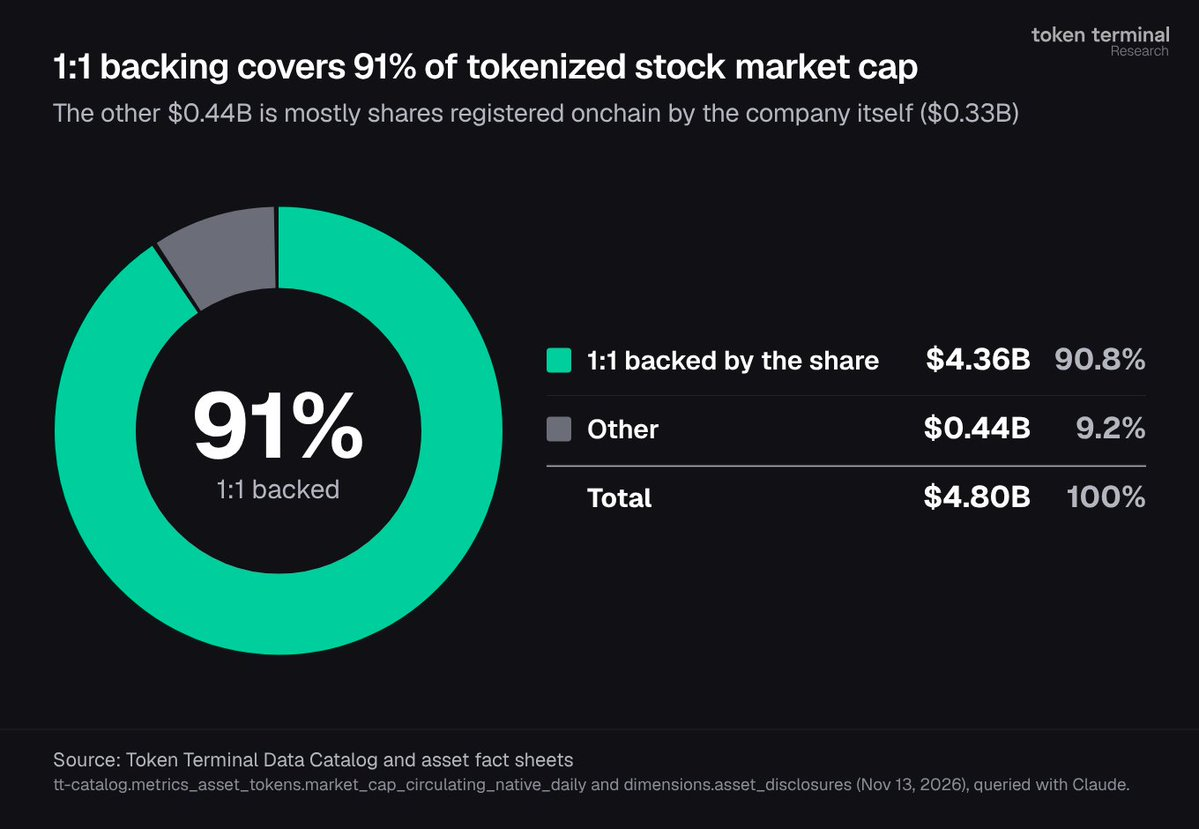
91% of tokenized stocks support 1:1 asset backing
The vast majority of underlying stocks are held by US companies. For example, stock tokens listing US broker Alpaca Securities as custodian account for 86% of the total tokenized stock market cap, including $3.76 billion from the three major issuers Ondo, Binance, and xStocks. Of this, $3.03 billion in market cap lists only Alpaca as custodian, while xStocks also lists three European custodians. Taken together, most stock tokens sold overseas channel foreign capital into US stocks held by US institutions under US regulation.
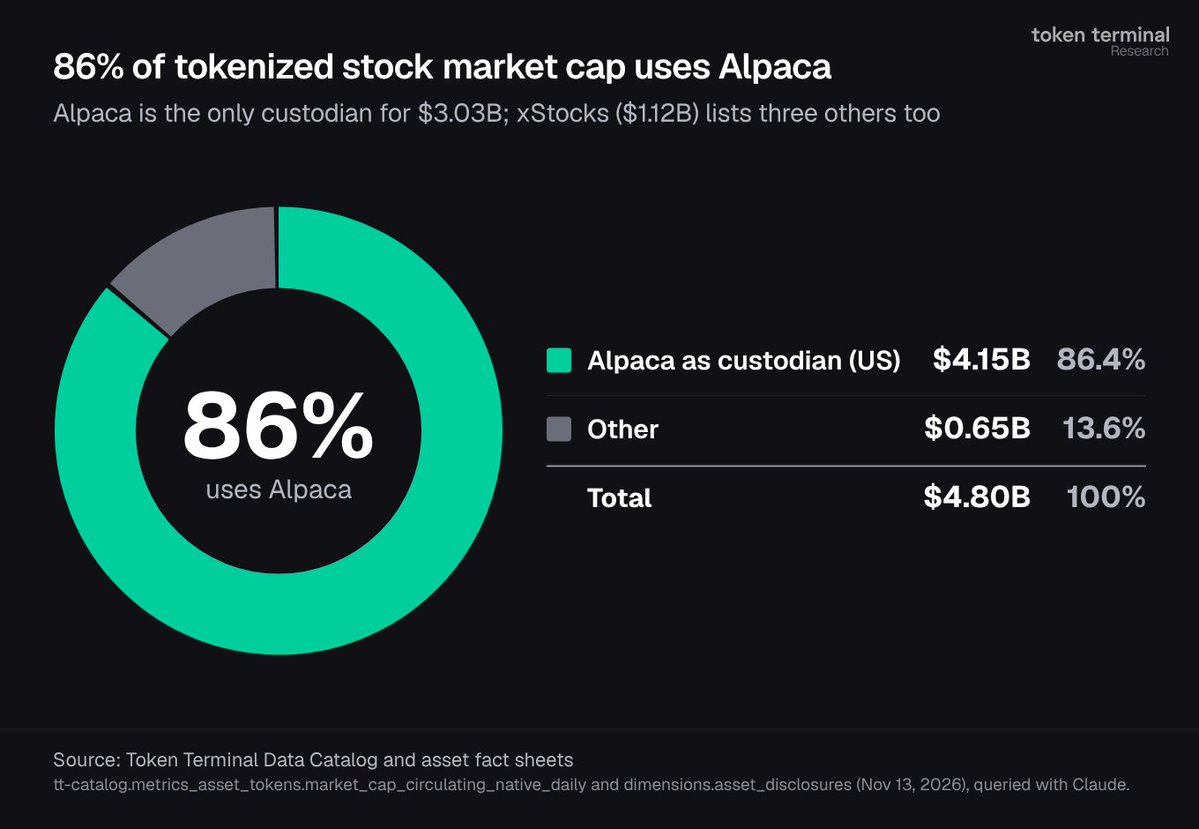
86% of tokenized stocks use Alpaca as custodian
Demand for stock tokenization is already evident in specific US-listed companies. The tokenized stock of Circle, the issuer behind USDC, has reached a market cap of $343 million, equivalent to 2.1% of Circle's $16 billion total market cap.
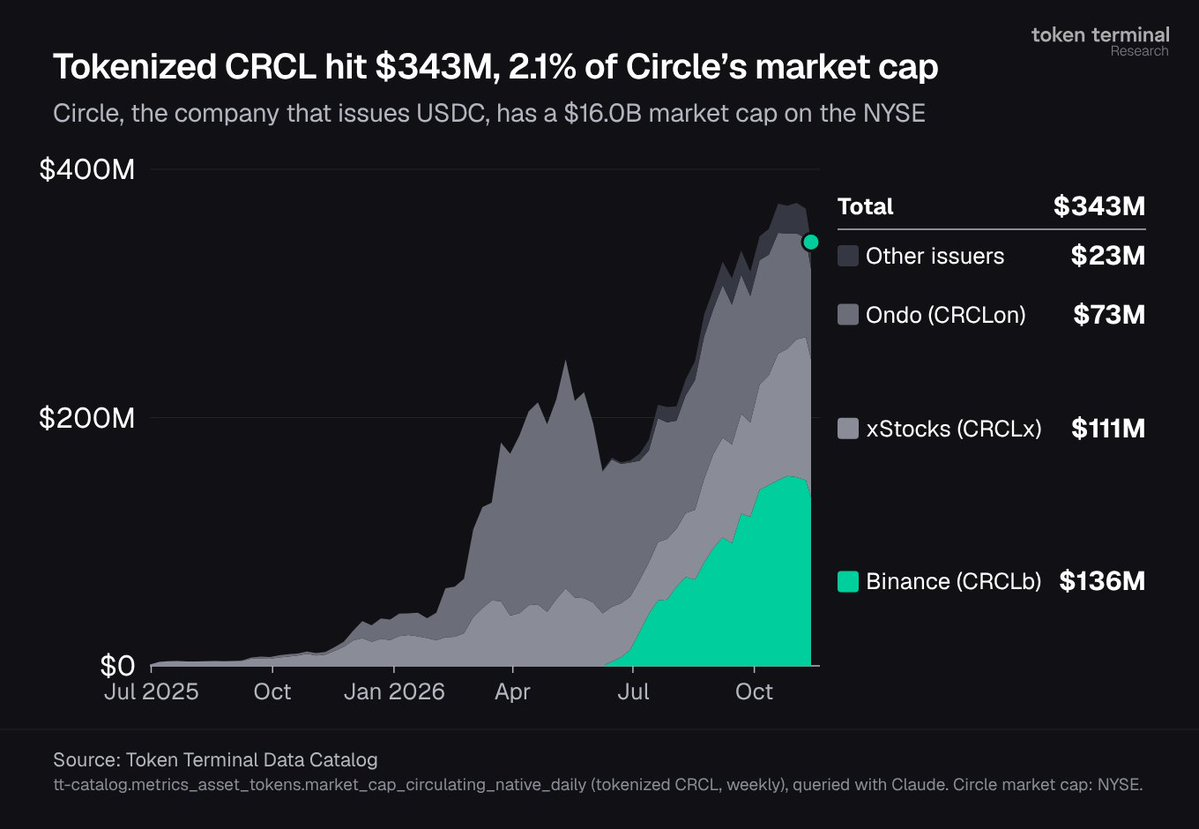
Tokenized CRCL reaches $343 million, 2.1% of Circle's market cap
For companies raising capital through stock issuance, the token market is also a significant source of demand. Strategy raises funds for its BTC purchases by issuing common stock (MSTR) and preferred stock (STRC), and the combined market cap of tokenized MSTR and STRC has now reached $413 million, bringing more buyers to the same securities Strategy uses for fundraising.
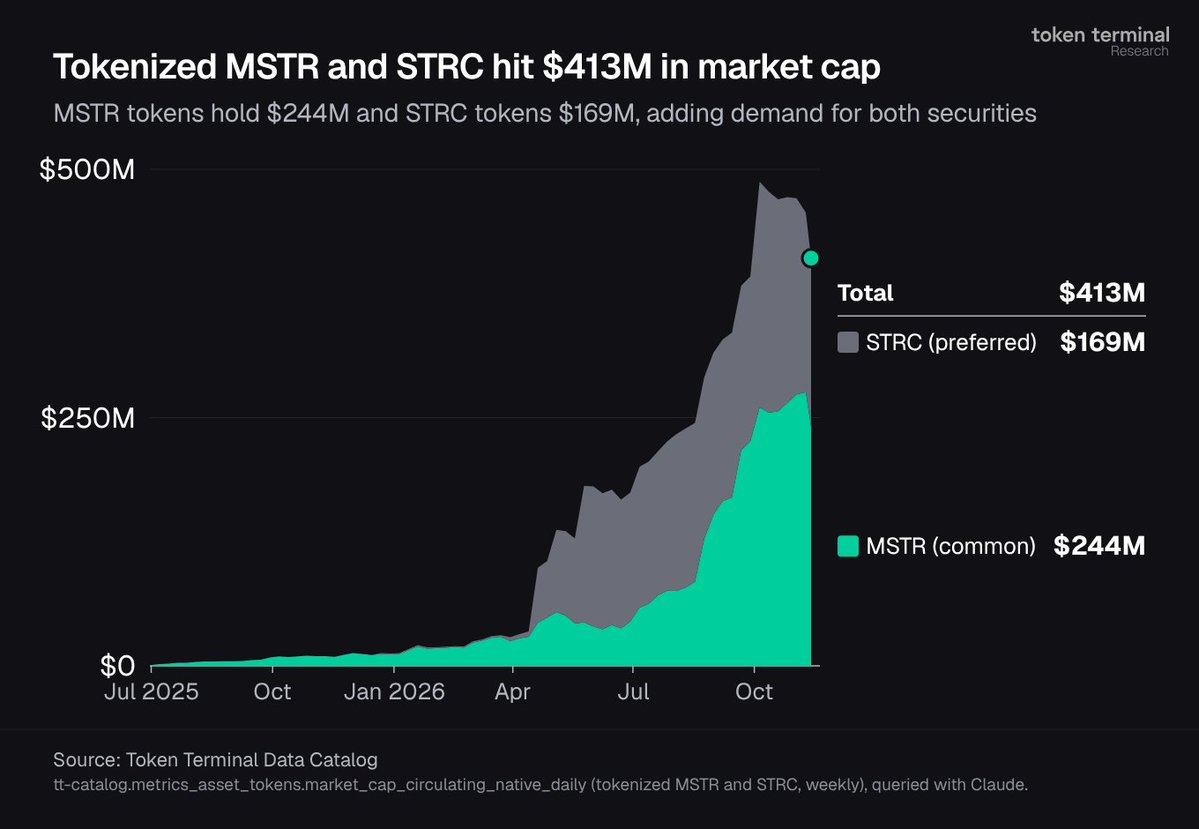
Combined market cap of tokenized MSTR and STRC stocks reaches $413 million
Crypto Infrastructure: On-chain Applications Make Tokenized Stocks Harder to Replace
Every new application of stablecoins in exchanges, lending markets, and payment scenarios makes them more useful to other participants and harder to replace; tokenized stocks are now following the same path of usage diffusion.
DeFi total value locked (TVL), i.e., the value of tokenized stocks deposited into on-chain applications such as lending markets and trading pools, has grown 24x over the past year to $300 million. These deposits currently account for 6.3% of the total tokenized stock market cap, up from 2.4% a year ago; each deposited asset provides liquidity for the next trader and earns yield for the holder.

Tokenized stock DeFi TVL grows 24x in one year to $300 million
Because US stock exchanges are closed on Saturdays and Sundays, weekend trading provides another reason for stock token holders to trade. In October 2026, weekend trading accounted for 18% of tokenized stock volume on DEXs, or $2.4 billion, an 83x increase from a year ago. Holders can take corresponding buy or sell actions based on news developments before the market opens on Monday.
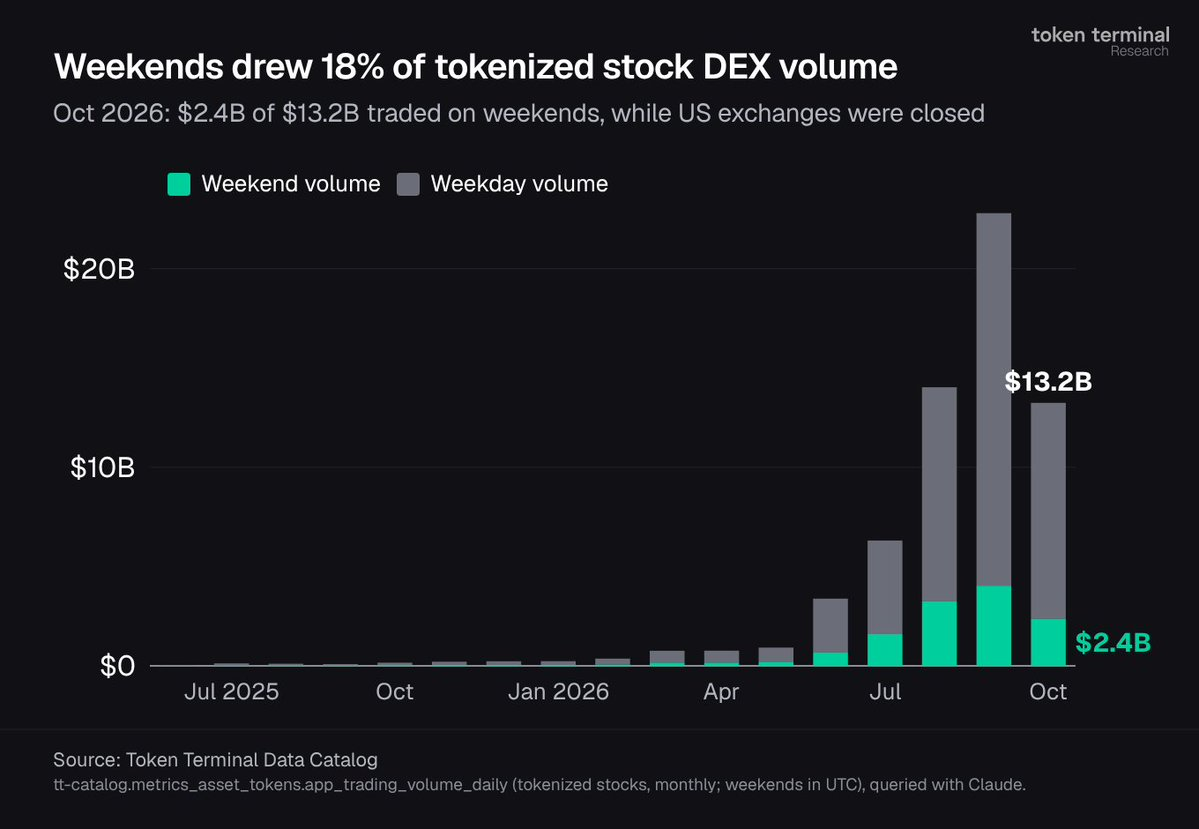
Weekend trading contributes 18% of tokenized stock DEX volume
Regulatory Boundaries: The More Trading Is Restricted, the More Regulatory Initiative Is Lost
A key risk facing tokenized stocks is regulation.
If US regulators restrict trading of tokenized stocks backed 1:1 by stocks, demand from non-US investors for US stocks is likely to shift quickly to perpetual contracts (Odaily News note: i.e., on-chain derivatives, contracts that track prices, have no expiration date, and are not backed by real stocks).
Currently, the stock perpetual contract market is growing rapidly. Trade.xyz, a perpetual contract exchange built on Hyperliquid, has listed a large number of US stock and index contracts, and its open interest has grown 55x over the past year to approximately $1.54 billion. Perpetual contracts do not require real stocks behind each position, so less of the demand flowing into perpetual contracts is actually transmitted to US stocks and US custodians. Moreover, perpetual contracts do not pay dividends, and the US cannot tax them. Supporting stock tokens backed by real stocks is the way to keep more overseas trading demand within US stocks.
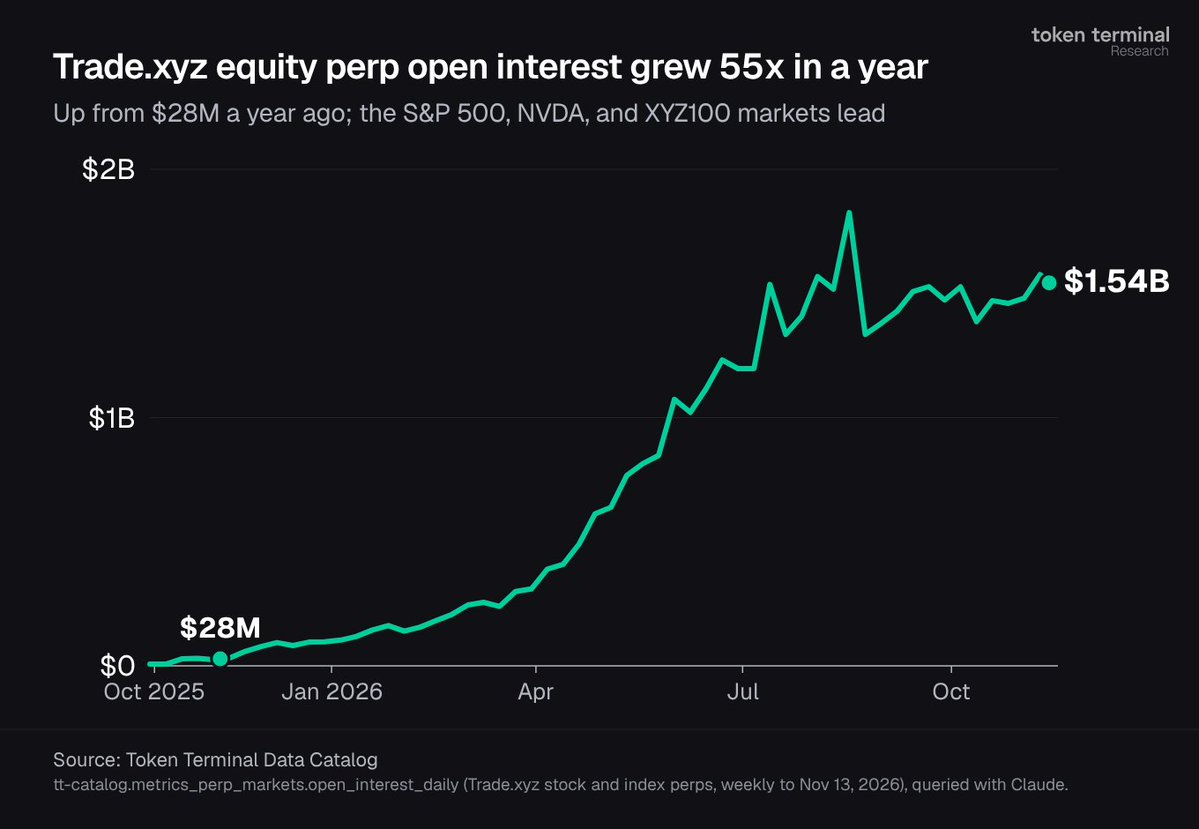
Trade.xyz stock perpetual open interest grows 55x in one year to $1.54 billion
Conclusion: Stock Tokens in 2026 Are Stablecoins in 2020
Today's tokenized stocks are like stablecoins in 2020, before their explosive growth.
In terms of asset structure, tokenized stocks use a reserve asset design similar to stablecoins, and their market cap grew from $1 billion to $4.8 billion faster. They also have a market space of $25.2 trillion in foreign investors' US stock holdings.
Supporting tokenized stocks, like supporting stablecoins, is what will truly bring more capital into the US stock market, rather than pushing trading toward perpetual contracts of stock tokens due to regulatory restrictions.
Whether from the perspective of practical interests or market development, tokenized stocks remain a strategic battleground for US regulators and trading platforms.
This content is for informational and educational purposes only and does not constitute investment advice related to BTCC. BTCC makes every effort but cannot guarantee the truthfulness, accuracy, or originality of the content above.