Legendary Investor Druckenmiller Makes Rare Exit: Nearly Liquidates Stocks, Shorts Copper, Now Solely Focused on Capital Preservation
 Odaily
Original author: Long Yue
Original source: Wall Street CN
Legendary investor Stan Druckenmiller publicly stated that he has almost completely liquidated his equity positions and entered "capital preservation mode"—a rare proactive exit in his 50-year investment career.
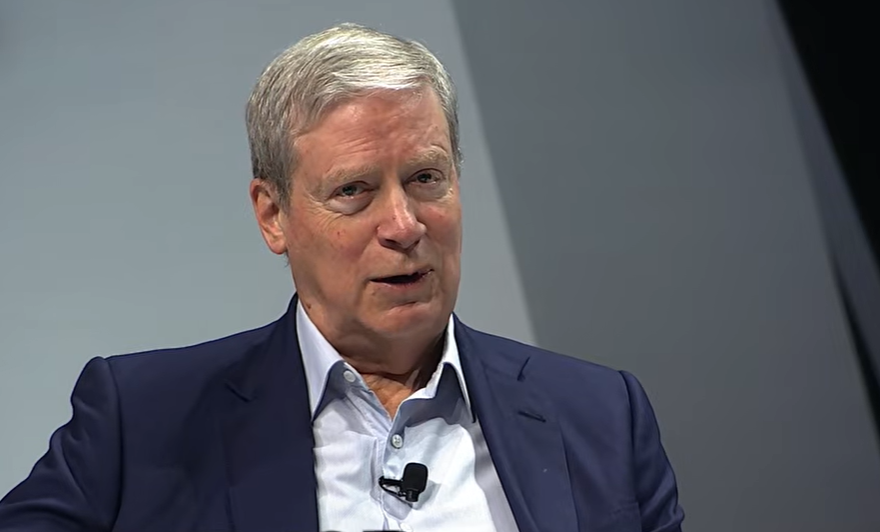
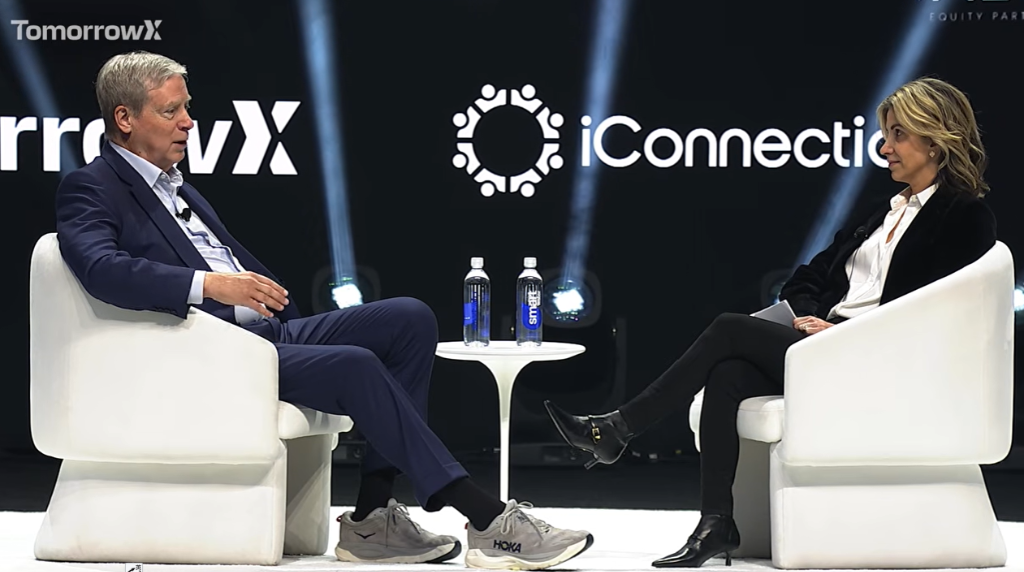
On November 18, 2026, Druckenmiller spoke with Iliana Bouzali, Morgan Stanley's global head of derivatives, at the TomorrowX Summit in Austin, Texas. He said bluntly that today's macro environment is a "complete reversal" from January of this year: the Federal Reserve has shifted from cutting rates to hiking, commodities have turned from rising to falling, credit spreads continue to widen, and market visibility is at an unprecedented low in his career. "I can't think of a period where I've had less conviction about the next 12 months," he said.
Just nine months ago, in the same conversation framework, Druckenmiller was aggressively bullish—long stocks, long copper, shorting Treasuries, and betting on a healthcare breakout. Now, that portfolio has been almost entirely unwound. Describing his current positioning, he said: equity longs and shorts are essentially flat, he holds a small dollar position, and he is short copper. Overall, he has entered "capital preservation mode" (we're in capital preservation).
His phone's auto-reply reportedly says just a few words: "Don't talk to me. I'm not playing."
He also revealed that he believes the next big opportunity in AI lies in "selling tasks" rather than "selling compute"—once leading labs possess the world's top intelligence, they can move beyond token pricing models and directly enter verticals like cybersecurity and healthcare, building their own business empires.
The bullish logic from January has completely unraveled
Druckenmiller's January judgment was built on a complete macro framework: federal funds rate at 3.5%, nominal growth at 6%, monetary policy effectively extremely loose; the Fed's dot plot showed more cuts expected within the year; commodities like copper breaking to new highs; the advance-decline line continuing to hit new highs; and credit spreads extremely tight.
"With monetary policy excessively loose, a recession within 6 to 12 months seemed almost impossible to me," he said. At that time, he was also bullish on accelerating AI capex, long stocks, long copper, shorting Treasuries as a hedge, and bullish on the healthcare sector.
However, about a month later, the "US tariff" event disrupted the rhythm. He admitted there was panic selling at the time, but he quickly bought back, and in the process completed a natural purification of the portfolio—positions without significant upside potential were cleared, and the logic of AI infrastructure positions became even clearer.
By November today, he listed each condition that originally supported his bullish judgment and pointed out that they have all reversed: the Fed is no longer cutting rates but hiking; he mentioned someone who worked alongside him for 15 years, who is deeply dissatisfied with the past 15 years of zero interest rate policy and even more dissatisfied with inflation exceeding target for five consecutive years, implying a fundamental shift in the Fed's internal policy orientation. Commodities have turned from breaking new highs to peaking and falling, and he is now short copper; the advance-decline line peaked as early as August 14, even though the index high came in October; credit spreads continue to widen.
"You should understand what I mean. Everything is completely opposite to back then," he said.
"I'm not playing!" A proactive exit in a moment of confusion
Facing this situation, Druckenmiller's choice is to exit. His equity positions are essentially flat after offsetting longs and shorts, he holds a small dollar position, and he is overall in a wait-and-see mode. Bouzali joked that he set up an "auto-reply" button on Zoom calls with just one line: "Don't talk to me. I'm not playing." He did not deny it.
He explained that this proactive exit is not a concession, but a reflection of his consistent risk management logic. His investment framework spans four major asset classes—commodities, bonds, stocks, and rates—which means he never needs to maintain continuous exposure in any single class. "Bonds and currencies often make their biggest moves during stock bear markets," he said, which makes him more willing to stay on the sidelines in stocks and instead look for opportunities in other macro instruments.
He also admitted that he does not use VaR, does not do stress tests, and the core signal for risk management is whether the P&L itself is performing as expected. "When the market falls into chaos and enters a bear phase, all correlations break down," he said. "Some very talented people verified this in a painful way this year when shorting software and going long AI infrastructure."
He also talked about his belief in "winning and losing streaks"—he believes that state cycles in investing far exceed random distribution, and recognizing whether you are currently in a "hot hand" or "cold hand" state is one of the most important parts of the job.
"When I'm in good form, I bet big; when I'm in bad form, I only make small bets, wait for average cost to recover, and then decide whether to add again." He characterized the current period as a "rest" that could last two days or six months.
From selling shovels to selling services: the second half of AI?
Despite the overall reduction in positions, Druckenmiller's long-term judgment on AI has not wavered. He made it clear that he will not short innovation in this field, partly because related assets are already oversold and positions have been cleared.
His judgment on the next phase of AI lies in "use cases" rather than "infrastructure." He believes the AI infrastructure sector may offer tactical trading opportunities, but it will no longer be the main engine it was over the past four years. The real opportunity, he believes, lies in the leading labs themselves.
His logic: labs that possess the world's top intelligence have no reason to remain in a token-based pricing business model. "If you own the world's strongest intelligence, you can start selling tasks instead of tokens, and you can create your own businesses," he said.
He named cybersecurity as the most intuitive example: "Who can compete with these people in cybersecurity? They created these problems, so now they can use swarms of AI agents to protect us." Healthcare is also within his sights.
He summarized this judgment in one sentence: "Sell tasks, not tokens."
Fiscal risks and education concerns: slow variables quietly unfolding
When asked which important trends are currently "quietly happening," Druckenmiller raised two structural issues he has long focused on.
The first is the continued deterioration of K-12 basic education in the US. He pointed out that the US has long compensated for this shortcoming by attracting top overseas talent. "I bet that eight of the top ten tech companies are founded or led by immigrants." But he worries that tightening immigration policies are threatening this compensatory mechanism, and the combination of the two problems has not yet attracted enough policy attention.
The second is fiscal issues. As early as 2011-2012, he traveled to major universities trying to persuade young people to pay attention to intergenerational fiscal unfairness, but almost no one listened. He quoted the old saying: "How does bankruptcy happen? First slowly, then suddenly." He believes the US will most likely experience a fiscal reform forced by a financial market crisis within the next 10 years, "and it will be a crisis very different from the current one." He also expressed cautious optimism that reform will eventually happen.
10-year predictions: nuclear fusion, space data centers, curing cancer
Druckenmiller also gave three 10-year predictions, each with what he considers a reasonable probability:
- Nuclear fusion: 20% chance of achieving it within 10 years, or at least clearly seeing that "we are about to achieve it."
- Space data centers: Saying this in Austin, he gave a probability of "at least 70%."
- Curing cancer: He has been on the board of Memorial Sloan Kettering Cancer Center for 30 years and has witnessed the iteration from gene sequencing to immunotherapy to AI. "I think we will cure cancer. I think it will become a manageable disease. I'm talking about within 10 years, not 20."
What makes a top investor
At the end of the conversation, Druckenmiller shared his judgment on investor qualities. He believes the gap between top investors and good investors lies in four things: an almost pathological passion for the business, extreme intellectual curiosity, a "pathological degree" of competitiveness, and strict self-discipline. "Every time you buy, there is a seller on the other side. If you don't have incredible work commitment, you will lose in this industry," he said.
He also talked about a common trap for highly intelligent people: loving their own thesis so much that they forget the second half of the saying "put all your eggs in one basket and watch that basket closely." "They can have a great thesis, it can be a great bet, but things change, and they just can't adjust as quickly as others."
He also mentioned his most painful lesson: in January 2000, he sold the Nasdaq but bought it back on the day of the peak. "I think I missed the top by no more than an hour." Asked what he learned from it, his answer was: "Nothing. I knew I shouldn't do it at the time, but I just couldn't control myself."
The full interview is as follows:
Stan Druckenmiller: Why he is now "sitting on his hands" | TomorrowX Summit
November 18, 2026
Legendary investor and CEO of Duquesne Family Office, Stan Druckenmiller, spoke with Morgan Stanley's Iliana Bouzali on the main stage of the TomorrowX Summit in Austin.
Stan shared why, after 50 years of investing, he has never had so little certainty; and his current focus: AI applications rather than infrastructure, why leading labs can sell "tasks" rather than "tokens," and how swarms of AI agents can aid cybersecurity defense. He also talked about the moment he realized AI was the most significant event in American business history, bold predictions for the next decade—from nuclear fusion and space data centers to curing cancer within ten years—and what separates top investors from good ones.
Chapter 1: How Gavin Baker predicted the AI boom
Iliana: Hi, Stan.
Stan: Hi, Iliana. Gavin, thank you for giving us a reason to get together again. Our last conversation was about nine months ago.
Before we start, I know time is tight, but I want to tell a little story about Iliana and Gavin. Iliana runs global derivatives at Morgan Stanley. She organizes Zoom calls, and at the time our group was called the "macro legends"—in my view, a more accurate name would be "macro has-beens."
About a month after ChatGPT launched, we had a Zoom meeting. The so-called "macro legends" were all pontificating about interest rates and other topics. Then someone I had never met—Gavin—joined the meeting and said, "You are all deluding yourselves. The most significant event in American business history is happening, and you are here quibbling over trivialities."
Chapter 2: Reviewing the January portfolio
Stan (continued): Gavin, I want to thank you, because that was the starting point of everything. You predicted the whole thing, its depth and breadth. And I also want to thank Iliana, because without you, I would not have met Gavin. Thank you both.
Iliana: You're welcome. I looked back at our similar conversation in January, when the audience was smaller. At that time, you were bullish on the economy, long stocks, shorting Treasuries as a hedge, long copper, and firmly believed the healthcare sector would stand out. How much of those positions do you still hold today?
Stan: Basically almost all flat.
Looking back at that January interview, it was a special period. In my career, sometimes I see things very clearly, and sometimes I have no sense of direction at all. When I see clearly, I like to bet big; when I don't, I sometimes almost completely sit on my hands.
At that time, the economy was very strong. More importantly, from a forward-looking perspective, the federal funds rate was at 3.5%, nominal growth was 6%, and monetary policy was extremely loose. According to the Fed's dot plot, more rate cuts were expected within the year. Commodities—including copper—were breaking to new highs. The advance-decline line and other technical indicators I use when observing the market were also at new highs. Credit spreads were very, very tight.
Therefore, with monetary policy excessively loose, a recession in the next 6 to 12 months was almost impossible. In addition, the previous autumn, Claude Code had just excited insiders about AI acceleration. We were quite optimistic about AI capex, and all of this made us very bullish on stocks and the economy.
Unfortunately, about a month later, a so-called "trade war" broke out. I panicked, and we sold a batch of positions. But it turned out to be a blessing in disguise—because when we bought back (very quickly), the trend of AI infrastructure taking off across the board was clearer than ever. This operation also incidentally cleaned out the positions in the portfolio that would not rise significantly.
Chapter 3: Why everything has reversed
Stan (continued): Now let's look at today's situation.
The economy is still strong, but all the other aspects I just mentioned have completely reversed. The Fed is not cutting rates; it is hiking—there has been a policy shift at the Fed. There is someone I know who sat next to me for 15 years, who is dissatisfied with the past 15 years of monetary easing, deficits, and everything that followed, and is even more indignant about inflation exceeding target for five consecutive years.
Therefore, we are currently in a monetary tightening cycle. Commodities that were breaking new highs in January now appear to have peaked and are moving lower—in fact, we are already short copper. The advance-decline line was at new highs when we did the interview, but its high actually appeared as early as August 14, even though the index high came in October. Credit spreads are widening.
I think you get the picture—everything now is completely opposite to back then. So, we are neither long stocks nor short stocks.
Chapter 4: I'm sitting on my hands
Stan (continued): I admit I like shorting. But for the reasons most people come to this conference, I would never dare to short the technological innovation and all the progress being discussed here. Moreover, many related assets are already oversold, and positioning is tactically very low.
So, my choice is the same as always—when I have no certainty, I step aside and watch. I've been in this business, my God, for 50 years. I don't remember a period when I had so little conviction about the next 12 months, which is completely different from last January.
Just like you teased me on the Zoom call the other day—you said: "Stan now has an auto-reply button that shows when you call: 'I'm sitting on my hands.'"—Auto-reply: Don't talk to me, I'm not playing.
That's where we are now. We still hold some small dollar positions, equity positions are basically flat, but there are some long-short mismatches internally—there are several shorts and longs, but we are essentially avoiding the market.
Iliana: There were some flattering words about your track record in the introduction. Are you saying you have never lost money? Never had a losing year?
Stan: Indeed not. But that's just calendar luck—I've had big drawdowns, but never a full-year loss from December 31 to December 31.
My performance, fundamentally, comes from a few things: first, we trade four major asset classes—commodities, bonds, stocks, and rates—so we don't feel the need to be heavily positioned in any single asset class.
Iliana: And this style was pioneered by you; you are clearly not an investor constrained by an investment mandate.
Stan: This style may indeed have been pioneered by me, but I did it out of necessity—because at the time I didn't know what I was doing. Anyway, purely by coincidence, bonds and currencies tend to make their biggest moves when stocks are in a bear market. This makes me more willing to temporarily put stocks aside, without having to hold positions in that asset class—you have other alternatives, which naturally forms a discipline.
We have gone through periods of exiting the market and periods of actively operating in macro instruments other than stocks. Now, because I don't have much certainty about anything, we are largely in capital preservation mode—we are trying not to lose money, rather than make money.
Iliana: When we chatted backstage, you mentioned that someone analyzed your 50-year investment style, which made us all laugh. Can you share that with everyone?
Stan: You weren't listening carefully, because I think what I just said was the answer. Duquesne made money over the years through "bursts of growth": we would have flat years, up 5% to 8%, then suddenly a burst of three or four years of explosive gains, followed by a period of consolidation. But we avoided the downturns.
I think this is largely because I was lucky enough to have many young people on the team, and Gavin's phone call also played a big role. We just had a great three or four-year burst, and many of the factors I mentioned have great uncertainty, so I'm just taking a break—it could last two days or six months, I don't know.
Chapter 5: Hot hands and cold hands, and risk management
Iliana: So you are in a "cold hand" phase. How do you know when you can get back into form?
Stan: I'm not a "cold hand"; I'm in an "out period." You must be referring to my risk management approach—it is indeed somewhat unconventional. We don't use VaR, no stress tests, none of those tools. I remember when I was managing the Quantum Fund for Soros, banks were reluctant to lend to us because we didn't use VaR, so I gave them that useless VaR model.
What I have always done—because we are cross-asset investors—is look at my P&L. If performance doesn't meet expectations, if correlations are off, I start reducing positions. P&L is my real signal. Why do I think this is better than VaR? Because when the market is chaotic and enters a bear phase, those correlations all break down. I think earlier this year, some very talented people verified this at great cost when shorting software and going long AI infrastructure—all sorts of strange things started happening, and your P&L captures all of that.
You mentioned one of the most important parts of my job—I believe in the "winning streak effect." Friends in Texas understand sports, like hitting streaks and winning streaks in baseball, which far exceed random probability. My business is the same: sometimes I'm in good form, sometimes I'm not.
Chapter 6: What he is watching: AI applications
Stan (continued): A big part of my job is judging whether I am currently a "cold hand" or a "hot hand." When I'm in good form, I bet big; when I'm in bad form, I make small bets. If my "batting average" starts to recover, I feel I may be starting to see clearly, and then I increase my intensity.
Iliana: I originally prepared a multiple-choice question for you to pick a buy target from several themes or stocks, but you don't seem to want to buy anything, so we'll skip that. Here's a similar question: although you are not ready to buy on a large scale, is there anything in the stock market that you are watching, interested in, and might position in the future?
Stan: Considering the trend in commodities, and one point I haven't mentioned yet—a year ago, cyclical stocks outperformed defensive stocks, and now defensive stocks are leading across the board—I am highly vigilant that the economy may disappoint in the second half of 2027, and I have some considerations on interest rates.
In stocks, we are watching AI applications, not infrastructure. Infrastructure might be a good tactical trade—positions have been significantly oversold—but I don't think it will be the engine that drives our "burst of growth" like the past four years.
And applications may be the most interesting opportunity. Ironically, the most interesting application may be the AI labs themselves. I personally think they will not stay in the "token sales" business for long. My judgment is that they will not keep releasing models—if you own the world's top intelligence, you can start selling "tasks" instead of "tokens" and create your own businesses.
This doesn't require much imagination. For example, cybersecurity—who can compete with these AI labs in cybersecurity? They created these problems, so now they are also the most capable of sending swarms of AI agents to protect us. And healthcare, and all sorts of applications.
So, if there is a next big driver in the stock market, I think it's there. Sell tasks, not tokens—you heard it here first.
Chapter 7: Things happening quietly
Iliana: Okay, let's switch to a slightly different question and put AI aside for five minutes. Social media is very good at capturing hot topics happening right now, but many important things happen quietly, evolving slowly beneath the surface over longer time spans. What important things are quietly happening in the world that we should pay attention to?
Stan: One thing that is quietly happening, and I find heartbreaking, is the continued deterioration of K-12 basic education in this country. And closely connected to that—we used to compensate for this shortcoming by importing a large number of excellent overseas talents. At a tech conference, it's hard to imagine the top ten tech companies—I can't recall exactly which ones right now, but I bet at least eight of them are led by immigrant founders or managers.
What worries me now is that not only is K-12 continuing to decline, but no one is simultaneously examining the related issue—our immigration policies are threatening this influx of talent. I am also optimistic that policies will eventually adjust, but this is something I have been thinking deeply about, independent of our business.
Another thing that is slowly happening reminds me of the old saying: How does a person go bankrupt? Slowly, then suddenly.
For those who don't know the background, in 2011-2012, I traveled to major universities trying to persuade young people, telling them that my generation plundered their future with the welfare system, and we must address the deficit problem—because just looking at the demographic table, you know that between 2020 and 2030, this time bomb is bound to explode.
Of course, the United States, with reserve currency status, can continue to sustain itself even with what I said in 2011-2012—and I also did not anticipate that $5 trillion would be spent on the pandemic, followed by continued spending, and zero interest rates gave them the confidence to keep splurging.
But I worry that at some point, we will see the United States repeating France's mistakes. I am also optimistic that if that day comes, we will make the painful decision to reform. But as a macro investor, that will be a crisis very different from the current one. I do believe that at some point in the next decade, we will experience a fiscal reform forced by a financial market crisis.
Chapter 8: How smart people hinder themselves
Iliana: Last time, about nine months ago, you said something that impressed me—I like to quote that interview because the timing was quite good.
Stan: You must be deliberately picking the good parts.
Iliana: Indeed. You said: My edge is not IQ, but decisive action. You said contrarian thinking is overrated, and many people sacrifice a lot of profit to appear different. You also talked about how smart people hinder themselves by not knowing when to stop researching. Now, let's add one more to that list—how else do smart people hinder themselves?
Stan: I think this industry requires intellectual humility, and intellectual humility requires an open mind. I am a big advocate of strong conviction—I once quoted Mark Twain: "Put all your eggs in one basket, and watch that basket." I am in favor of concentrated bets, but the problem is that many highly intelligent people often forget the second half—"watch that basket." They love the investment logic they have built so much that they no longer keep an open mind.
Chapter 9: What separates top investors
Stan (continued): You can have a great thesis and make a great bet, but things change, and they just can't seem to adjust as quickly as others. I can't say why, but high IQ often leads to mental rigidity—not always, but often.
Iliana: This is closely related to another thing—you have worked with and mentored some outstanding investors. What separates good investors from top investors?
Stan: They must have an almost fanatical passion for this industry, and they must maintain a strong intellectual curiosity. They must have a competitiveness that is almost pathological—the desire to win and fear of losing that goes beyond normal, with no such thing as work-life balance. But every time you buy something, there is a seller on the other side. If you don't have extremely strong work commitment, you will lose in this industry.
The fourth point, perhaps equally important: they are all extremely disciplined. Everyone's discipline may be very different, possibly completely different from mine, but whatever the discipline, they stick to it. Put these four together, and I think that answers your question.
Chapter 10: How Stan makes decisions
Iliana: If our audience followed you around for a month—which would be strange—what would surprise them most about your decision-making process?
Stan: It's what our firm calls "invest first, research later." I hear an idea, or as a technical analyst, I see a chart I like, the story makes sense, or the person telling the story has been in the field for years and I can feel his genuine passion—then I build a position, not a huge one, but big enough that it would hurt if I'm wrong. At that point, I only have about 15% of the information that traditional investors require before acting.
Then, I hand the idea to the research team, spend two or three weeks on deep research, and then decide whether to add or clear the position. So, there is a lot of intuitive betting in my process, involving things I may not be qualified to buy—but over the long term, this method works for me.
Chapter 11: Predictions for the next decade
Iliana: We talked a lot backstage about history, psychology, markets, and various bold hypotheses. I want to bring the audience into this conversation: give me one or two predictions for the next decade that sound unlikely but you would quietly give a 20% probability.
Stan: First, I think there is a 20% chance we will achieve nuclear fusion, or at least clearly see that nuclear fusion is coming.
Second, I'm in Austin, so I'll say there is at least a 70% or higher chance we will build space data centers.
Third, I have been on the board of Memorial Sloan Kettering Cancer Center for 30 years. The first ten years were basically stagnant, but then we had gene sequencing, we recognized that cancer is an individualized disease, then mutation research, immunotherapy, and now AI.
I think we will cure cancer. I think it will become a manageable chronic disease—and I'm talking about within 10 years, not 20.
[Applause]
Chapter 12: Fill in the blanks
Iliana: That's great. We need to wrap up this segment before we get kicked off stage. Let's do a fill-in-the-blank. Those scary red indicator lights...
Stan: I know, I think someone will just escort us off stage, but I want to finish this question.
Iliana: Okay, let's start. Meet a person, in the first 15 minutes...
Stan: I can tell if he's a fraud.
Iliana: The personal trait that has made me the most money is...
Stan: An open mind.
Iliana: And work-life balance.
Stan: [Laughs] The personal trait that has lost me the most money is...
I have broken my discipline a few times. I lost emotional control and did things I knew I shouldn't do—that was about 26 years ago, but I remember it like yesterday. In January 2000, I shorted the Nasdaq, then bought it back on the day of the all-time high. I think I was about an hour late from the top. Because I had the worst FOMO. Someone asked me what I learned from it, and I said, "Nothing. I knew I shouldn't do it at the time, but I just couldn't control myself."
Iliana: You still have PTSD. The AI bear case I most agree with is...
Stan: Political factors, and financing concerns—both are worrying.
Iliana: It's an honor to share the stage with you. Gavin, thank you again for this opportunity. Stan, more importantly, thank you for your friendship.
Stan: Thank you, Iliana. Thank you to everyone here.
This content is for informational and educational purposes only and does not constitute investment advice related to BTCC. BTCC makes every effort but cannot guarantee the truthfulness, accuracy, or originality of the content above.