Zuckerberg's Brand Robot, Made in China
 chaincatcher
According to foreign media reports, Meta has partnered with Chinese robotics company Fourier Intelligence to complete a humanoid robot prototype named Max in just three months, and has now begun development of a second-generation product. This is the most concrete hardware progress since Meta established its robotics team.
From AI models to humanoid robots, Zuckerberg is extending Meta's technology footprint into the physical world. Notably, in this collaboration, Meta did not choose to build the hardware system from scratch, but instead leveraged the robotics R&D and manufacturing capabilities of a Chinese company to rapidly complete prototype development.
What tasks will this robot perform? Why did Meta choose Fourier? Why is the robotics strategy of a US tech giant inseparable from Chinese manufacturing?
01 Prototype Built in Three Months
According to foreign media reports, Max stands about 1.5 meters tall and weighs about 48 kilograms, powered by an NVIDIA Jetson Thor chip. The robot has two speakers built into its chest, a display on its face capable of simulating human expressions, and five-fingered hands designed to pick up small bottles and toys.
Meta's requirements for this robot go beyond basic mobility to include human-robot interaction. According to people familiar with the matter, Max must be able to recognize voices from five meters away, gestures and waving from three meters away, maintain eye contact, and express states such as listening, thinking, speaking, and uncertainty through different status signals.
The robot is customized based on Fourier's existing technology. Meta leveraged the hardware and research experience from Fourier's previous GR series robots, and the two sides subsequently adjusted the robot's height, body proportions, head structure, display, and cameras, and modified the hands and shoes.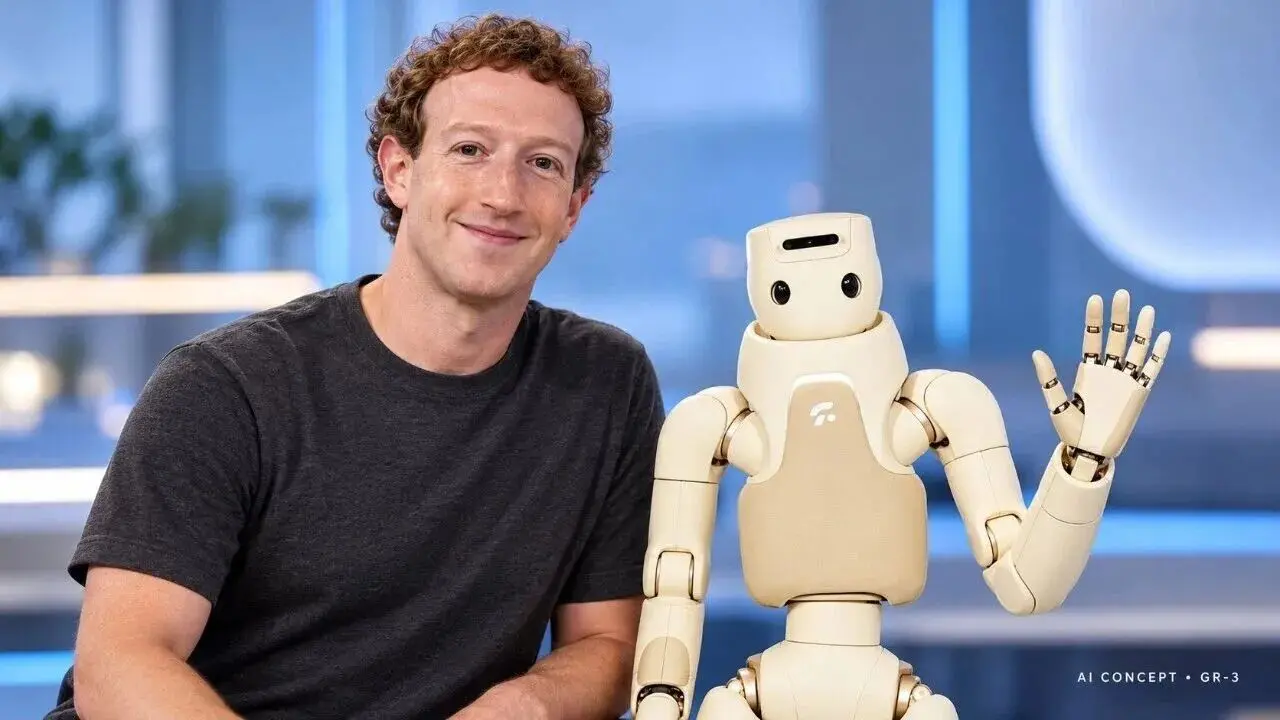
Zuckerberg with the Fourier GR-3 concept robot
Meta's Vice President of Robotics Product, Li Chen Miller, worked at Fourier's Shanghai factory for nearly two months, collaborating with the local team to advance R&D. At the end of August, Max was demonstrated to some employees at Meta's internal robotics summit.
In September, the two sides began development of Max 2. The new version plans to redesign the torso, improve hand manipulation capabilities, add a projector for displaying visual content, and equip additional sensors to help the robot navigate stairs.
A Meta spokesperson said the collaboration with Fourier is primarily for internal research and experimentation, and the company currently has no plans to sell these robots.
This does not mean Meta lacks broader product intentions. People familiar with the matter indicated that the company is hiring supplier development engineers in Shanghai, and product design engineers and technical program managers in Shenzhen, with responsibilities involving product design, manufacturing, prototype development, and mass production preparation.
From dispatching R&D personnel to China to recruiting supply chain positions, Meta is expanding its robotics project from a single prototype to a more complete R&D and manufacturing system. However, there is currently no evidence that Meta has finalized mass production plans or a product release timeline.
02 Giving Muse a "Body"
Meta's core goal in developing Max is related to its AI agent Muse.
Meta's Chief Technology Officer Andrew Bosworth internally refers to the humanoid robot as the physical embodiment of Muse. This means Meta hopes AI can not only answer questions through conversation but also use robots to perform tasks in real-world environments.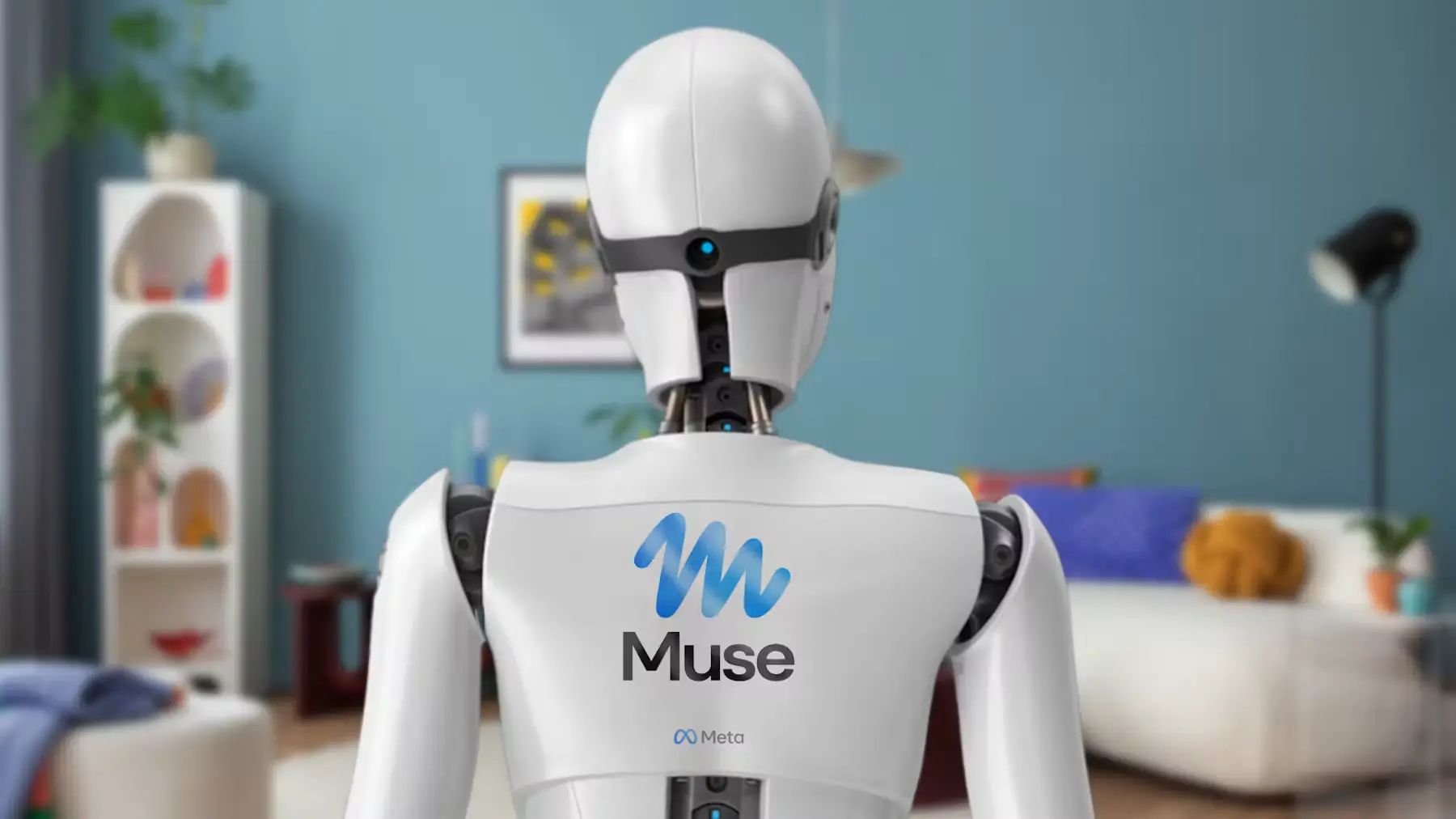
In May this year, Meta acquired robotics AI startup Assured Robot Intelligence. The company focuses on developing robot models that help machines understand human behavior and adapt to different environments. The related technology and team have also been integrated into Meta's robotics R&D.
From the current layout, Meta is filling in the software capabilities needed for robot AI, while using Max to test how these capabilities integrate with hardware.
For example, when a user asks the robot to clean a desk, the AI must first identify the items on the desk, determine which ones need to be moved, and then plan the grasping and placing actions. During execution, the robot must also adjust its grip based on the position, weight, and shape of the items. If an item slips or the planned path is blocked, it must reassess the next action.
Such tasks involve visual recognition, spatial understanding, motion planning, and motor control. AI understanding a command does not mean the robot has the ability to execute it.
Meta needs a physical platform like Max to test model performance in real-world environments. Perception errors, action failures, and environmental changes encountered by the robot during task execution can serve as the basis for subsequent model training and hardware improvements.
Meta's robotics business has also undergone management changes. Marc Whitten, former CEO of General Motors' autonomous driving unit Cruise, left at the end of August, about 18 months after joining Meta. Subsequently, Meta appointed Li Ning as interim head of Meta Robotics Studio.
Bosworth took over Whitten's previous responsibilities and continues to be involved in the division's technical and operational work.
For Meta, whether Muse can evolve from a software agent into a system capable of performing real-world tasks depends on whether the model and robot hardware can work together. Currently, Max is undertaking this R&D task.
03 US Does AI, China Does Hardware
Meta's choice of Fourier highlights the importance of Chinese robotics manufacturing capabilities in the global industrial chain.
Fourier initially focused on exoskeletons and rehabilitation robots before entering the humanoid robot field. Its GR series products have undergone multiple iterations, accumulating R&D experience in bipedal locomotion, dexterous hands, and tactile perception.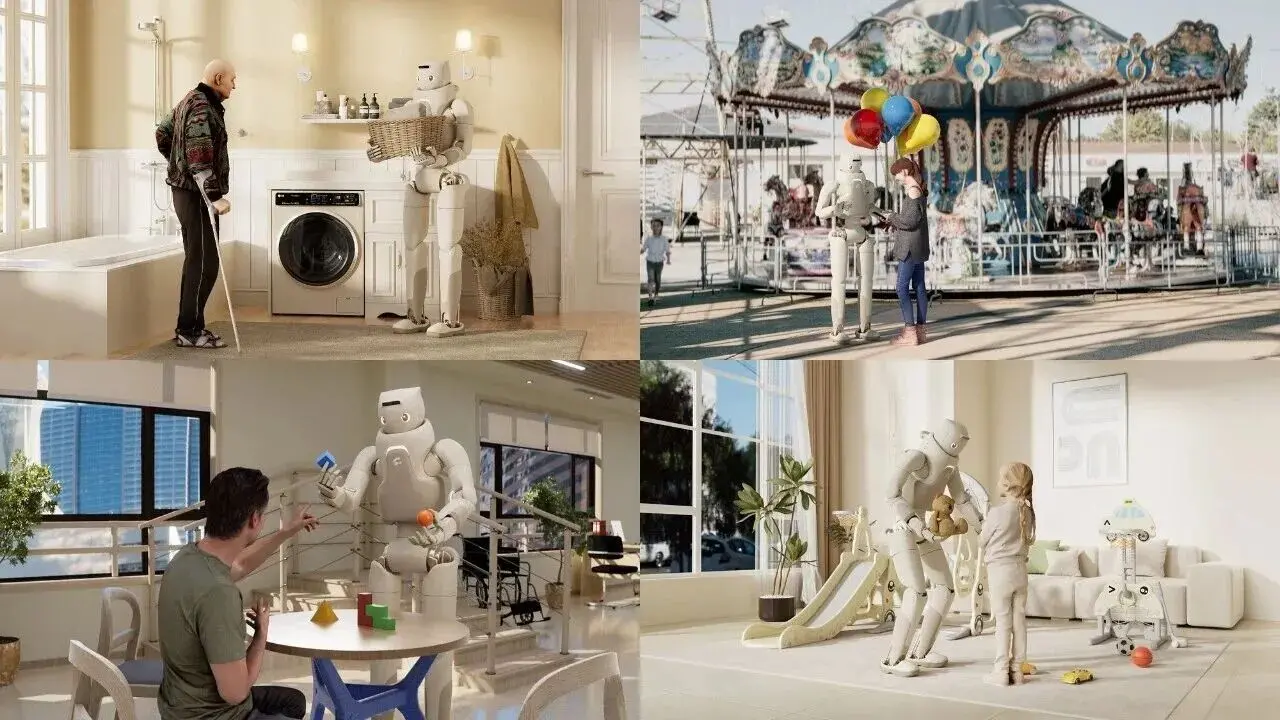
Promotional image of the Fourier GR-3 concept robot
For Meta, partnering with a company that has existing products and manufacturing experience can reduce the exploration time from mechanical structures and components to full machine assembly, allowing more resources to be invested in AI models and interaction systems.
Chinese companies also have advantages in industrial supporting facilities and practical application scenarios. Humanoid robots involve multiple components such as motors, reducers, sensors, structural parts, and control systems. China has a relatively complete manufacturing supply chain and numerous factories and industrial customers that can provide testing environments.
According to foreign media reports, in the first half of 2026, Chinese embodied intelligence companies completed 322 financing deals totaling 93.5 billion yuan, about $13 billion, five times the same period last year. Investment scope extended from complete machine manufacturing to robot AI models, training data, and software systems.
Chinese companies are trying to solve the problem of how robots learn unfamiliar tasks.
Spirit AI has hired about 1,000 people to record daily life and industrial activities to accumulate data for robot training. ACE Robotics collects motion and grasping information from store and hotel employees through wearable sensors.
Ant Group's robotics division Robbyant claims its model uses 160,000 hours of training material, including 50,000 hours of human-guided robot motion data, and has trained software on 20 robot configurations across 17 brands.
Another company, DexForce, uses computer-generated environments to train robots, reducing the cost of collecting real-world scenario data.
These companies take different technical approaches but share the same goal: to enable robots to adjust their behavior based on environmental and task changes, rather than relying entirely on pre-programmed motion scripts.
American companies are also heading in this direction. Startups such as Physical Intelligence, Skild AI, and Generalist are developing general-purpose robot models, hoping robots can learn multiple skills and reduce repetitive training for single tasks.
The US has advantages in certain areas of advanced AI research and computing resources, while Chinese companies are closer to manufacturing processes and industrial applications. Competition between companies from the two countries in the robotics field has extended from hardware manufacturing to models, data, and computing platforms.
However, Meta's collaboration with Fourier also faces policy restrictions.
In July, the US Federal Communications Commission (FCC) restricted imports of new humanoid robots from China, citing potential supply chain and cybersecurity risks. The rule at the time allowed companies to import up to 4,000 devices for testing and product development, but prohibited sales. In August, the FCC proposed reducing this exemption to 40 units unless companies obtain written approval.
If this proposal is implemented, the ability of US companies to import robot prototypes from China for testing and to continuously obtain related components may be affected.
This creates a dual reality for Meta's collaboration: on one hand, Chinese companies can provide mature hardware R&D and manufacturing capabilities; on the other hand, US restrictions on the Chinese robot supply chain may increase subsequent collaboration costs.
However, for Meta, Max has not yet provided enough public data to prove its actual capabilities. The robot's task completion rate, battery life, payload capacity, and the degree of human assistance required during execution have not been disclosed. Adding hand and stair sensors does not equate to solving complex object manipulation and stair navigation problems.
For home robots to truly enter the consumer market, reliability, safety, and cost issues must be addressed. Consumers need devices that can consistently perform specific household chores, adapt to different home environments, and stop immediately in emergencies—not just machines that can understand commands and execute actions.
As AI begins to enter the physical world, product competitiveness will depend not only on how smart the model is, but also on whether it can translate understanding into action through a reliable body. For the robotics industry, this is more challenging than simply manufacturing a humanoid robot that can walk.
This content is for informational and educational purposes only and does not constitute investment advice related to BTCC. BTCC makes every effort but cannot guarantee the truthfulness, accuracy, or originality of the content above.