Saudi Jizan Refinery Attacked, OPEC+ Weighs Quota Extension, Brent Back Above $96
 wallstreetcnAuthor: 鲍奕龙
Middle East tensions have escalated sharply. Israel has announced preparations for war with Iran, Kuwait has experienced an explosion, the Saudi Jizan refinery was attacked by Houthi forces resulting in one death, and threats to passage through the Strait of Hormuz have resurfaced, with multiple geopolitical risks combining to push oil prices higher.
According to Xinhua News Agency, the Saudi-led coalition confirmed on the 26th that the Jizan refinery in southwestern Saudi Arabia was attacked by Yemen's Houthi forces. The Saudi Ministry of Energy subsequently confirmed that the attack killed one worker, caused a fire at the refinery, which has been extinguished, and temporarily disrupted some production operations.
Coalition spokesman Turki al-Maliki warned in a statement that any attacks on civilians and civilian facilities will be met with a firm military response.
Meanwhile, OPEC+ is discussing extending current production quotas, and market attention on the supply side continues to rise.
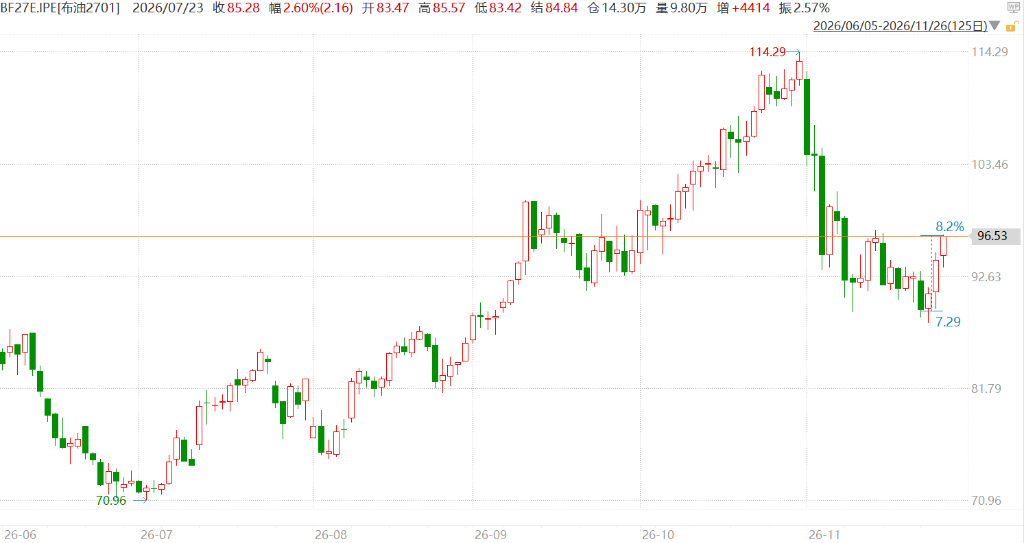
These events, combined with the Kuwait explosion, Israel's statement on war preparations, and tensions in the Strait of Hormuz, have jointly pushed oil prices higher. Brent crude rose 2% on Thursday to $96.18 per barrel, breaking above $96 for the first time in over a week, marking a third consecutive day of gains with a cumulative increase of about 8.2%.
Jizan Refinery Attack Renews Focus on Saudi Energy Infrastructure Security
The Saudi Ministry of Energy confirmed that the Jizan refinery caught fire during the attack, forcing a temporary halt to some refining operations. This is another strike by Houthi forces on Saudi energy infrastructure in recent times.
Meanwhile, according to Al Akhbar, after Omani mediation and Houthi threats to respond to any strike, Saudi Arabia has abandoned plans to attack the Yemeni port of Hodeidah.
According to Al Arabiya, an Israeli military spokesman said Israel is preparing for war against Iran and has made preparations to launch a powerful strike. This is one of the most direct public statements by Israel on actions against Iran to date.
Meanwhile, an explosion occurred in Kuwait, and the Kuwaiti military claimed it was attacked by an Iranian drone. Iranian Foreign Minister Araghchi immediately called the Kuwaiti Foreign Minister, denying any Iranian involvement in the attack and expressing willingness to participate in the investigation.
A spokesman for the Iranian armed forces also stated via Tasnim News Agency that Iran has not carried out any military or offensive operations in the region. Iran's Fars News Agency, citing sources, said the explosion may have involved a Ukrainian drone from the Kurdistan region of Iraq, and raised the possibility of a "false flag operation" by Israel and the United States.
Strait of Hormuz in Focus, Iran's Diplomatic Stance Ambiguous
The commander of the Islamic Revolutionary Guard Corps Navy said via the Islamic Republic of Iran Broadcasting that Iran has full control over both the east and west sides of the Strait of Hormuz, and safe passage must be premised on respect for Iranian sovereignty. This statement has further heightened market concerns about potential disruption to the world's most important oil transit route.
Meanwhile, the United Kingdom Maritime Trade Operations (UKMTO) received a report that an oil tanker departing port was hit by an unidentified flying object 18 nautical miles east of Khasab, Oman.
On the diplomatic front, Iranian Foreign Minister Araghchi said mediation efforts are ongoing and parties are exchanging proposals, but stressed that Iran maintains its position on the Strait of Hormuz and that preconditions must be met.
On the supply side, according to reports citing OPEC+ delegates, the group is considering extending the current quotas to January next year and may at this Sunday's meeting extend the production-cut targets to at least the first quarter of 2027.
Iraq's oil minister said Iraq's oil exports have risen to 3.6 million barrels per day, and authorities are negotiating to raise the production ceiling.
Turkish state-owned company Botas and the National Iranian Gas Company have reached an agreement to renew a five-year natural gas export contract, according to Iran International citing Turkish media reports, with the cooperation framework between the two sides extended.
Risk Warning and Disclaimer Markets carry risks, and investors should exercise caution. This article does not constitute personal investment advice and does not take into account individual users' specific investment objectives, financial situations, or needs. Users should consider whether any opinions, views, or conclusions in this article are suitable for their particular circumstances. Investing based on this article is at your own risk.
This content is for informational and educational purposes only and does not constitute investment advice related to BTCC. BTCC makes every effort but cannot guarantee the truthfulness, accuracy, or originality of the content above.