Is DeFi Insurance Beyond Saving?
 Panewslab

Written by: Sachin
Compiled by: Chopper, Foresight News
DeFi's total value locked (TVL) stands at $68 billion, with less than 2% covered by insurance.
Since 2021, DeFi has evolved from basic lending and liquidity markets to fixed-rate credit, yield tranching, and structured yield products; but insurance protocols have moved in the opposite direction, with combined TVL falling from $1.85 billion in 2021 to just $132 million today.
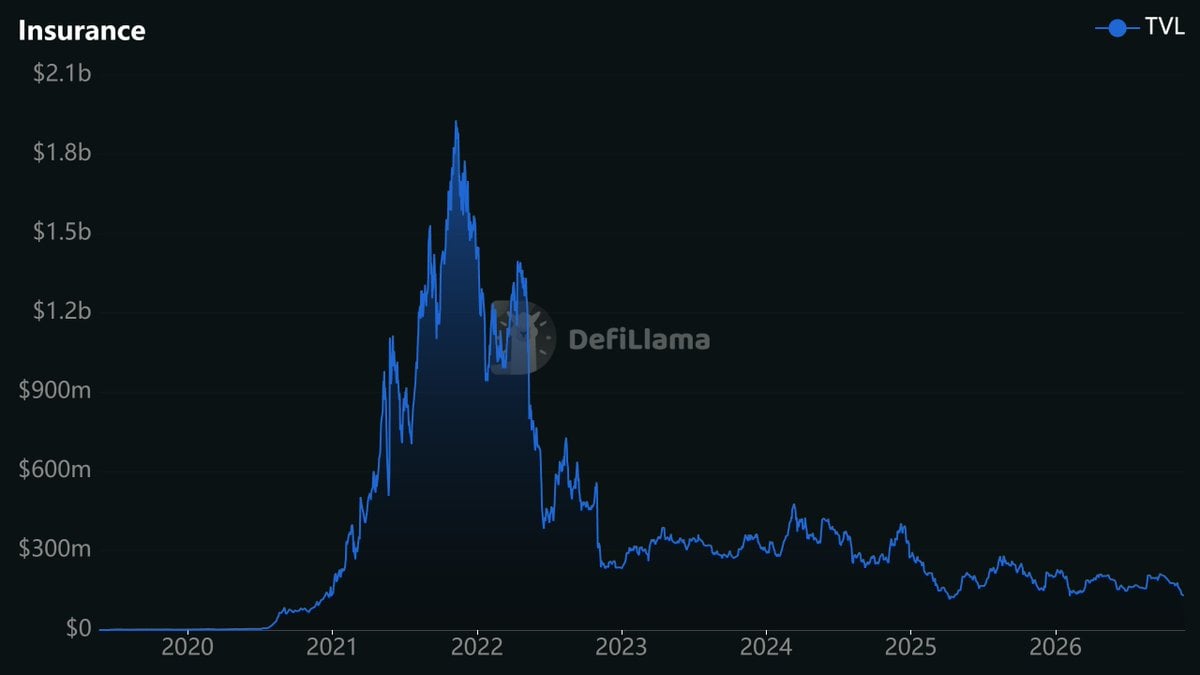
DeFi insurance TVL has dropped sharply from its 2021 peak
Insurance as DeFi's Fourth Primitive
DeFi has established three core financial building blocks:
- AMMs enable decentralized trading;
- Lending markets provide credit and yield;
- Cross-chain bridges enable cross-chain transfers.
Together, these create and distribute financial risk. But insurance has been absent—the ability to price downside risk and transfer it away. Audits and monitoring can identify failures, but they cannot absorb losses; insurance, through coverage limits and payout conditions, defines "financial protection."
At a time when AI is making vulnerability discovery and attacks faster and cutting costs 100-fold, why is DeFi insurance still lagging? Is the problem with the insurance protocols themselves, insufficient supporting infrastructure, or a lack of demand from users and institutions?
Before assessing why DeFi insurance struggles to scale, it's necessary to understand what risks existing products actually cover.
What Risks Does DeFi Insurance Cover?
Depositing assets into DeFi exposes you to more than just market risk. Smart contract vulnerabilities, oracle failures, governance attacks, liquidation failures, depegging, slashing, and custody failures can all cause losses.
For example, an exploit drains $10,000 that a user deposited into a lending protocol—even if they never made a bad trading decision, their position is wiped out.
DeFi insurance targets predefined loss events, not ordinary market fluctuations or trading losses.
Systemic risk is currently considered uninsurable.
How Existing DeFi Insurance Models Work: Nexus Mutual as an Example
Nexus Mutual is a good sample for understanding existing models. It runs on Ethereum and is a discretionary mutual, where members pool capital to underwrite specific risks.
Its operation flow is as follows:
- Capital providers: NXM holders stake or delegate tokens to underwriting pools.
- Risk selection: Pool managers decide which protocols and risks to cover, and set premiums.
- Policy purchase: Users pay premiums to obtain protection against defined loss events.
- Claims: Claims are assessed by a claims committee. Approved payouts are made from the mutual's capital, and a corresponding amount of staked NXM is burned to complete the payout.
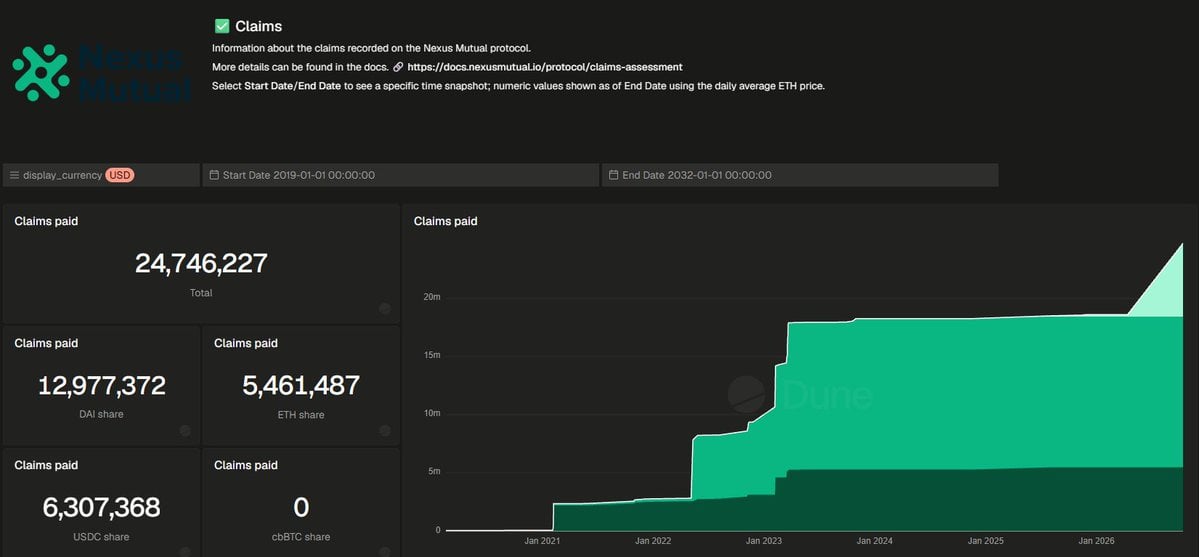
Nexus Mutual's cumulative claims payouts since 2019
Premiums are dynamically priced based on supply and demand, with policy terms typically ranging from 28 to 365 days. Based on recorded claims history, Nexus Mutual has paid out over $24.7 million cumulatively since 2019.
DeFi 保險生態
整個 DeFi 保險板塊的 TVL 約 1.32 億美元,其中 Nexus Mutual 與 Firelight 兩家即佔約 90%。其餘多數協議幾乎或完全沒有收入,說明該賽道高度集中,且仍處早期。
生態中的主要參與者:
- Nexus Mutual:成員共有的互助組織,彙集資本為 DeFi 風險承保並提供保障。
- Firelight:以質押的 FXRP 作為外部抵押,為 DeFi 金庫提供保障。
- EaseDeFi:DeFi 保障協議,透過「無保險(Uninsurance)」模式提供無需預付保費的保障。
- Ensuro:鏈上保險與再保險協議,連接資本方與承保方。
- Cozy Finance:為 DeFi 用戶與協議搭建自動化保障市場。
- Ante Finance:將質押的智能合約測試上鏈,使協議的承諾可被驗證。
- Sherlock:把智能合約安全審計與漏洞賠付相結合。
- USD8:以 USDC 為支撐的穩定幣,為指定 DeFi 代幣的損失提供保障。與保單式保障或 FXRP 抵押承保不同,它用共享保障池和保險評分來分配保障與賠款。
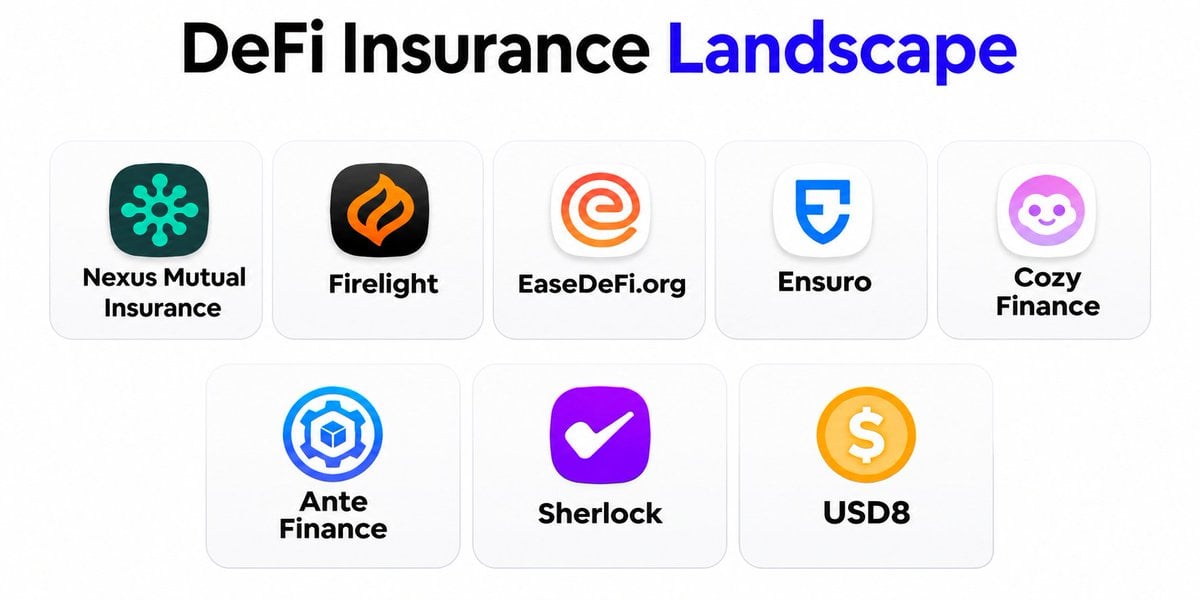
主要 DeFi 保險協議
僅看 TVL 並不能反映一個保險協議的賠付能力。有效保額、資本效率、最低資本要求與歷史賠付記錄,才能更清晰地說明其承保能力與財務健康度。
Why DeFi Insurance Struggles to Scale
Early DeFi insurance models often used capital from the same source as the insured risk as collateral.
When a market crisis hits, claims rise, while supporting assets like ETH simultaneously depreciate. As liabilities increase, the value of the collateral decreases.
Early capital pools also lacked the capacity to underwrite large protocols and institutional-grade positions.
Firelight has taken a different path: backing DeFi coverage with XRP-based capital. Users deposit FXRP into vaults on Flare and receive stXRP in return; the pooled capital provides coverage for integrated DeFi vaults.
Capital flow: XRP holders → FXRP → Firelight vaults → DeFi coverage.
This design aims to reduce reliance on "DeFi-correlated collateral," but market, liquidity, and correlation risks remain.
Firelight founder jrdothoughts, speaking about the problems with early insurance models, said, "One pain point of our predecessors was that they used ETH to insure ETH."
What Needs to Change for DeFi Insurance
DeFi suffered $138 million in losses from exploits in Q1 2026, but only about $9 million was recovered. This gap highlights the need for financial protection, but building a sustainable insurance market faces many challenges:
- Capital efficiency: Underwriters must hold enough capital to cover potential claims while keeping that capital productive.
- Risk pricing: Historical loss data is limited, making smart contract and protocol risks difficult to price accurately.
- Correlation risk: Market-wide shocks can trigger claims across multiple protocols simultaneously, while the crypto assets backing insurance pools depreciate at the same time.
- Claims assessment: Not every reported exploit qualifies for a payout. Payouts depend on policy terms, exclusions, and claim verification.
- Security of the insurance layer itself: Cozy Finance, which builds coverage markets, was itself attacked. The infrastructure used to provide protection is also at risk of being attacked.
These challenges create a difficult balance: insurance protocols need enough capital to absorb losses, accurate risk assessment to price coverage, and reliable infrastructure to actually pay out when users need it.
DeFi has built mature trading, lending, and yield markets, but the risk transfer component remains incomplete. To scale insurance, deeper capital pools, better risk pricing, and reliable claims infrastructure are needed. Firelight backs DeFi coverage with external FXRP collateral, while USD8 uses a shared coverage pool and insurance scores to allocate payouts.
Only then can DeFi insurance become a core financial building block; otherwise, it will remain a niche area for the long term.
This content is for informational and educational purposes only and does not constitute investment advice related to BTCC. BTCC makes every effort but cannot guarantee the truthfulness, accuracy, or originality of the content above.