S&P Breaks Key Level, VIX Soars, Treasuries Calm: What's the Market Afraid Of?
 Odaily
Original author: Capital Flows, macro hedge researcher
Original translation: TechFlow
Introduction: The highly anticipated AI unicorn Anthropic officially listed on the US stock market, but its first-day break below the issue price and further sharp decline in after-hours trading unexpectedly became the trigger for a global risk asset sell-off. The S&P 500 index fell below the key turning point of 7400 points, and AI-related stocks across the board faced institutional deleveraging stampede.
Well-known macro hedge research institution Capital Flows issued a warning, pointing out that the current sell-off is mainly dominated by pressure on technology stocks, and cross-asset risk aversion has not yet fully unfolded. If the long-end US Treasury yields spiral out of control and force the Federal Reserve to restart a rate hike cycle, the surge in bond volatility will push US stocks into a new round of deeper and more severe crash.

Anthropic's First-Day Break, S&P Breaks Through 7400 Key Turning Point
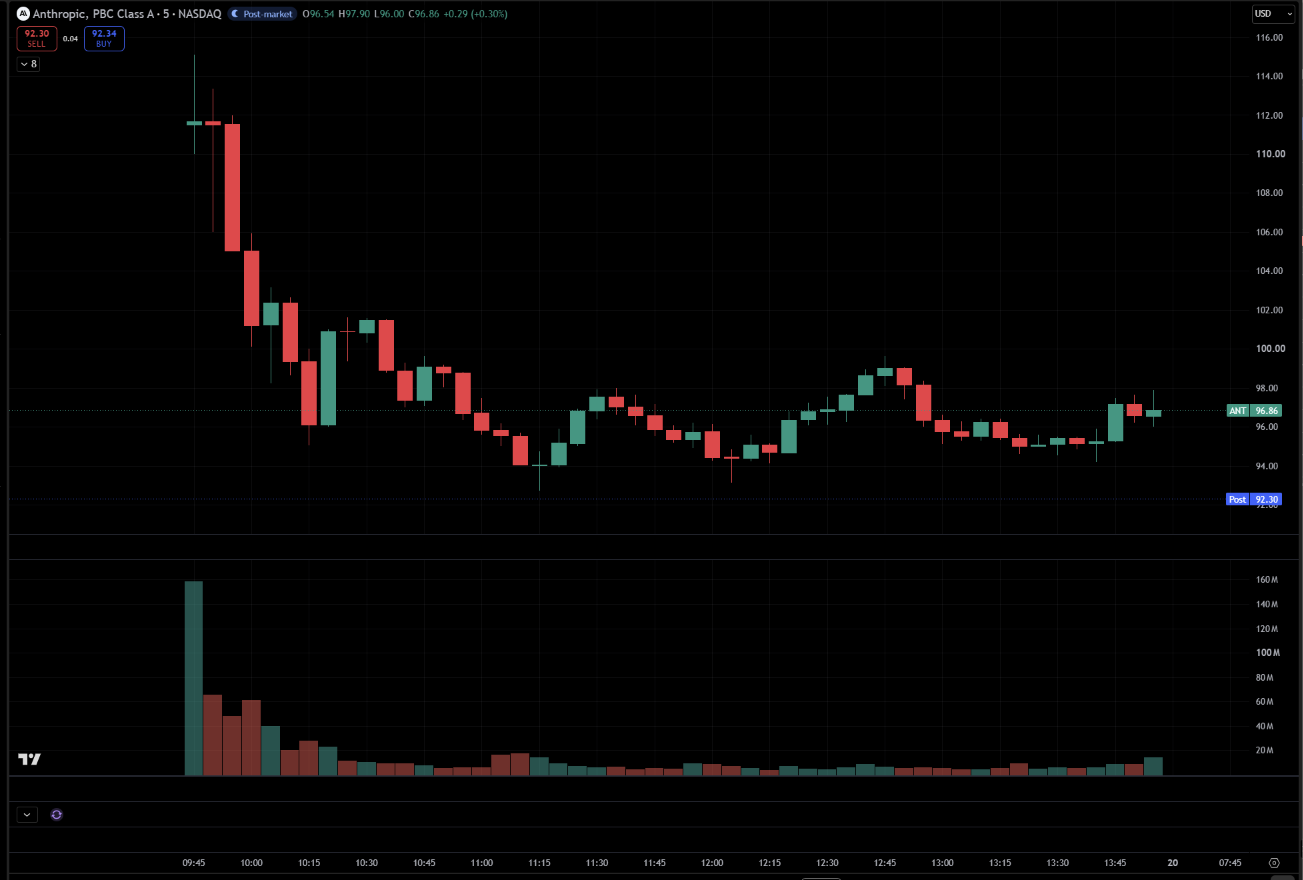
The much-anticipated IPO of Anthropic made its debut today, but instead of injecting a boost for the bulls, it added more intense uncertainty to the global financial markets against the backdrop of accumulating systemic deep risks. The stock with ticker ANT quickly encountered heavy selling after the opening and fell below its opening price, and further plunged in after-hours trading:
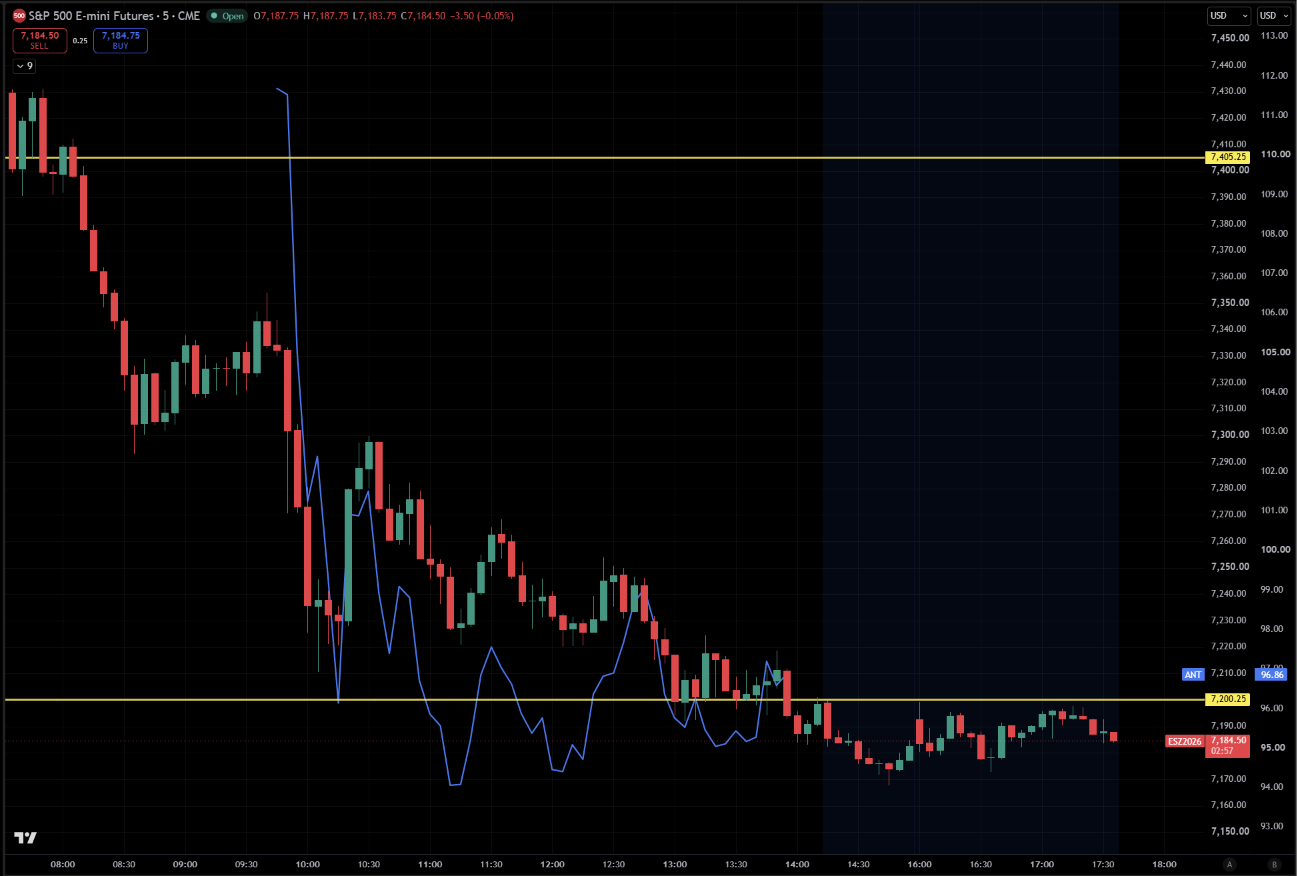
Dragged down by this, the S&P 500 index (ES) has now effectively broken below the 7400-point key level that I specifically highlighted earlier this week. This heavyweight IPO turned into a trigger for a chain-reaction stampede sell-off, directly breaking down global stock markets and beginning to shatter the deep key technical support levels of the overall equity asset market:
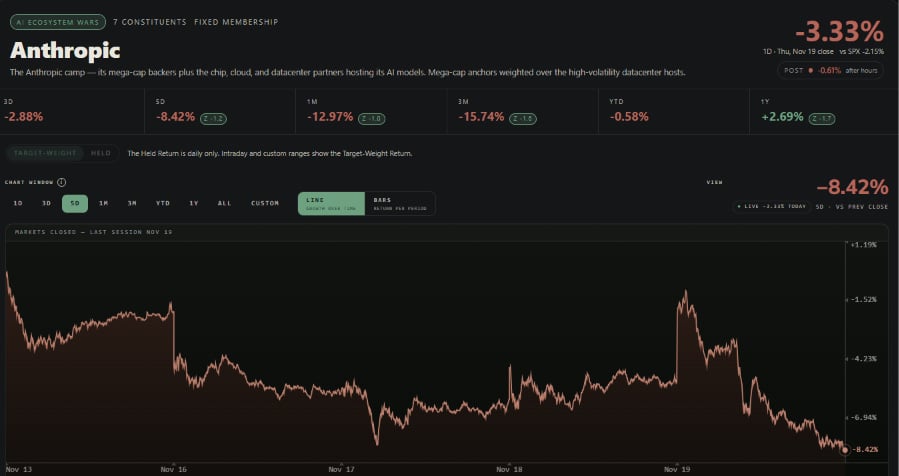
What is more alarming is that all Anthropic-related industry chain concept stocks (Anthropic Factors) also collapsed across the board during today's IPO process. This market action clearly confirms a systemic de-risking operation surrounding the fundamentals of the AI industry: this highly anticipated IPO has effectively served as a brutal liquidity clearing event, forcing many hedge fund managers to further unwind long positions.
Extremely Weak Safe-Haven Flows, Cross-Asset Contagion Storm Lurking
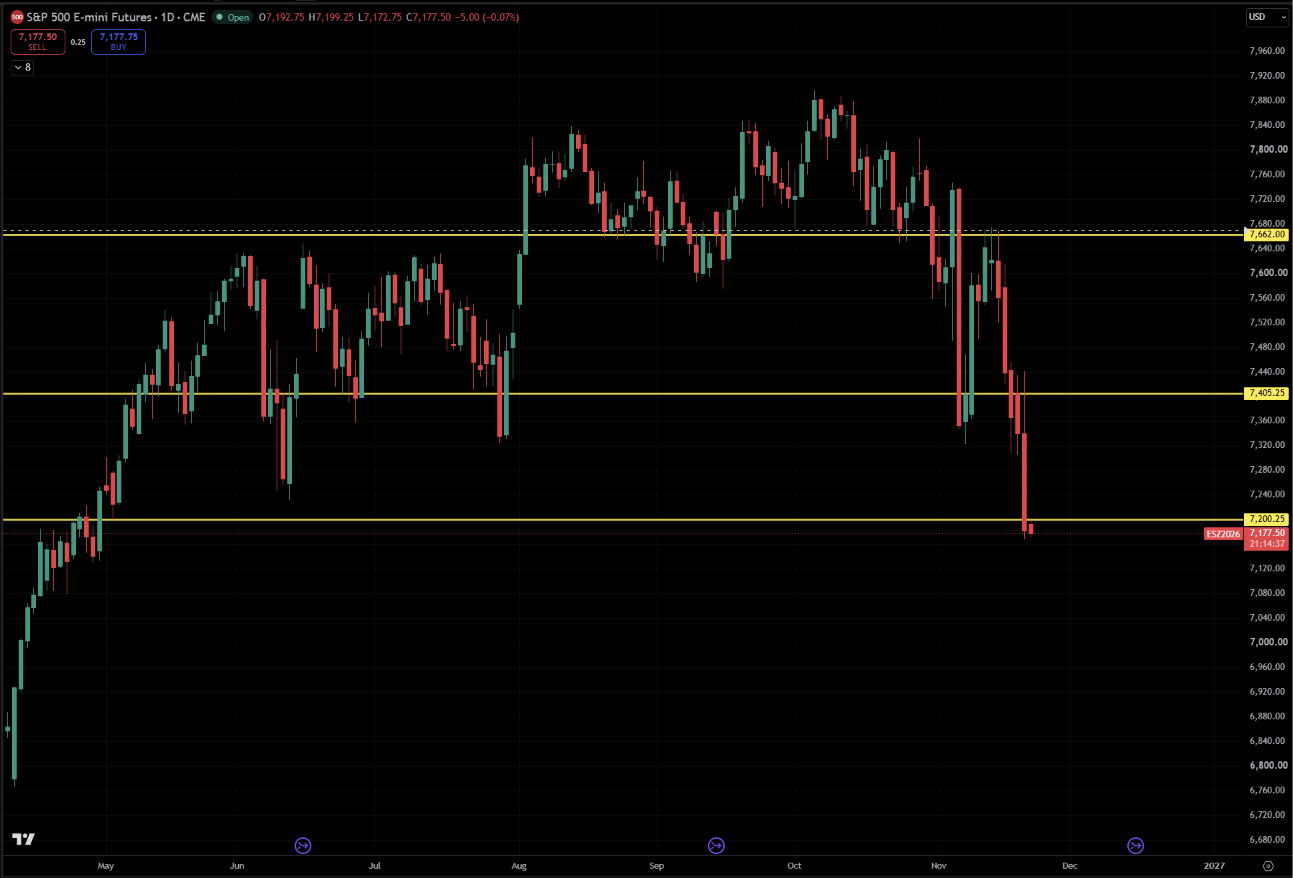
Now is the critical moment to step back and examine the deeper macro landscape. In my previous in-depth report, I clearly deduced: on a tactical level, once the S&P index loses the 7400-point level, the short-term logic immediately shifts to a bearish advantage. Currently, the market has moved significantly away from the 7400-point level, and the probability of fully recovering all losses before Friday's close this week is extremely low:
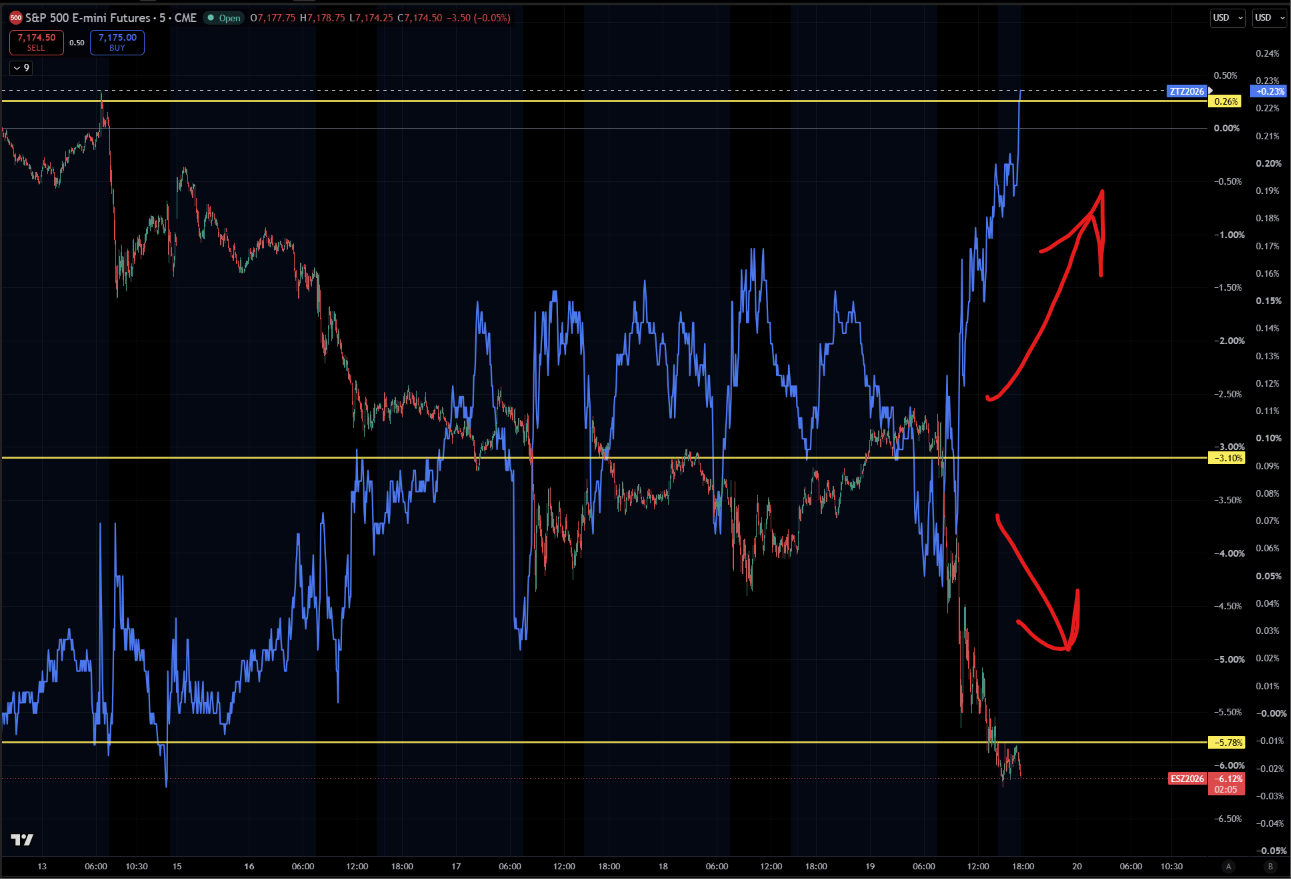
However, for macro capital flows, the more severe core issue is: while S&P 500 futures (ES) are being aggressively sold off, two-year Treasury futures (ZT) have only rebounded slightly, with extremely weak gains. This calm reaction reflects a dangerous signal: the rotation of funds into traditional safe-haven assets and safe-haven buying is very weak, which is gradually bringing the deeper macro crisis of the entire financial system to the forefront:
Core Deduction: Forced Rate Hike Cycle and Fiscal Stranglehold
The core macro theme that I have consistently emphasized in recent videos is very clear: we are entering a new and harsh cycle of forced rate hikes. The Federal Reserve will be forced to raise benchmark interest rates again in the future, or else it will watch the long-end Treasury yields spiral completely out of control, and the loss of control over long-end rates will deal an unbearable and fatal blow to the credibility of the US dollar and the sovereign fiscal system.
The fatal deadlock at present is: today's sharp decline in US stocks is almost entirely dominated by concentrated pressure on large technology stocks, and cross-asset risk contagion has not yet truly erupted in the bond market or foreign exchange (FX) market. This means that if we really enter a new rate hike cycle with a hard landing while global stock markets are at current high valuation levels, the downside space for equity assets in the future will be extremely large.
Cross-Asset Volatility Divergence: Calm Before the Storm
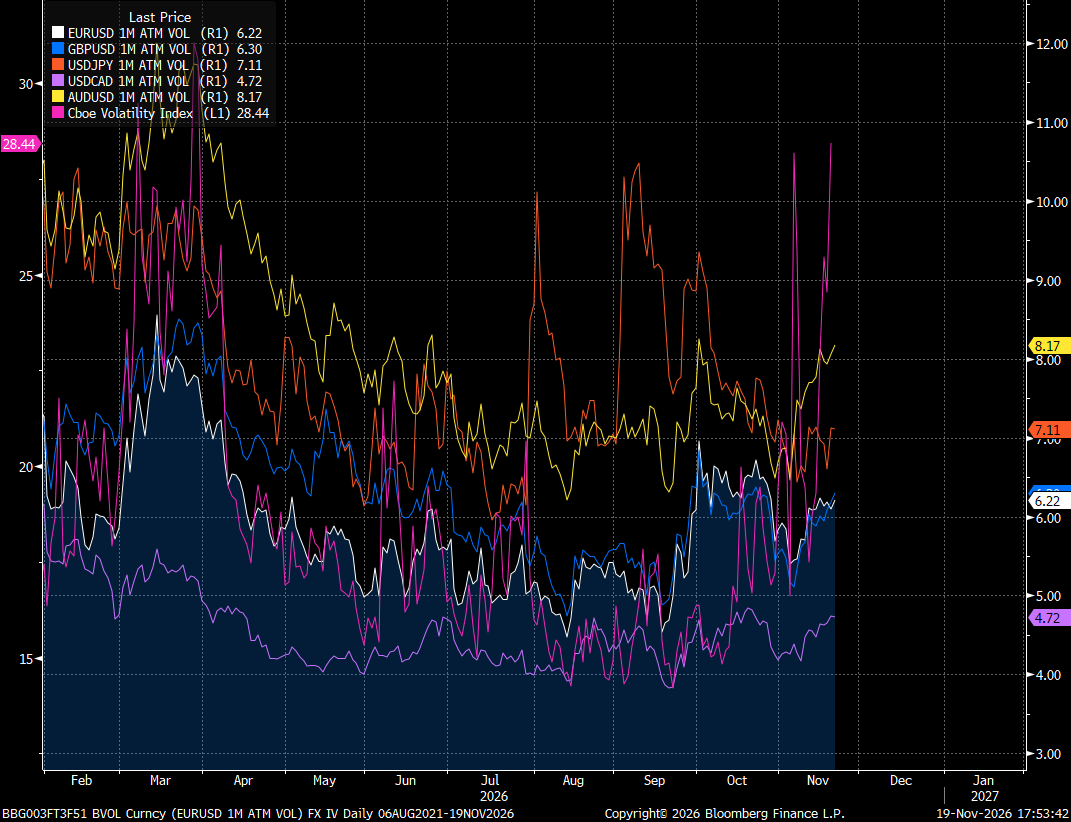
Please pay close attention to the anomaly revealed in the chart below: volatility in the foreign exchange market has barely moved, but the stock market's fear index VIX has already surged:
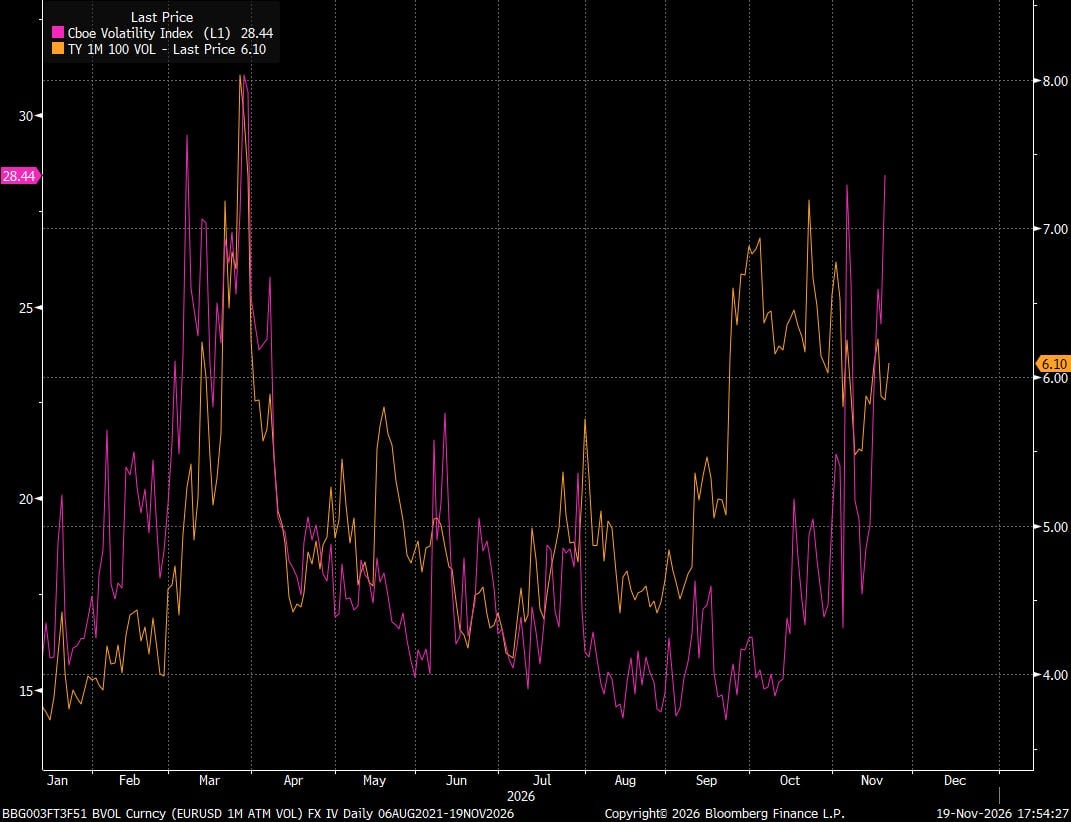
At the same time, bond market volatility is currently only showing a moderate increase, likely because interest rate traders have soberly realized that the potential oscillation range for future interest rates is far wider than what the Federal Reserve's short-term policy fine-tuning suggests. The logical conclusion is: once the Federal Reserve is cornered by inflation and fiscal deficits and forced to initiate substantive rate hikes, bond market volatility will completely spiral out of control, and it will inevitably drag equity assets into another round of deeper and more severe breakdown and crash:
Macro Response: Hold Large Cash Reserves, Wait for Valuation Extremes
Given the escalating deep imbalances in the entire macro system, I have maintained a stock-neutral defensive stance for a considerable period. As early as this summer, I fully shifted to defense, no longer betting that the credit cycle would push asset bubbles further into irrational upward surges.
Currently, I personally hold an extremely large amount of cash reserves, maintaining absolute restraint, waiting for long-end rates to form a definitive top, or for market sentiment to be dragged down to extreme pessimism, prompting industrial capital with a truly long-term perspective to enter the market and pick up cheap chips. The core of the problem is: our current market position is still far from a truly safe absolute valuation bottom. Unless the Federal Reserve suddenly pivots to extreme dovishness, or the macro economy miraculously falls into a flawless Goldilocks state (both scenarios have extremely low probability), as long as the S&P index is suppressed below 7400 points, the market's core bias will remain firmly bearish:
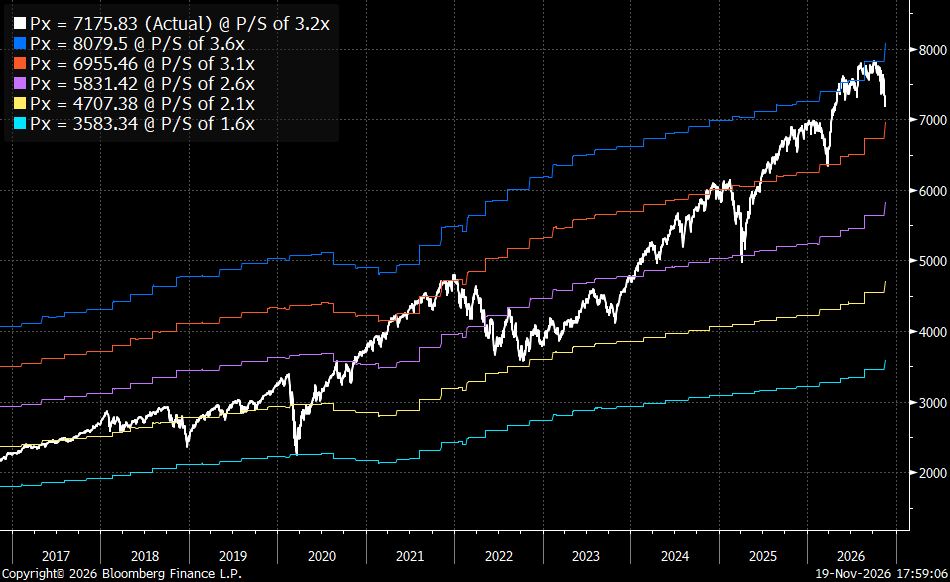
Core conclusion: This is clearly a high-risk environment with violent volatility swings, where a tiny catalyst can instantly and completely rewrite the market's technical landscape. We must soberly recognize that on the deep dimension of the macro cycle, equity assets as a whole lack upside potential and are facing heavy headwinds. Once volatility in the interest rate market begins to fully catch up and erupt, it will push the risk skew of the stock market to a more extreme bearish abyss; and the only question is: before the interest rate storm fully closes in, can the fundamentals of the AI industry chain achieve a miraculous improvement within this fragile time window?
This content is for informational and educational purposes only and does not constitute investment advice related to BTCC. BTCC makes every effort but cannot guarantee the truthfulness, accuracy, or originality of the content above.