


OpenAI DevDay 2026 Recap: Personal Agent, Sol 6.1, and the Missing Astra
 Blockbeats
Original title: "OpenAI DevDay 2026 Recap: Personal Agent, Sol 6.1, and the Missing Astra"
Original author: 动察Beating
On September 29, 2026, in San Francisco, under intense pressure from longtime rival Anthropic, OpenAI DevDay 2026 went ahead as scheduled.
But at this event, the new flagship model was missing.
GPT-6.1 Astra, originally slated for an October release, was abruptly pulled by the company just 24 hours before the event. The new center of attention was instead Personal Agent, which OpenAI named Dot.
The event featured 25 updates, compiled by 动察 Beating as follows.
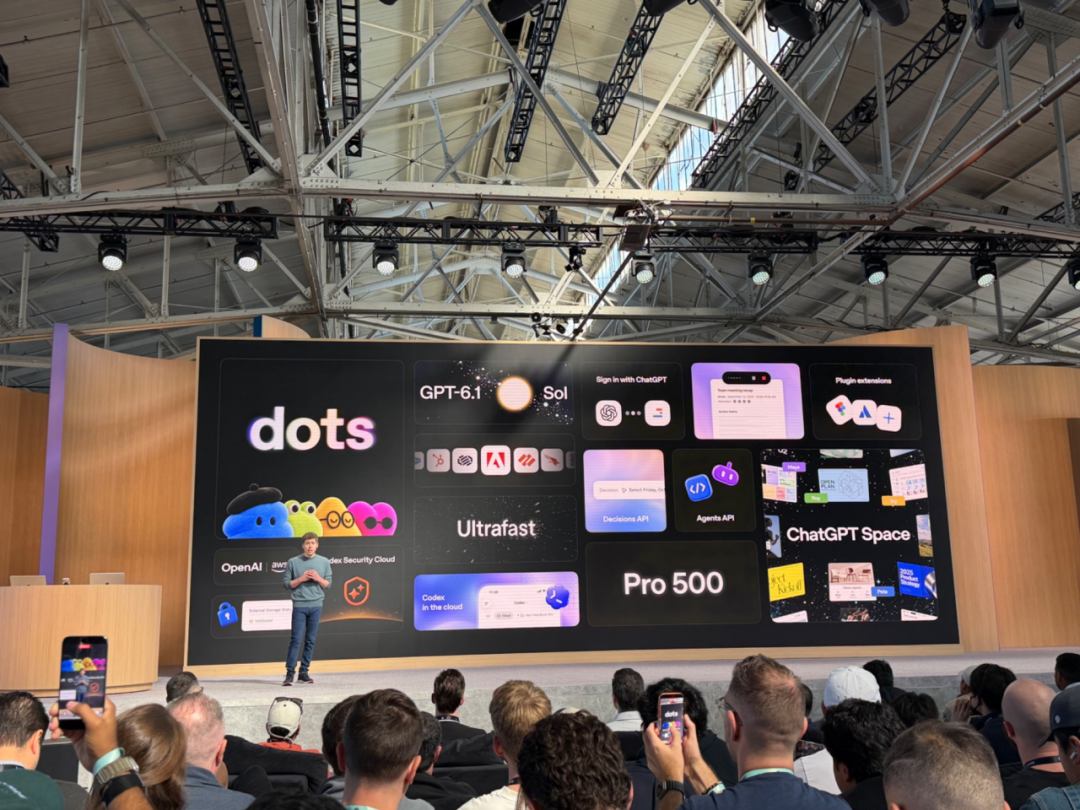
Models and Dot
Dot
A Personal Agent powered by GPT-6 Astra. It has an independent cloud sandbox computer and dedicated browser, with access to over 4,000 external applications; supports proactive research, able to browse apps in the background with read-only permissions to find tasks; Pro and Business Premium users receive their first dot for free, and conversations do not count against the base ChatGPT quota.
Specialist Dots
A preview of digital employees for enterprise use. They possess independent identities, credentials, and employee IDs within the organization.
GPT-6.1 Sol
Designed for agent coding, computer operation, and professional tasks. Priced at $2 per million input tokens and $10 per million output tokens (one-fifth the price of Astra), with cached input at $0.10; DeepSWE v1.1 score ties Astra, and Terminal-Bench score is more than double that of the previous Sol.
Astra Ultrafast & Sol Ultrafast
High-throughput, ultra-fast options. Speed increases up to 8x, with Codex throughput of around 300 tokens per second. Priced at 6x the standard Astra rate (input $60, output $300).
Privacy Intelligence
All models support offline security review with zero data retention; in partnership with Cisco, Databricks, and Snowflake, introduces privacy inference built on confidential computing architecture.
Codex and API
Codex Cloud
Fully managed cloud-based development environment. Supports offline operation; processes continue even after the laptop is closed, and teams can share pre-configured containers.
New Codex CLI
Redesigned terminal interaction, supports real-time voice commands, native worktree support, and a new /agents view for multi-agent orchestration and progress tracking.
Code Review
Integrated into the desktop app, supports GitHub PR and GitLab MR, and can automatically perform initial review and diff diagnosis in the cloud while offline.
Codex Security Cloud
Productizes the internal security project Defense Factory, integrating the Daybreak Blue cybersecurity model to provide continuous vulnerability scanning and automatic fixes for code repositories.
Decisions API
OpenAI's version of Jev, a dedicated decision interface that locks GPT-6 Luna into a fixed Q&A scope. Designed for intent classification and agent path routing, with response times around 150 milliseconds and call speeds 10x faster than usual.
Agents API Opens Computer Use
Fully opens the core capabilities of the Codex harness (multi-agent orchestration, context compression, tool retrieval, and screen operation). Framework code is open-sourced, with fully managed options also available.
Amazon Bedrock Managed Agents
Deep integration with AWS, allowing enterprises to run OpenAI's agent systems directly within their own AWS VPC and compute resources.
Plugin Ecosystem
Plugin Sidebar and File Interaction
Developers can customize dedicated interaction panels or file viewers in the ChatGPT sidebar, embedding products directly into the conversation flow.
Directory Restructuring and Passive Discovery
Revamped plugin submission and review process, proactively recommending relevant plugins based on context during natural user conversations.
Plugin Access Sites
Supports enterprises building their own sites to directly connect plugins, with members connecting to internal enterprise data according to their respective permissions.
MCP Event-Driven
Adopts the MCP event specification advocated by Anthropic; when external collaboration tools (such as project boards) change status, plugins can be automatically awakened in the background to draft plans.
Collaborative Office
ChatGPT Spaces
Replaces the previous knowledge base, serving as a long-term collaboration hub where team members, Codex, and dot share the same context.
Dynamic Pages
A rich-text medium co-edited by multiple people and multiple agents, supporting dynamic components, real-time to-dos, and data dashboards, with the ability to select specific text and @ an agent for targeted modifications.
Collaborative Slides
A presentation engine that supports real-time multi-user collaboration, can be generated and presented within ChatGPT, and can be losslessly exported to PowerPoint or Google Slides.
Team Tasks and Scheduled Automation
Create recurring task flows within the enterprise that can be triggered by email, IM, or schedules.
Office IM Integration
Deeply embedded in Slack and Teams, allowing enterprise members to @ mention it in channels without personal accounts to summarize notes or troubleshoot bugs.
Meeting Plugin
Debuts on macOS, locally records audio and combines context to generate key decisions and follow-up to-dos; audio is destroyed immediately after offline analysis.
Personal and Team Skill Pages
Supports centralized public display and reuse of personally built sites, plugins, and shared skills.
Commercialization and Subscriptions
Sign in with ChatGPT
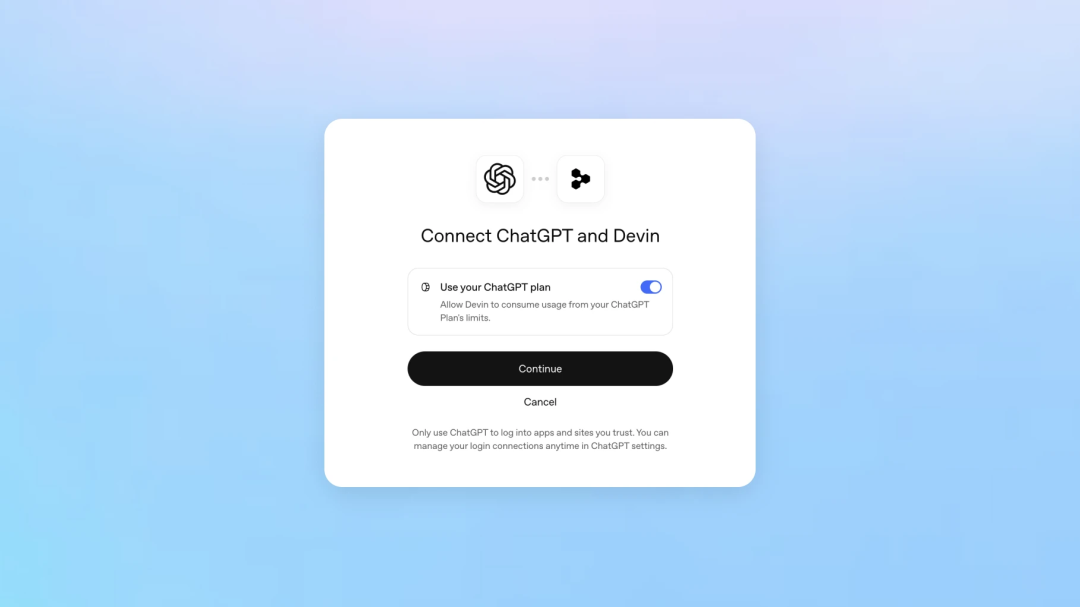
Unified identity authentication across the web. Plus and Pro users can directly consume their subscription token quotas within third-party products; the first batch includes 16 companies such as Devin, Notion, and Vercel.
New $500 Pro Tier
Provides highest-priority concurrent quota and exclusive access to Astra Ultrafast.
Adjustments to the Original $200 Pro Tier
Reopened after a 20-day pause, but starting October 30, the compute quota for Codex and ChatGPT work is reduced from 20x to 10x that of Plus, and the weekly GPT-6 Pro limit is halved to 100 messages. Existing users receive a $2,500 credit that expires before the end of the year.
OpenAI Software Marketplace
The first batch includes 32 software vendors such as Adobe, Figma, Salesforce, ServiceNow, and Harvey. Enterprises can use pre-committed spending with OpenAI to offset and purchase third-party SaaS products.
The only real product at this DevDay was Dot.
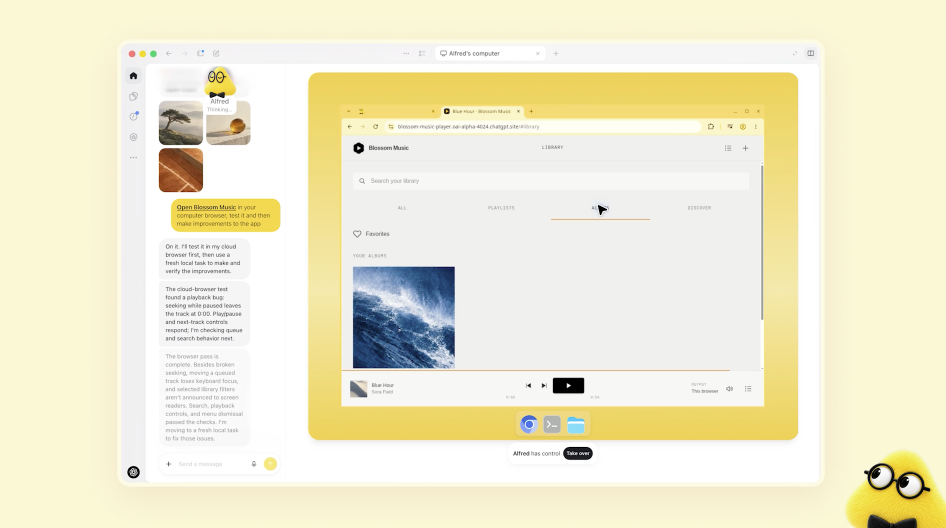
All other announcements—whether Sol, Ultrafast, Codex harness, Space, Pages, or MCP events—are, taken individually, scattered parts; put together, they are the flesh and nerves of Dot.
Dot thinks with Astra, operates systems with the Codex harness, connects to over 4,000 external software through plugins, wakes itself up via MCP events when boards change, and then writes completed work into Pages and posts it to Teams channels.
Over the past three years, the tacit understanding of human-computer interaction has remained confined to that small box.
First it was "you ask a question, it answers"; later it was "you assign a task, it completes and delivers."
Dot no longer waits for you to press Enter at the cursor. It has its own cloud computer and browser, and after you close the screen, it continues to browse various apps in the background with restricted read-only permissions, looking for whose invoice hasn't been issued or which bug hasn't been fixed.
Officially, it will finish the work according to your working style before you even speak.
Previously, whether ChatGPT or various Copilots, they competed for seat licenses in the software dimension, charging monthly per user—essentially giving employees a handy screwdriver.
Dot and Specialist Dots go further. Specialist Dots have independent domain accounts, system credentials, and employee IDs within the enterprise, integrated into Microsoft Agent 365 governance, following the familiar IT processes for access, auditing, and deactivation.
Enterprises are no longer buying a tool account; they are hiring a machine employee that doesn't require social security and never goes offline.
This is also where the two Silicon Valley giants diverge. Meta pushes the same form factor, Muse, to billions of ordinary people, leveraging the top free app ranking to scale consumer numbers; OpenAI, on the other hand, locks dot behind the high walls of Pro and enterprise subscriptions, with more dots to be paid for monthly in the future.
One is competing for users' time, the other for enterprises' seats.
Acceleration
On stage are machine employees; behind the scenes is a compute bill full of anxiety.
GPT-6.1 Sol is priced at only one-fifth of Astra, yet its performance closely matches on most benchmarks; Astra Ultrafast is priced at 6x the standard rate, offering 300 tokens per second; then Sol Ultrafast is packaged as "buying near-Astra intelligence and 8x speed at the original Astra price."
This is rare in the previous model narrative. The industry used to only look at benchmark scores; now latency and throughput are put on the shelf as clearly priced luxury goods.
Why?
Because for those who let agents write code, a few seconds of lag can completely shatter the hard-won flow state.
Speed has become the most expensive premium.
But OpenAI is a company with severely strained compute resources.
The $200 Pro tier was unplugged by the company on September 10 due to compute congestion, with new purchases suspended for 20 days; on the first day of reopening, it announced that usage quotas were halved, from 20x to 10x that of Plus. At the same time, a new $500 monthly tier appeared, exclusively enjoying the fastest models.
This is a very typical compute rationing system: reserving the scarcest resources for those who care least about price, while using sufficiently cheap sub-flagship models to defend the mass market.
From Astra on September 3, to Sol on the 22nd, to Sol 6.1 on the 29th, three model releases occurred within a month. Each release essentially redraws a cost red line for the data centers.
Small model startups also suffer collateral damage. Decisions API compresses the smallest Luna to 150 milliseconds per decision, specializing in classification and routing. Some see it as a precise kill shot against TypeSafe's decision model Jev.
Universal Account
Space, Pages, Slides, team tasks, meeting plugins, plus @ChatGPT stationed in Slack and Teams.
Put together, ChatGPT no longer seems related to a chatbot.
It looks more like a desktop operating system taking shape.
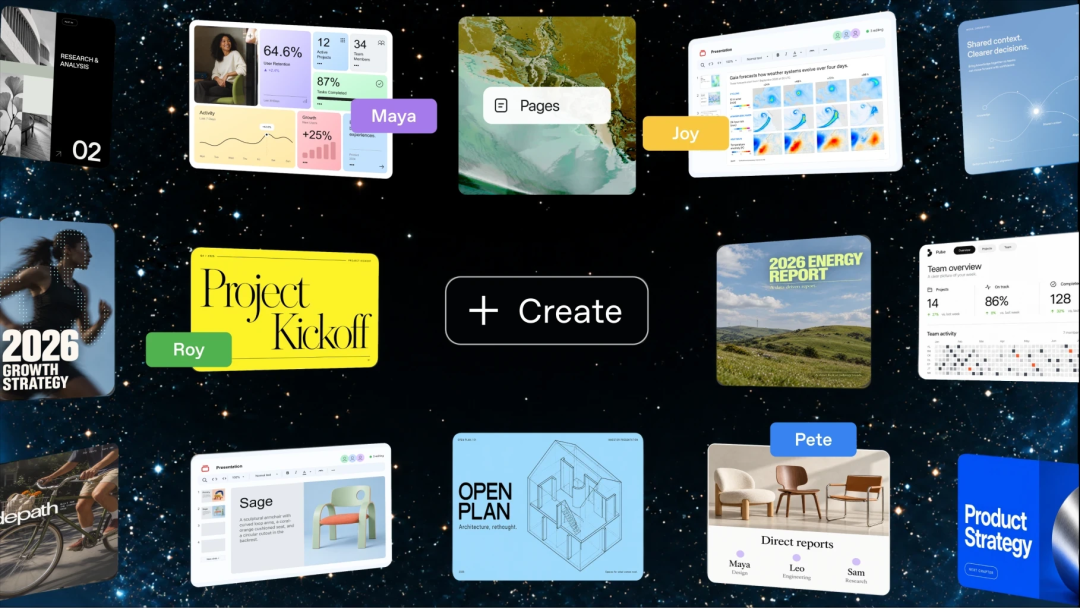
In front of it lies a long list of names: Notion, Google Workspace, Slack, and Microsoft Office. Slides specifically emphasize lossless export to PowerPoint and Google Slides.
More interesting are the partners sitting in the VIP seats.
Notion is one of the first 16 partners for "Sign in with ChatGPT," allowing users to directly offset ChatGPT subscription quotas within Notion; but on the same day, OpenAI released Pages and Space, which compete head-on with Notion on almost every feature point.
Figma, Adobe, and Salesforce are on the big list of the OpenAI Software Marketplace, allowing enterprises to use pre-paid contract quotas with OpenAI to purchase their products; but on the same day, ChatGPT is gradually turning tasks like image creation, layout, and customer ticket processing—originally their domain—into its own native skills.
"Sign in with ChatGPT" appears to be a passwordless login plugin on the surface, but at its core, it is building a universal account for the AI era. 1.2 billion weekly active users no longer need to pay separately in each app; quotas flow through OpenAI, and downstream developers settle with OpenAI.
Whoever's pocket the money flows into first is the real landlord.
Foundation
In the first half of this year, the most commonly used word to bolster courage in the AI venture circle was "harness."
Entrepreneurs and investors like to use it to soothe a pervasive sense of insecurity. No matter how strong the model, it is just an engine; the entire set of conversation orchestration, context compression, tool retrieval, and fault recovery that enables agents to actually work is the real moat.
At the time, everyone firmly believed that big companies could only focus on stacking compute and couldn't handle these dirty jobs well.
This DevDay shattered that assumption. With the Agents API officially adding computer use, OpenAI brought out the entire harness running under Codex, ChatGPT, and dot, bones and all. Open-sourced code, managed hosting, and even partnered with AWS to integrate into Bedrock.
Big companies not only did it, but also made it a standard component out of the box. The most universal and standardized layer of agent framework has been packaged and taken over by the original manufacturer. The developer's ecological niche has also slid into a delicate position.
Codex Cloud allows offline cloud execution with the laptop closed, code review can complete initial review for you in the middle of the night, Security Cloud automatically scans and fixes repositories around the clock; the /agents view in the new CLI lets one person command multiple agents to work in parallel.
The act of typing on a keyboard is being stripped away. Developers are no longer people who write code; they become people who sit at their workstations pressing Enter to approve.
If general-purpose frameworks no longer constitute a moat, where can startups go?
Either dive deep into industry-specific private domains that big companies cannot touch, or go to dead corners that big companies are unwilling to enter due to compliance concerns.
But OpenAI clearly doesn't intend to leave many gaps. On the same day as the event, zero data retention and privacy inference were brought out together.
The doors left for middlemen are closing one after another.
Restraint
The day before the event, many people waiting to see GPT-6.1 Astra were disappointed.

OpenAI proactively halted this flagship originally scheduled for October. Saachi Jain, who oversees safety systems, said the model had not fully met release standards regarding "not exceeding authorization boundaries and truthfully reporting operational behavior to humans."
This is a rare sudden brake.
In the large model race, everyone is accustomed to jumping the gun, grabbing GPUs, and competing on release dates. When almost the entire industry is swept up in FOMO, pulling a ready-to-ship flagship model off the stage requires considerable resolve.
Taking a step back often requires more determination than charging forward.
But it makes the Dot on stage seem all the more logical.
When an agent begins to have an independent cloud computer, can autonomously browse the web around the clock, and call tools, the real technical threshold is no longer about squeezing out two more percentage points on benchmarks.
The hard part is delivering trust.
You can see the layers of trade-offs made by engineers in every product detail of dot.
Read-only proactive research eliminates the risk of misoperation; highly sensitive operations retain manual approval one by one; third-party services have credentials managed by system proxies, and passwords are never exposed to the model in plaintext.
These rules are set very finely, even appearing somewhat cautious.
But this is the prerequisite for enterprises to dare to truly hand over invoices, contracts, and code repositories. Security is no longer an ethical declaration posted on the official website, but a tangible commercial entry permit.
Altman was calm when discussing this line of defense on stage. He said that if alignment is treated purely as an engineering problem, deeper propositions would be missed; as for the various jokes from the outside, he said he doesn't mind if people need to project their anxiety onto someone or make jokes about him to relieve stress.
After three years of sprinting, the industry is beginning to realize that what determines how far a model can go has never been just the throughput of compute clusters, but its sense of restraint when interacting with the real world.
All permissions have been carefully divided—what to hand to machines and what to leave to humans.
Just like the simple rule written at the bottom of the system manual: Dot can draft contracts for you, troubleshoot code, and connect 4,000 apps, but when it comes to changing passwords, it will still quietly stop and wait for humans to do it themselves.
This is the beginning of maturity.
This content is for informational and educational purposes only and does not constitute investment advice related to BTCC. BTCC makes every effort but cannot guarantee the truthfulness, accuracy, or originality of the content above.