


Robinhood Chain Has No Token, But Which Altcoins Are Benefiting From Its Growth?
 Odaily
Original | Odaily News (@OdailyChina)
Author | Asher (@Asher_ 0210)
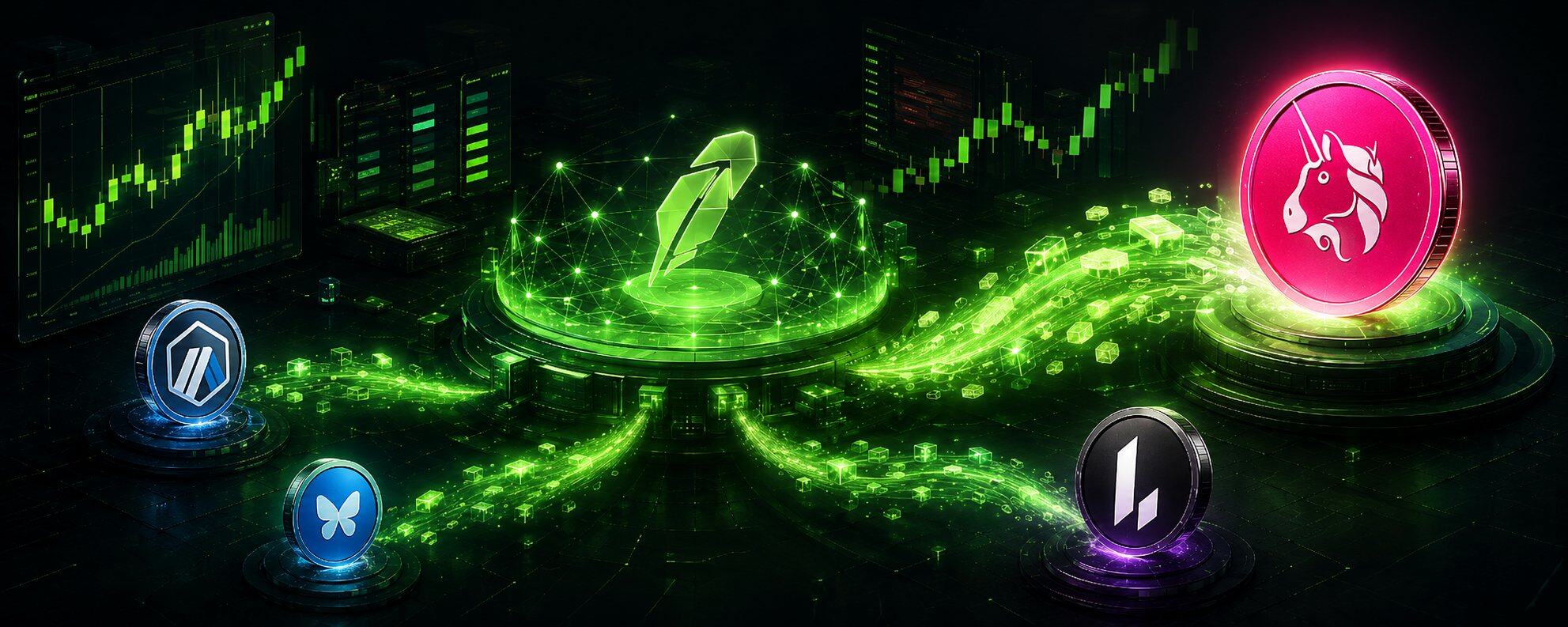
Just two months after launch, Robinhood Chain has become one of the fastest-growing and most-discussed public chains in the community.
DefiLlama data shows that on Sept. 1, Robinhood Chain's DEX trading volume surpassed $1.5 billion, briefly exceeding Ethereum, BNB Chain, and Base; on-chain TVL also grew from less than $100 million at launch to nearly $800 million.
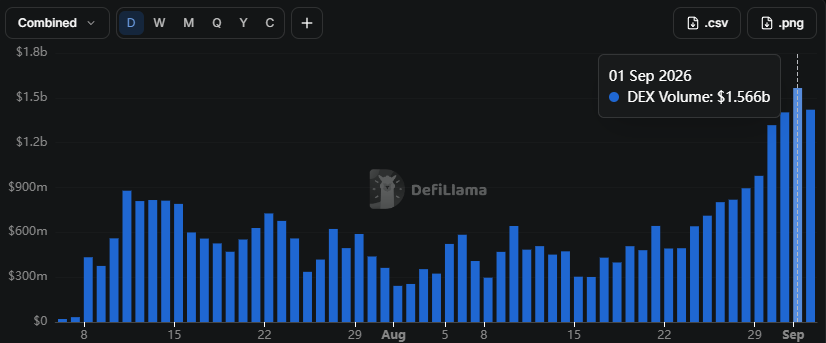
Since Robinhood Chain has not yet issued a native token, crypto investors bullish on the continued growth of this chain's users, assets, and trading volume can, on one hand, focus on popular projects on Robinhood Chain (For more, read: No Time to Sit on Chain? Which Robinhood Chain Targets Offer a Second Entry Opportunity?); on the other hand, as massive capital flows in, projects providing trading, lending, and underlying infrastructure for Robinhood Chain may also gain users, revenue, or token demand.
So, where exactly is the growing trading volume and capital on Robinhood Chain flowing? Which tokens are truly capturing the growth dividends of this chain?
Odaily News will analyze in this article the value connections between UNI, MORPHO, LIT, ARB, and Robinhood Chain (ETH, while earning fees as the chain's gas and settlement asset, has limited incremental impact relative to its size, so it is not included in the discussion).
Uniswap Dominates Robinhood Chain Trading Volume, Protocol Fees Drive Token Burns
Robinhood Chain did not build its own liquidity system from scratch but directly integrated Uniswap V2, V3, and V4. Robinhood officially positions Uniswap as the primary public liquidity protocol on the chain, and most DEX trading on Robinhood Chain is currently executed through Uniswap. Therefore, regardless of whether the heat on Robinhood Chain comes from meme coins, protocol tokens, or stock tokens, the growth in trading volume will primarily translate into Uniswap's trading volume and fee revenue.
Since July, Robinhood Chain has become one of Uniswap's most important revenue sources. In July, Uniswap's single-day fees once reached approximately $5.16 million, of which about $4.38 million came from Robinhood Chain, accounting for nearly 85%. As of today, Uniswap's protocol revenue over the past 30 days is $9.19 million, with Robinhood Chain contributing $4.36 million, accounting for 47.4%.
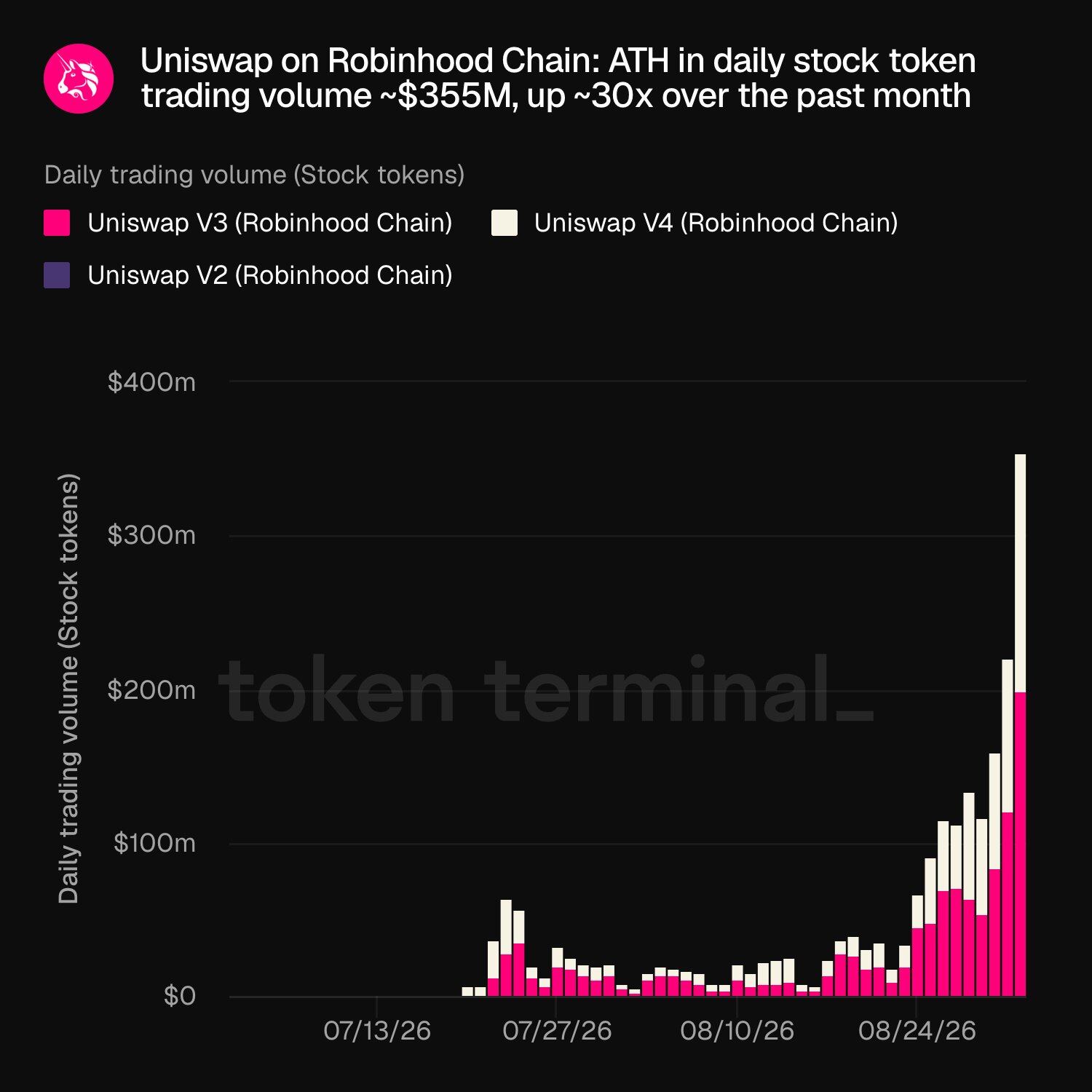
In addition to on-chain native assets like meme coins, Robinhood Chain is bringing a new RWA trading increment to Uniswap. About six weeks after Robinhood Chain's launch, the cumulative trading volume of stock tokens processed by Uniswap reached $1.5 billion; as of today, its daily stock token trading volume has further risen to $355 million, a 30-fold increase from a month ago. As stock token trading expands, Uniswap's trading volume and fees are also increasing accordingly.
The increase in Uniswap's revenue, combined with the implementation of the UNIfication proposal at the end of 2025, officially activated the Protocol Fee, and this revenue is used to continuously burn UNI, transforming UNI from a past "pure governance asset" into an asset clearly linked to protocol usage and revenue.
As of Aug. 31, UNI has cumulatively burned approximately 110 million tokens. Of these, 100 million came from the one-time treasury burn when UNIfication was implemented, and the continuous burns generated since the protocol fee mechanism went live have reached approximately 10 million UNI. Recently, with protocol revenue growth, the burn rate has further accelerated. In August, there were multiple trading days with single-day burns exceeding 100,000 UNI, and on Aug. 21, a single-day burn of approximately 150,000 UNI, worth about $590,000, set a new record for single-day burn value since the mechanism launched.
Lighter Becomes the Perpetual Contract Entry Point for Robinhood Wallet
When Robinhood Chain's mainnet launched, Lighter was directly embedded into Robinhood Wallet, becoming the perpetual contract entry point within the wallet. Compliant users no longer need to jump to other DeFi frontends to trade Lighter's perpetual contracts within the wallet. Additionally, Lighter officially stated it is providing 11 million LIT tokens as incentives for the Robinhood community, with double points for trading through Robinhood Wallet.
Unlike ordinary protocol deployments, perpetual contracts on Robinhood are powered by Lighter's underlying trading services, using USDG as margin and quote asset. Lighter founder Vladimir Novakovski previously revealed that the two parties split this business revenue 50:50, with Lighter's portion used for LIT buybacks.
DefiLlama data shows that Lighter's cumulative perpetual contract trading volume on Robinhood Chain is approximately $5.07 billion, with about $4.97 billion in the past 30 days and about $1.75 billion in the past 7 days. During the same period, Robinhood Chain contributed approximately $741,000 in fees and $537,000 in protocol revenue to Lighter.
Compared to merely deploying contracts on Robinhood Chain, Lighter has directly integrated into the wallet's user entry point and order flow. If Robinhood users' demand for perpetual contract trading continues to rise, Lighter's revenue and LIT buyback scale will also grow.
Morpho Is the Lending Infrastructure Behind Robinhood Earn
On July 1, the day Robinhood Chain's mainnet launched, Robinhood simultaneously launched its on-chain yield product Robinhood Earn and chose Morpho as the underlying lending protocol. Users can directly purchase USDG within the Robinhood App and then deposit USDG into a Morpho Vault managed by Steakhouse Financial through a self-custodial wallet to earn yield. For ordinary users, the frontend remains Robinhood, but the funds actually enter Morpho.
Less than two weeks after Robinhood Earn's launch, deposits surpassed $100 million, and by early August, they exceeded $250 million. As funds continued to flow in, Robinhood Chain quickly grew into Morpho's third-largest market, second only to Ethereum and Base in overall scale.
Morpho's official data dashboard shows that Morpho's total deposits on Robinhood Chain are currently approximately $932 million, outstanding loans approximately $412 million, and TVL approximately $521 million.
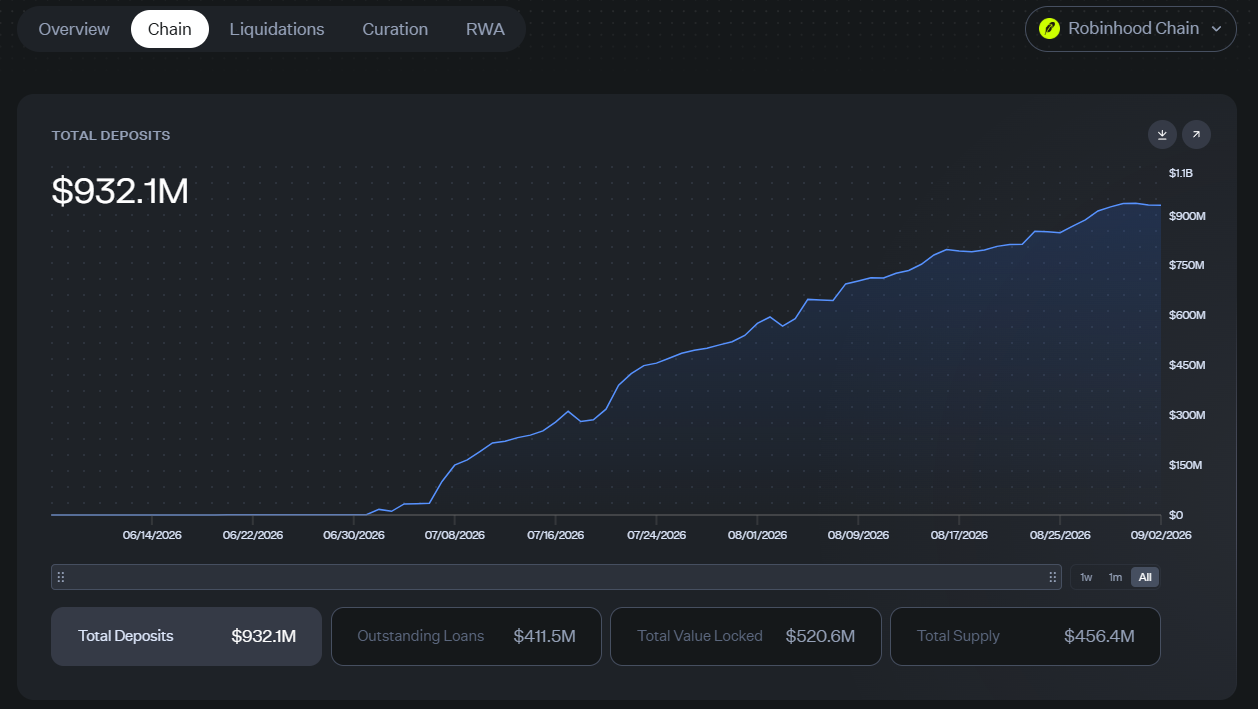
However, unlike UNI, which can directly capture Robinhood Chain's trading growth through protocol fees and burn mechanisms, Morpho's fees currently still primarily flow to lenders. Although the protocol has a built-in Protocol Fee switch, it has not yet been activated, so the growth brought by Robinhood Chain is more reflected in capital scale and lending demand, and has not yet directly translated into MORPHO value capture.
After Robinhood embedded Morpho into its Earn product, the former handles the user entry point while the latter provides the underlying lending infrastructure. As Robinhood Earn continues to expand, Morpho's deposit and lending scale is also expected to grow in tandem; if the Protocol Fee is activated in the future, this growth could further translate into protocol revenue.
10% of Robinhood Chain Revenue Flows to the Arbitrum Ecosystem
Unlike Uniswap, Morpho, and Lighter, which are applications on Robinhood Chain, Arbitrum provides more fundamental blockchain infrastructure.
Robinhood Chain itself is an Ethereum Layer 2 built on Arbitrum Dedicated Blockchains, running Arbitrum Nitro and using Ethereum for data availability and settlement. According to the Arbitrum Expansion Program's revenue-sharing mechanism, Robinhood Chain must return 10% of its net protocol revenue to the Arbitrum ecosystem, with 8% going to the ArbitrumDAO Treasury and 2% to the Arbitrum Developer Guild.
To date, Robinhood Chain has cumulatively contributed approximately $1.3 million to the Arbitrum ecosystem, of which $1.04 million went to the ArbitrumDAO Treasury; in the past 30 days alone, it contributed approximately $665,000, with $532,000 going to the DAO.
However, this revenue is not currently distributed directly to ARB holders, nor is there a corresponding ARB buyback or burn mechanism. Therefore, Robinhood Chain's value capture for ARB is significantly weaker than for UNI. Compared to short-term revenue, Robinhood Chain's greater significance for Arbitrum is proving that this technology stack can handle large financial institutions' on-chain business. If more institutions choose Arbitrum to build independent chains in the future, the Arbitrum DAO can continue to receive revenue shares from them.
This content is for informational and educational purposes only and does not constitute investment advice related to BTCC. BTCC makes every effort but cannot guarantee the truthfulness, accuracy, or originality of the content above.