Vitalik Buterin Pushes for Radical Ethereum Gas Limit Hike—Up to 100x Current Cap

Ethereum’s co-founder isn’t thinking small. Vitalik Buterin’s latest proposal? A gas limit increase of 10 to 100 times—enough to make even the most hardened crypto maxi’s spreadsheet tingle.
Why it matters: Higher throughput could turbocharge L1 transactions... or turn the chain into a bloated buffet for validators. Either way, ETH bulls win—gas fees get a PR makeover while devs scramble to keep up.
The kicker: Wall Street analysts are already spinning this as ’infrastructure investment’—just don’t ask about the last time they predicted a blockchain upgrade correctly.
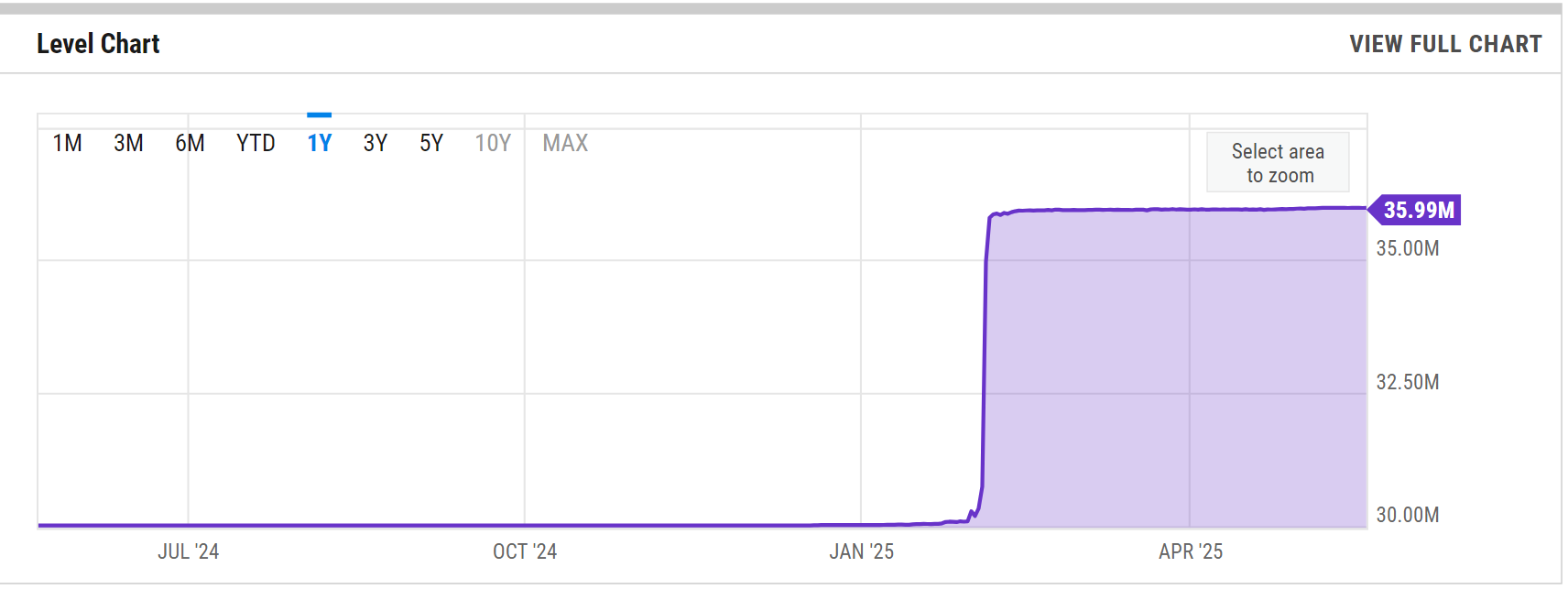 Ethereum’s gas limit has reached 35.99 million in the past 24 hours, May 21, 2025 | Source: YCharts
Buterin also said Succinct’s proving mechanism still lacks formal verification, which is necessary to assure users that it is seamless and relatively bug-free. Not only that, the real-time proving system still needs around 100 kilowatts of power to churn out proofs at the demonstrated speed.
Buterin argued that to make it available for broader participation, the energy cost needed to generate proofs should be around as low as 10 kW. This way, the energy rate is home-use friendly and WOULD enable small teams or individuals to run their own real-time proofs.
What is Ethereum’s current gas limit?
Compared to a year ago, on May 21, 2024, the ecosystem’s gas limit has increased by nearly 20%. The number increased by nearly 6 million from 30 million one year ago.
If Ethereum does manage to raise its gas limit by 10 to 100 times, its gas limit could reach as high as 360 million to 3600 million. Ethereum’s gas limit represents the maximum gas units needed to process a transaction or smart contract on the network.
It acts as a cap, preventing transactions from using excessive resources that could lead to high fees or generating congestion on the network.
Even if real-time proving mechanisms become available on-chain, each one requires a considerable amount of gas. Therefore, in order to make it viable at scale, it would require a higher gas limit compared to what the network’s current block gas limit would allow.
Last February, the Ethereum network raised its gas limit for the first time since 2021. The gas limit reached 32 million gas units, surpassing 30 million for the first time in nearly five years. At the time, around 51.1% of validators approved the gas limit adjustment without a hard fork.

Log in to Reply
Log in to comment your thoughtsComments
Related Articles
|Square
Get the BTCC app to start your crypto journey
Get started today Scan to join our 100M+ users