Core DAO Validator Reward Glitch Sparks Exchange Transfer Freezes and CORE Supply Uncertainty

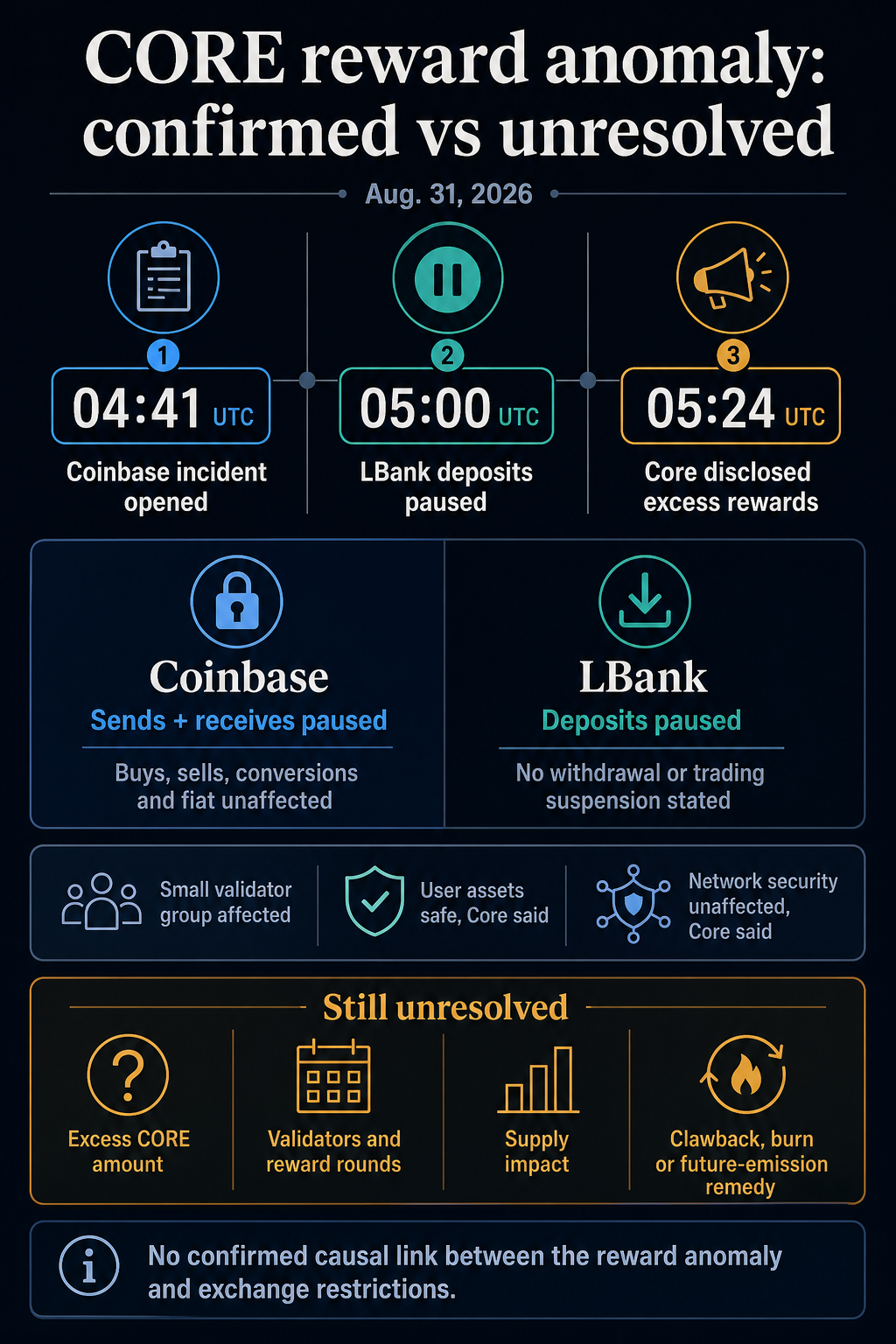
Core DAO has confirmed that validator rewards for a select group of validators exceeded the protocol's intended limits, triggering immediate transfer restrictions on two major exchanges and raising unresolved questions over the CORE token's total supply. The project stated that user assets remain secure and that the incident is isolated to reward issuance, with no impact on network security or custody. However, Core DAO has yet to disclose the exact amount of excess CORE distributed, the identities of the validators involved, the specific reward rounds affected, or the underlying technical cause. A full postmortem is promised once the issue is fully contained, leaving the market on edge regarding the token's inflation trajectory.
DeFi Technologies to stake $100 million in BTC on Core Chain
The missing amount is central because Core DAO validator rewards normally include newly minted tokens. The disclosure leaves unresolved whether the anomaly accelerated rewards already scheduled for later distribution or added issuance outside the project's planned path.
Coinbase opened its Core DAO incident at 04:41 UTC on Aug. 31, before Core's 05:24 UTC public statement. At 17:38 UTC, the exchange's status feed still listed the incident as investigating, with CORE sends and receives paused. Coinbase said buys, sells, conversions and fiat transactions were unaffected. Its public status page remained the venue's official channel for further updates.
LBank separately suspended CORE deposits at 05:00 UTC, saying the action was due to the project's requirements. Its notice did not describe a withdrawal or trading suspension and gave no restoration time. A translated version gives the equivalent time of 06:00 UTC+1 and says the English notice governs any discrepancy.
The official statements leave the relationship between the reward anomaly and the exchange actions unconfirmed. The restrictions also differ: Coinbase limited sends and receives, while LBank's notice covered deposits only.
Related Reading
Coinbase is pulling Loopring trading today – finding a safe place to sell LRC tokens is getting complicated
Core's reward documentation says validator compensation combines newly minted CORE block rewards with transaction fees and is calculated at the end of each round. Its validator guide says 90% of rewards go to validators and their delegators, while 10% goes to the System Reward Contract.
The documentation places the anomaly inside the network's regular issuance process, separate from the user-balance and custody systems Core said were unaffected. A numerical disclosure is still needed to measure how much of the scheduled node-mining allocation was brought forward or exceeded.
Related ReadingSolana stakers get a new way to force the next SOL inflation fight
The project's tokenomics describe a fixed supply of 2.1 billion CORE, including 839.9 million allocated to node mining over 81 years. The disclosure also leaves the transferability of affected rewards and the possibility of a clawback, burn or reduction in future emissions unresolved. For now, reward issuance exceeded the protocol's intent and exchange access remains restricted, while the size and lasting supply impact remain unknown.

Log in to Reply
Log in to comment your thoughtsComments
Related Articles