Softbank combining brain cells with tech in bizarre ‘next-generation’ AI experiment

Regional media from Japan reports that investment and holdings powerhouse Softbank is looking to combine cultured cell tissue with artificial intelligence to create “next generation” AI capabilities and save on energy consumption.
The story, which sounds like something out of a sci-fi thriller, details that the Softbank Research Institute of Advanced Technology is working with The University of Tokyo to “use brain tissue cultured from iPS cells to directly incorporate the energy-saving and flexible learning ability of the human brain into computing.”
Whether this is something credible (if highly controversial) or just a clever way to spend grant money while creating a buzz, is really anyone’s guess. But with the focused, global push from politicians and technocratic corporations for integrating AI into everyday life, and the extreme push to implement AI governance in Japan, the development is noteworthy.
Softbank’s vision for BPU (Brain Processing Units)
The Friday morning (JST) Toyokeizai write-up explains that while large-scale AI operations currently use a lot of power for computation, the human brain typically requires only about 20 watts for everyday thinking and integration of new data. “We aim to realize it as a new accelerator that coexists with conventional CPUs, GPUs, and quantum computers,” Softbank researcher Sota Sugimura is quoted as saying. But, where do the cells come from?
The so-called “brain cells” are created via iPS cells (induced pluripotent stem cells). Project researchers have created what they call “brain organoids” from these cells, which are spherical in shape and measure about o.5 – 1 centimeter in size, containing nerve cells and glial cells.
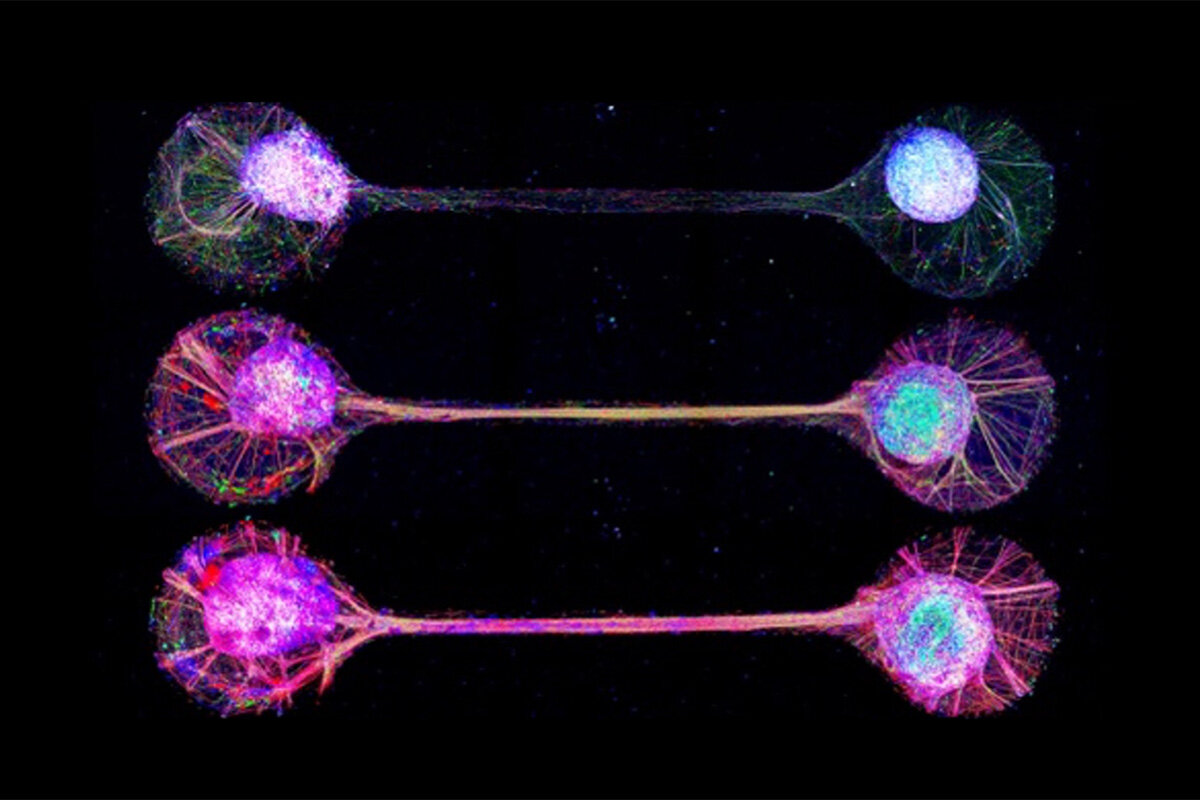
According to the report, the organoids have shown reactions to “reward” and “penalty” stimuli, and “a phenomenon that seems to be learning specific to brain cells” was observed. But project researchers note this experiment is still in its early stages, and there are ethical questions to be considered.
Further, Toyokeizai’s Toru Ishii details that the cells often react differently to the same stimulus, as they are derived from living organisms with inherent differences. While Softbank R&D researcher Keisuke Asakura is quoted as comparing the organoids to a “baby’s brain” stage, that seems quite a stretch, as at present the experiment is basically electrifying tiny samples of tissue in the lab. Nothing akin to the ineffably rich cognition, feedback, and creativity an actual human infant.
As for a roadmap for the project, “SoftBank aims to apply it as a small, energy-saving sensor by around 2030, expand it to robot control and complex motor tasks around 2040, and further develop it into fields that require advanced judgment, such as autonomous driving and creative fields, from 2050 onwards,” the report explains.
Land a High-Paying Web3 Job in 90 Days: The Ultimate Roadmap

Log in to Reply
Log in to comment your thoughtsComments
Related Articles
|Square
Get the BTCC app to start your crypto journey
Get started today Scan to join our 100M+ users