Oil Prices Plunge as Geopolitical Storm Clears, Fueling Safe-Haven Rotation into Bitcoin

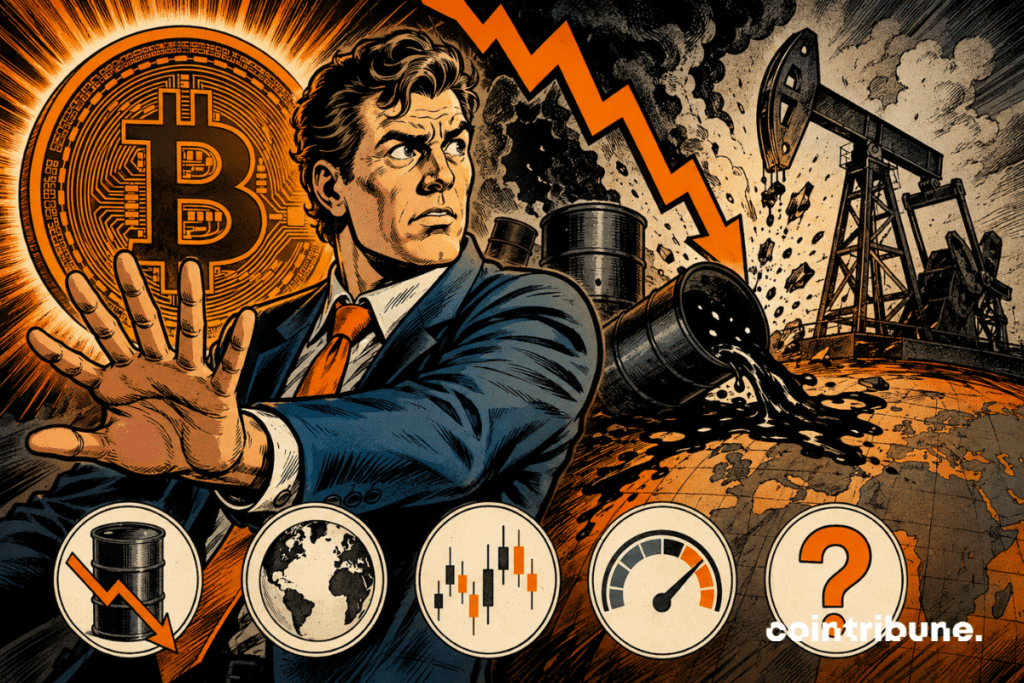
Global markets are breathing a sigh of relief as Donald Trump signs a landmark agreement to reopen the Strait of Hormuz, triggering a sharp retreat in oil prices. The deal, which ends the U.S.-Israeli offensive against Iran that began on February 28, has shattered the geopolitical uncertainty that froze real economies and trapped investors in risk-off mode. With crude sliding, capital is now rotating at breakneck speed into digital assets like Bitcoin, poised to absorb a flood of liquidity seeking refuge from traditional market volatility.
 Read us on Google News
In Brief
- The agreement signed between the United States and Iran marks a major geopolitical turning point with the reopening of the Strait of Hormuz, a strategic passage for global oil trade.
- This easing causes a rapid drop in Brent and WTI prices, while Gulf producers prepare for the gradual resumption of exports and energy production.
- The drop in crude oil prices is already beginning to be reflected in fuel prices in Europe and the United States, fueling hope for a slowdown in inflation and a return of consumer confidence.
- The easing of tensions in energy markets could encourage a loosening of monetary conditions and support the return of capital to risky assets, including bitcoin and the Web3 ecosystem.
The US-Iran Agreement and the Collapse of Oil Prices
The relief in global stock markets led to an immediate and spectacular correction of the main international energy benchmarks.
Here are the main events of this trading day:
- The price of North Sea Brent plunged below the symbolic 76 mark, erasing the geopolitical risk premium ;
- The West Texas Intermediate (WTI), the American equivalent of crude oil, fell below the $75 threshold at the same time, marking a clear return to its pre-war level in Iran ;
- The memorandum of understanding signed by the US administration officially lifts the naval blockade on the Strait of Hormuz, a vital artery through which nearly 20 % of the world’s oil consumption transits daily ;
- Analysts point out that a full return to normal transit volumes will inevitably require several months of complex logistical adjustments for commercial fleets.
This technical normalization dynamic relies on massive hydrocarbon reserves that are only waiting for the green light to flood the global distribution networks again. As summarized well by analysts at Saxo Bank, “attention is now focused on the pace of traffic resumption in the Strait of Hormuz, facing this imminent congestion situation. It is estimated that 100 million barrels of crude oil and refined products are already loaded on tankers and ready to leave the Gulf, while regional producers are taking measures to restart interrupted production”.
At the same time, sector specialists anticipate an unbalanced restart of pumping capacities in the Middle East. For Homayoun Falakshahi, responsible for crude oil analysis at Kpler, the Iranian production apparatus could be surprisingly responsive. Indeed, he specifies that lifting military restrictions should “allow a quick resumption of exports and support a rapid rebound in production and loading”.
The Slowdown of Inflation at the Pump and the Return of Economic Confidence
This diplomatic easing goes beyond the London or New York trading floors and is already beginning to directly impact the daily lives of European and American consumers. In France, fuel distribution networks have begun a price adjustment, resulting in diesel prices falling below the critical threshold of 2 euros per liter in many service stations across the country. This rapid decrease led the Minister Delegate for Energy and government spokesperson, Maud Brégeon, to speak publicly to exert increased pressure on industrial players, stating that prices “have started to drop and they must continue to drop”.
This pragmatic position is also shared by Serge Papin who, during his appearance on Public Sénat, emphasized the psychological unblocking induced by the agreement by stating: “we can regain confidence and leave the wait-and-see attitude behind”. However, a note of moderation came from Bercy through the voice of the Minister of Economy, Roland Lescure, who wanted to temper excessive optimism by reminding that a general return to a rate of 1.70 euros per liter would inevitably take “some time because there will still be uncertainties”.
On the other side of the Atlantic, within the world’s top crude producer, the repercussions of this signing have broken a strong psychological resistance with heavy consequences for monetary policy. Regular gasoline has indeed fallen below the $4 per gallon mark, to $3.999 exactly according to data published by the American Automobile Association (AAA), while the average diesel price dropped to $5.13 from $5.63 a month earlier.
To gauge the importance of this retreat, it is necessary to recall that these prices had risen from $3 to over $4.50 under the effect of the Hormuz conflict, pushing overall US inflation to its highest level in three years. Thus, the current correction in energy provides crucial relief to the US Federal Reserve (Fed) to reassess its interest rate trajectory.
Macroeconomic Perspectives and the Realignment of Liquidity Towards Web3 Assets
The simultaneous drop in Brent crude and pump prices in the United States is profoundly changing capital allocation on an international scale. From a strictly financial perspective, the overall disinflation currently postpones the risk of prolonged monetary tightening, opening the door to a gradual return of liquidity to risk markets, of which bitcoin and the Web3 sector are naturally the primary beneficiaries.
Moreover, a lasting stabilization of energy costs worldwide provides major operational breathing room to crypto mining companies, whose margins had been severely affected by spikes in geopolitical tension.
Ultimately, this agreement shows that the links between traditional energy and cryptos have never been closer, which requires crypto investors to maintain extreme macroeconomic vigilance in the face of upcoming geopolitical movements.
Maximize your Cointribune experience with our "Read to Earn" program! For every article you read, earn points and access exclusive rewards. Sign up now and start earning benefits.

Log in to Reply
Log in to comment your thoughtsComments
Related Articles
|Square
Get the BTCC app to start your crypto journey
Get started today Scan to join our 100M+ users