BTCC
/
BTCC Square
/
BitgetappsEN
/
Research Report | Roam Project Analysis & ROAM Market Valuation
Research Report | Roam Project Analysis & ROAM Market Valuation

0
0
I. Project Introduction
Roam is a DePIN project built on the Solana blockchain, aiming to revolutionize traditional telecommunications. It enables users to share their home WiFi, creating a global decentralized wireless network while earning ROAM token rewards through a token-based incentive system. Roam utilizes Solana’s decentralized identity (DID) and verifiable credential (VC) technology to enhance user data security and provide seamless WiFi connectivity. Once set up, devices can automatically connect and roam globally, eliminating the need for repeated logins and authentication, making connectivity more convenient.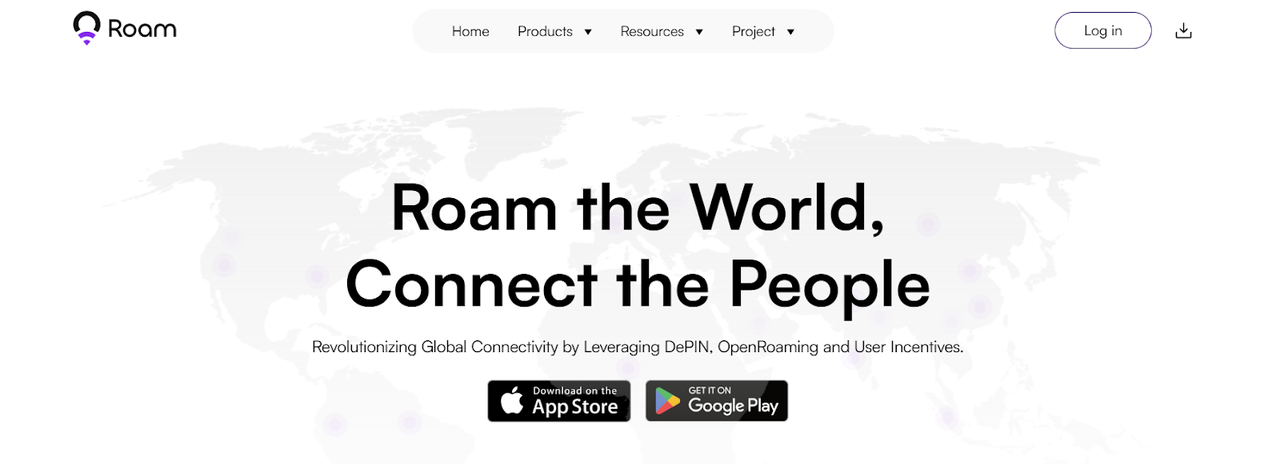
II. Project Highlights
According to DePINscan data, Roam operates the largest DePIN network , leveraging its decentralized WiFi roaming protocol. It spans 190+ countries and regions , with over 1.21 million WiFi nodes and access to 3.5 million OpenRoaming hotspots , enabling seamless and automatic connectivity. Roam utilizes DID (Decentralized Identity) + VC (Verifiable Credential) authentication to protect user identity and data privacy when connecting to WiFi. Once a device is connected, it can roam globally without requiring repeated password entries or account registrations , reducing security risks associated with centralized data storage. Roam’s dual-layer incentive system attracts users through:- Allowing users to connect their home routers to the Roam network and earn points by sharing WiFi.
- Offering official mining-grade routers: MAX30 ($199) and MAX60 ($499). Owners of these routers enjoy higher mining rewards and receive exclusive NFT airdrops, making Roam one of the fastest-growing projects in the DePIN sector.
III. Market Valuation Projection
As a key infrastructure provider for decentralized wireless networks (DePIN) , $ROAM operates within the decentralized telecom, network sharing, and AI data economy sectors. To estimate its potential market valuation, we compare it with:- Helium ($HNT) – A decentralized wireless hotspot network
- Filecoin ($FIL) – A decentralized storage network
- io.net ($IO) – A decentralized computing network

IV. Tokenomics
$ROAM Total Supply: 1,000,000,000 (1 Billion)
Token Allocation & Release:- Mining Incentives (60%) – Earned through WiFi sharing, mining operations, CDN nodes, and more.
- Early Investors & Airdrops (28%) – Distributed to early investors, TGE participants, and community airdrop campaigns.
- Team Allocation (12%) – Reserved for the core team, vested gradually over 6 years to ensure long-term stability.
Token Utility:
Burn & Deflation Mechanism
- Dynamic Burning: $ROAM tokens are burned through points conversion, eSIM data purchases, and node usage fees, reducing overall supply.
- Post-TGE Reverse Burn Mechanism: Tokens can be converted back into points, encouraging token utilization and mitigating sell pressure.
V. Team & Funding
Team Information:
- YZ (Co-Founder) – Developed Roam’s User Flywheel, Node Flywheel, and AI Data Flywheel models. Led Roam’s transformation from MetaBlox into the largest DePIN WiFi roaming network.
- Jason Zhao (CTO) – Holds an M.S. in Computer Science from Stanford University. Formerly at Google DeepMind, specializing in AI, blockchain, and decentralized networks. He leads Roam’s core tech architecture and global WiFi OpenRoaming expansion.
- Roam’s core team members have extensive experience in telecom, blockchain, data analytics, and hardware development, spanning investment, ecosystem growth, and technical innovation.
Funding Rounds:
- Strategic Round (March 2024) – Raised $5 million, led by Anagram and Volt Capital, with participation from Comma3 Ventures, IoTeX, Awesome People Ventures, Stratified Capital, JDI Global, ZC Capital, Future3 Campus, ECMC Group, and DePIN Labs.
- Seed Round (March 2022) – Raised $2 million, led by Collab+Currency and Synergis Capital, with contributions from SNZ Holding, Crowdcreate, Future Life, and Slope.
- Strategic Investment (April 2024) – Received funding from Samsung Next (undisclosed amount), supporting Roam’s global expansion in the DePIN sector.
VI. Potential Risks
VII. Official Links
- Website: https://weroam.xyz/
- Twitter: https://x.com/weRoamxyz
- Telegram: https://t.me/WeRoamXYZ
By:
Previous
Dogecoin (DOGE) Attempts Rebound—Will Recovery Gain Momentum?
Next
Bitget Daily Digest (March 5) | Easing US-Canada trade war expectations lift markets, Aave proposes $AAVE buyback
