What Is Non-Fungible Token (NFT): Everything You Need to Know About It

Non-fungible tokens (NFTs) are unique cryptographic tokens that exist on a blockchain and cannot be replicated. NFTs have transformed how we perceive ownership, value and digital assets. From digital art and collectibles to music, gaming and real estate, NFTs are enabling new economic models in the digital world. But what exactly are NFTs, and why are they so significant?
This guide provides a comprehensive overview of NFTs, covering everything from their definition, work principle, history to their benefits, limitations, and evolving impact across industries.
\Unlock Up To 10,055 USDT In Welcome Rewards!/
What is a Non-Fungible Token (NFT)?
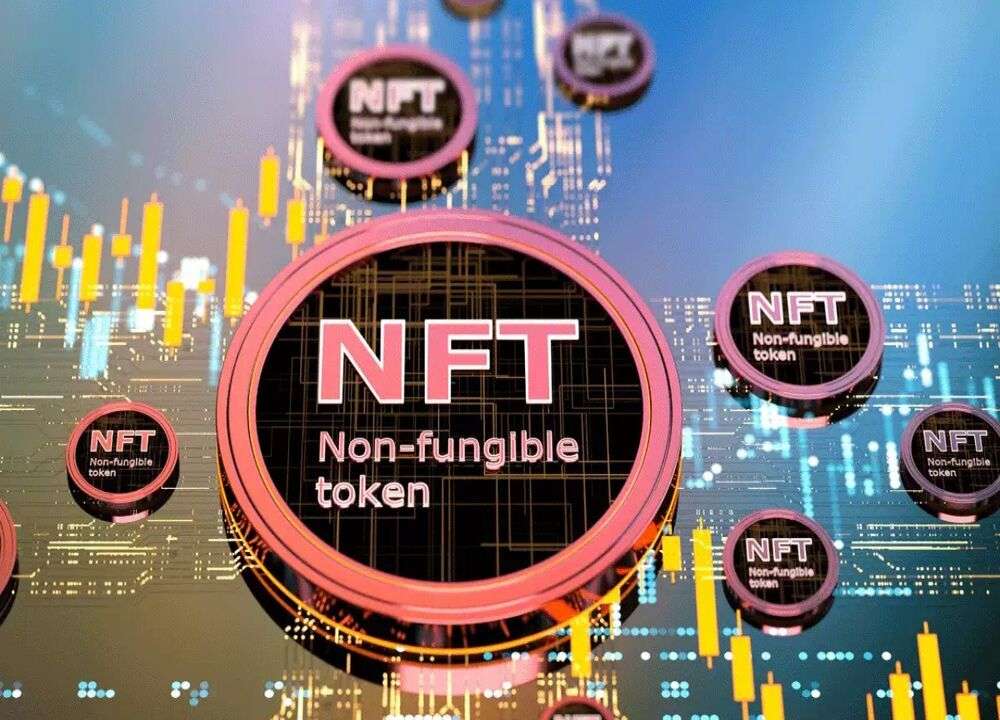
A non-fungible token (NFT) is a type of cryptographic token representing a unique asset. NFTs are digital or real-world assets that have been tokenised. They serve as verifiable proof of authenticity and ownership within a blockchain network. As they are not interchangeable, NFTs introduce scarcity to the digital world.
They could be used in many different fields, such as video games, digital identity, licensing, certificates or fine art, and could even allow for the fractional ownership of items. Storing ownership and identification data on the blockchain increases data integrity and privacy, and makes it easier to transfer and manage these assets, which could reduce friction in trade and the global economy.
Cryptocurrencies are similar to NFTs in that they are both secured on blockchain networks. The key difference is that cryptocurrencies are fungible, or interchangeable. While one bitcoin is no different to another, no two NFTs are identical.
[TRADE_PLUGIN]BTCUSDT,ETHUSDT[/TRADE_PLUGIN]
How does a Non-Fungible Token (NFT) Work?
NFTs are created through a process called ‘minting’, whereby the asset’s information is encrypted and recorded on a blockchain. At a high level, the minting process involves creating a new block, validating the NFT information and closing the block. The minting process often incorporates smart contracts that assign ownership and manage NFT transfers.
Ownership of an NFT is established through blockchain records, enabling users to demonstrate their ownership of a particular digital asset. This ownership can then be transferred, sold or licensed to others via cryptocurrency wallets and NFT marketplaces such as OpenSea, Blur or Magic Eden.
While many blockchains can create NFTs, they may be referred to by different names. For example, on the Bitcoin blockchain, they are called ‘Ordinals’. Like an Ethereum-based NFT, a Bitcoin Ordinal can be bought, sold and traded. The difference is that Ethereum creates tokens for the asset, whereas Ordinals have serial numbers (called identifiers) assigned to satoshis — the smallest denomination of bitcoin.
\Unlock Up To 10,055 USDT In Welcome Rewards!/
Non-Fungible Token (NFT) History
NFTs were created long before they became popular in the mainstream. Reportedly, the first NFT sold was “Quantum,” designed and tokenized by Kevin McKoy in 2014 on one blockchain (Namecoin). However, NFTs gained wider attention in 2017 with the launch of CryptoPunks and CryptoKitties, two pioneering Ethereum-based NFT projects that introduced mainstream audiences to blockchain-based collectibles.
The real breakthrough came in 2021, when artists like Beeple sold digital artworks for millions of dollars via NFT platforms. This period also saw widespread adoption across gaming, entertainment, sports, and fashion, with major brands and celebrities entering the space.
Since then, NFTs have evolved beyond collectibles, forming the basis for metaverse assets, play-to-earn economies, decentralized identity, and tokenized real-world assets. Despite market volatility, NFT technology continues to expand its use cases.
[TRADE_PLUGIN]BTCUSDT,ETHUSDT[/TRADE_PLUGIN]
Benefits of Non-Fungible Tokens (NFTs)
1. Increased Market Efficiency
NFTs significantly improve market efficiency by removing traditional intermediaries. Tokenizing physical or digital assets—such as artwork—allows creators to sell directly to buyers through blockchain platforms. This direct interaction not only reduces costs but also shortens the transaction cycle, provided the seller understands how to securely manage and distribute their NFTs.
2. Streamlined Investment and Asset Tokenization
NFTs are increasingly being used to simplify the investment process. For example, they can represent ownership of high-value assets like fine wine or real estate. In practice, a wine investment firm may use NFTs to verify the authenticity and provenance of stored bottles. In real estate, properties can be divided into unique segments—each represented by an NFT—based on characteristics like location or amenities, enabling more flexible pricing and easier trading.
3. Smart Contract Automation and Ownership Transfer
NFTs can also serve as digital shares in a business, mirroring traditional stock ownership. Since blockchain functions as a secure, decentralized ledger, NFTs offer a modern alternative to stock certificates. Through smart contracts, the transfer of ownership can be automated, eliminating the need for manual intervention and reducing the risk of administrative error.
4. Identity and Fractional Ownership
On the security front, NFTs offer a new approach to identity verification. Storing personal data on an immutable blockchain ensures that access is limited only to those with authorized keys. Additionally, NFTs make fractional ownership possible—allowing multiple parties to own portions of a single asset, such as a painting or collectible. This democratizes access to high-value assets by lowering the cost barrier for investors.
\Unlock Up To 10,055 USDT In Welcome Rewards!/
Limitations of Non-Fungible Tokens (NFTs)
Although there are many advantages for creators, owners and investors, there are also several issues you should be aware of if you are considering investing in or minting NFTs.
The token represents ownership via hashed metadata and matching key pairs generated by your wallet. However, the underlying content, such as images, videos or music, can be copied and circulated without your permission using various techniques. Owning an NFT does not necessarily mean owning the copyright of the underlying content. Many users misunderstand the legal implications, and the lack of regulation raises concerns about fraud, intellectual property theft and accountability.
Non-fungible tokens are also very limited in terms of liquidity. They attract a specific audience of collectors or buyers because they are much more specific than cryptocurrencies. If you find yourself holding an NFT that you no longer want, it may be difficult to find a buyer, particularly if that type is no longer popular.
[TRADE_PLUGIN]BTCUSDT,ETHUSDT[/TRADE_PLUGIN]
Conclusion
Non-Fungible Tokens (NFTs) represent a major innovation in digital ownership, combining blockchain security with real-world utility. They have already disrupted sectors like art, entertainment, and gaming, and their applications continue to expand into finance, identity, and beyond.
However, as with any emerging technology, NFTs also come with risks and challenges—from legal uncertainties to market instability. For creators, investors, and users alike, staying informed and critically evaluating NFT projects is key to leveraging their potential while navigating this dynamic landscape.
\Unlock Up To 10,055 USDT In Welcome Rewards!/
Why Choose BTCC?
Fully licensed and regulated in the U.S., Canada, and Europe, BTCC is a well-known cryptocurrency exchange, boasting an impeccable security track record since its establishment in 2011, with zero reported hacks or breaches. BTCC platform provides a diverse range of trading features, including demo trading, crypto copy trading, spot trading, as well as crypto futures trading with a leverage of up to 500x. If you want to engage in cryptocurrency trading, you can start by signing up for BTCC.

BTCC is among the best and safest platforms to trade cryptos in the world. The reasons why we introduce BTCC for you summarize as below:
- Industry-leading security
- High Liquidity & Volume
- Extremely low fees
- High and rich bonus
- Excellent customer service
\Unlock Up To 10,055 USDT In Welcome Rewards!/
Recommended for you:
Understanding KYC In Crypto: How To Complete KYC On BTCC
How To Use Copy Trading Strategy To Maximize Your Crypto Profits
Trusta.AI (TA) Price Prediction: How High Can Trusta.AI Go Post Binance Listing?
World Liberty Financial (WLFI) Price Prediction: Can WLFI Hit $1?
Vision (VSN) Price Prediction: Can VSN Hit $1?
TOKEN6900 ($T6900) Review & Analysis: Next 100x Meme Coin To Explode?
Eclipse Airdrop Now Live: How to Claim ES Tokens?
GUNZ (GUN) Price Prediction: How High Can PARTI Go Post Binance Listing?
Bedrock (BR) Price Prediction: Is Bedrock (BR) A Good investment In 2025?
Ellipsis (EPX) Price Prediction & Forecast: Will EPX Coin Reach $1?
Zucoin Price Prediction: Is Zucoin A Good Investment In 2025?
Bitgert (BRISE) Price Prediction & Forecast 2025 – 2050: Will Bitgert Hit $0.10?
Oil Prices Skyrocket Post Israel Strike on Iran: What’s Next for Crude Prices?
How to Earn Free Cryptos in Australia: A Comprehensive Guide For Beginners In 2025
How To Withdraw Funds From Binance Australia: A Useful Guide In 2025
Bitgert (BRISE) Price Prediction & Forecast 2025 – 2050: Will Bitgert Hit $0.10?
What Is SUV Bitcoin Miner APK: Everything You Need To Know About It
Bow Miner Cryptocurrency Mining Guide: How to Mine BTC, ETH, XRP and DOGE?
Gold-Backed Cryptocurrency Explained: What Are The Best Gold-Backed Cryptocurrencies In 2025?
What Is Webtoon XYZ: Everything You Need To Know About It
What Is Crypto30x.com ASX: Everything You Need To Know About It
Best Cryptos To Mine In 2025: A Complete Guide For Beginners
How To Mine Bitcoin: A Comprehensive Guide For Beginners In 2025
Top Crypto & Bitcoin Casinos Canada 2025
Best Crypto Exchanges With Lowest Fee In Australia 2025
How To Short Bitcoin: A Useful Guide In 2025
How To Buy Meme Coins In Australia – A Beginner’s Guide For 2025
A Beginner’s Guide: How To Buy Crypto In Australia In 2025
Best Crypto Exchanges Australia 2025
Three Secrets All Investors Must Know Before Investing in Crypto
BTCC vs. NDAX: which is a better choice for crypto trading in Canada?