2026 : Les États-Unis s’emparent du pétrole vénézuélien après la chute de Maduro – Un séisme géopolitique et financier

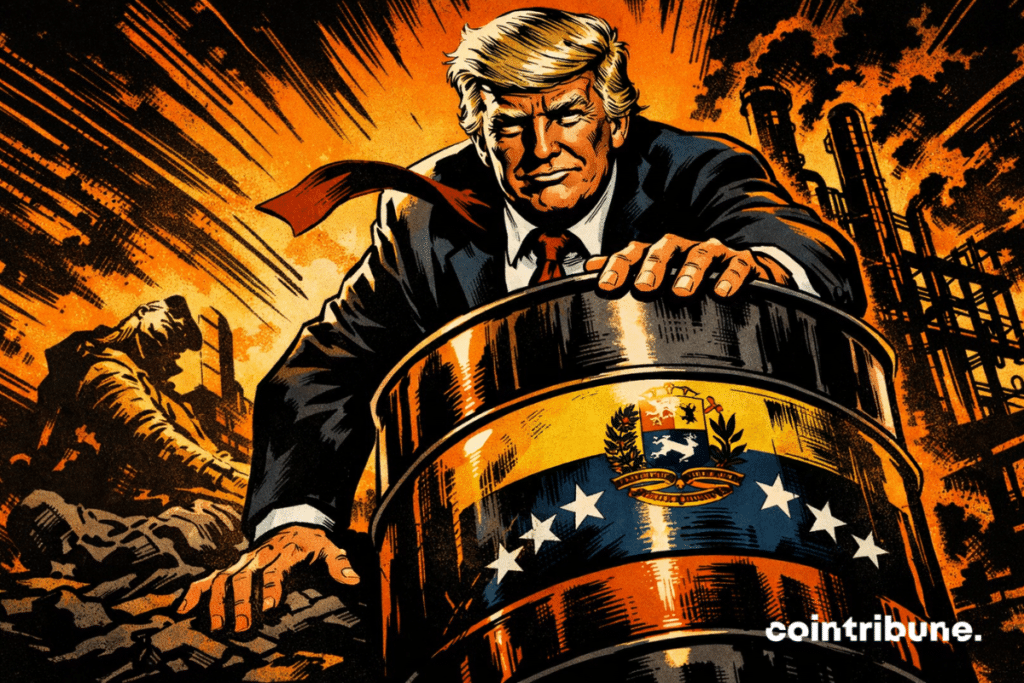
Le contrôle américain sur les réserves pétrolières du Venezuela vient de devenir réalité. Une manœuvre qui redessine la carte énergétique mondiale et envoie des ondes de choc à travers tous les marchés.
Le Nouvel Ordre Pétrolier
Plus besoin de sanctions ou d'embargos compliqués. Washington place désormais ses pions directement sur le terrain, sécurisant physiquement les puits et les infrastructures. Une prise de contrôle qui ressemble moins à une négociation diplomatique qu'à une opération stratégique de haut vol. Les cartes sont redistribuées, et le jeu des puissances traditionnelles en sort transformé.
L'Effet de Contagion sur les Marchés
Les traders observent, calculent, et anticipent déjà le prochain domino. Les actifs traditionnels tremblent sur leurs bases, tandis que les flux de capitaux cherchent frénétiquement de nouveaux refuges. Une chose est sûre : la volatilité n'est pas près de retomber. Les vieux modèles de stabilité géopolitique viennent de prendre un sérieux coup de vieux – et avec eux, les portefeuilles qui y croyaient encore.
Une nouvelle ère de réalpolitique énergétique est née. Froide, directe, et impitoyablement efficace. Pour le meilleur, et surtout pour le pire de votre exposition aux risques souverains. Un conseil d'ami : diversifiez mieux que ces fonds de pension encore accros au pétrole papier.
 Lisez-nous sur Google News
In brief
- Trump says U.S. oil companies will repair Venezuela’s damaged energy infrastructure under a U.S.-led transition period.
- Washington plans to keep the oil embargo in place while overseeing production, exports, and revenue flows during the interim.
- Chevron continues exports as uncertainty over leadership raises concerns about contracts, payments, and supply stability.
- Analysts expect limited market impact due to global oversupply and strong U.S. and OPEC+ production levels.
U.S. Policy Points to Oil-Led Recovery Plan for Venezuela
The comments followed an overnight military operation in which U.S. forces detained Maduro and his wife, Cilia Flores. Both face drug-trafficking indictments in New York. Trump said the United States would administer Venezuela “with a group” until conditions allow for a formal transfer of authority, though details around governance and oversight remain unclear.
Oil investment, Trump said, could open a path for U.S. firms to recoup losses tied to years of sanctions and underinvestment. Major energy companies are expected to fund repairs to wells, pipelines, and export terminals, with repayment tied to future production rather than direct state financing.
We’re going to get the oil flowing the way it should be. We’ll be selling large amounts of oil to other countries, many of whom are using it now, but I would say many more will come.
Donald TrumpEarly policy signals suggest Washington plans to maintain tight control over Venezuela’s oil sector during the interim period:
- U.S. oil majors positioned to lead infrastructure repairs and field development.
- The existing oil embargo remaining in place despite the leadership change.
- Energy firms covering rebuilding costs upfront, with repayment through output.
- U.S. oversight of production and exports during the transition.
- Crude shipments aimed at global buyers once volumes recover.
Uncertainty Over Oil Revenue Control Raises Risks for Buyers
Venezuela holds the world’s largest proven oil reserves, estimated at 303 billion barrels, or roughly 17% of global supply, according to the U.S. Energy Information Administration. Production, however, has fallen sharply over the past two decades. Output peaked at nearly 3.5 million barrels per day in the late 1990s and has since dropped to about 800,000 barrels per day, according to Kpler data.
Chevron remains the only major U.S. producer still operating in the country. The company exported about 140,000 barrels per day during the fourth quarter of 2025, according to Kpler. Chevron said it continues to comply with all applicable laws while prioritizing staff safety and asset protection.
China and Russia continue to hold stakes in Venezuela’s energy sector, raising questions around contract enforcement and asset control. Russian-linked firms secured a 15-year extension on joint ventures last November, shortly before Maduro’s removal. Analysts say those agreements could face review as authority in Caracas shifts.
For markets, the immediate risk lies in uncertainty over who controls export revenue and settlement flows. Buyers may delay payments or demand additional assurances, particularly while sanctions remain active. Some analysts say Chevron’s ongoing exports could help limit near-term supply disruptions.
Analysts See Limited Near-Term Market Impact From Venezuela Supply Risks
Key market risks to watch include:
- Security conditions around oil fields, pipelines, and ports.
- Potential export pauses from non-U.S. operators.
- A global oil surplus dampening price sensitivity.
- Continued OPEC+ output increases adding pressure.
- Record U.S. production levels offsetting supply shocks.
Oil markets entered 2026 under pressure. Brent crude fell about 19% in 2025, while U.S. crude dropped nearly 20%, marking the sharpest annual decline in five years. Rising OPEC+ output and steady gains in U.S. shale production have weighed on prices, limiting the market impact of geopolitical disruptions.
Analysts say any short-term Venezuelan supply risk may be absorbed by excess global capacity. Over a longer horizon, however, renewed production could alter trade flows if political control stabilizes and sanctions policy shifts. The pace of U.S. involvement, alongside responses from China and Russia, is expected to shape Venezuela’s position in global energy and commodity markets.
Maximisez votre expérience Cointribune avec notre programme 'Read to Earn' ! Pour chaque article que vous lisez, gagnez des points et accédez à des récompenses exclusives. Inscrivez-vous dès maintenant et commencez à cumuler des avantages.
